 ×
×
 The Perfect Crete Itinerary – 2 Weeks
 A trip by Sandy PapasGreece Travel Secrets
The Perfect Crete Itinerary – 2 Weeks
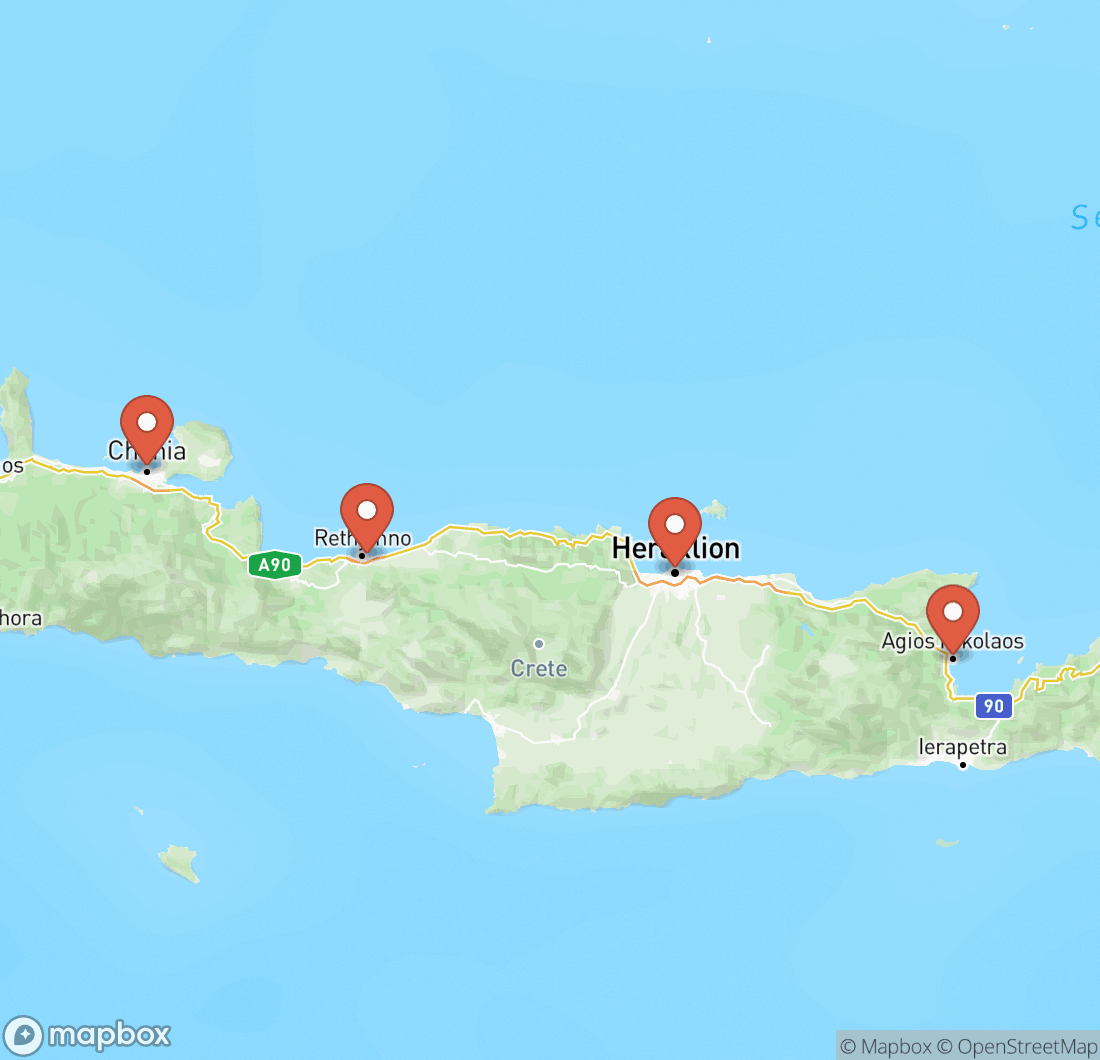
Crete is the largest of the Greek Islands and the fifth largest in the Mediterranean – bigger than many countries, packed with ancient wonders, wild beaches, mountain villages and four very different prefectures. This 14-night route works west to east: Chania's Venetian harbour and Balos, Arkadi and the mountain villages of Rethymno, the windmills of Lasithi above Agios Nikolaos, and Heraklion to close – Knossos, Phaistos, and the red-sand coves and hidden gorges of the south coast.
Chania
Days 1–4 of 14 · 4 nightsChania is where the trip starts – Venetian-harbour mornings, the white-cliffed lagoon at Balos, the long descent of Samaria Gorge, and the pink sands of Elafonisi. Four nights here is the right base to do the west-coast beaches justice and still leave Crete planning the return trip.
 Where Sandy stayed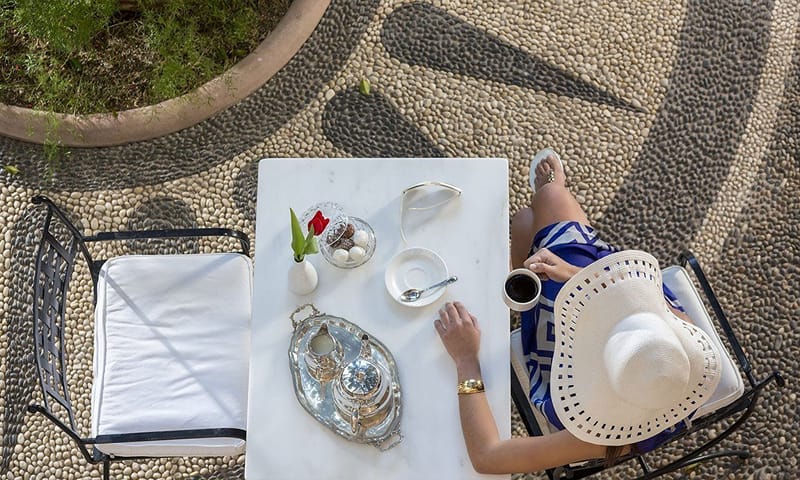
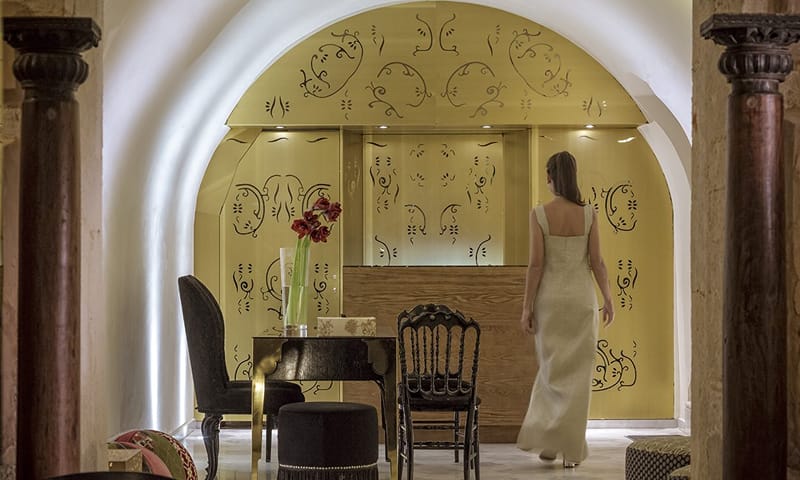
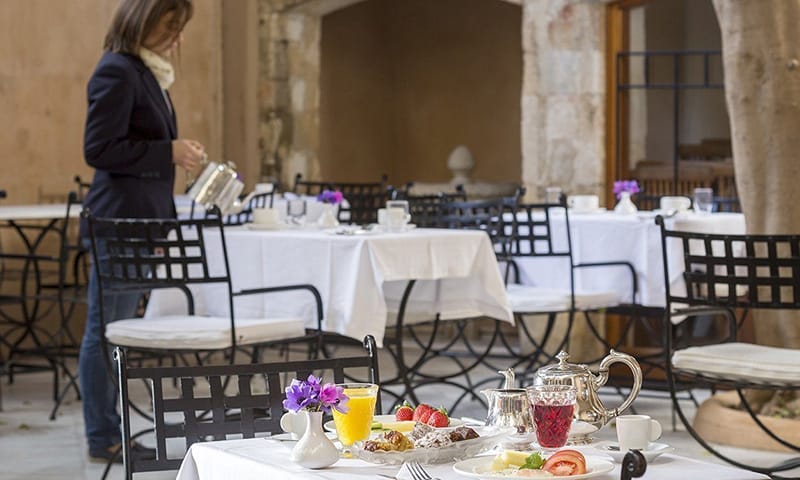
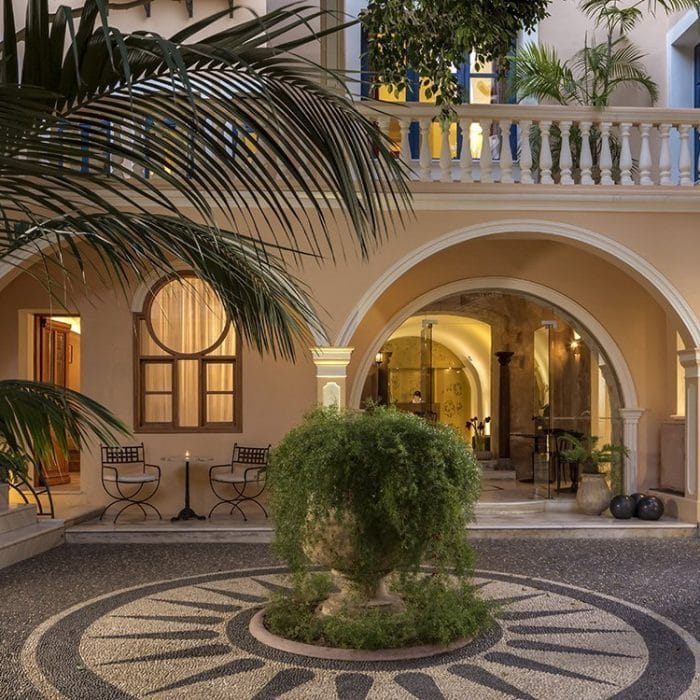
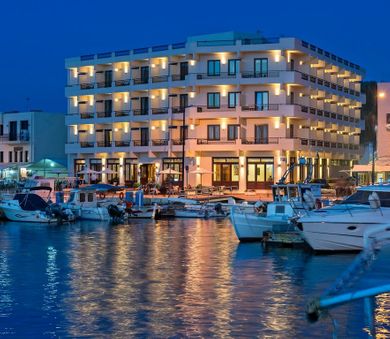
Casa Delfino Hotel & Spa
A 17th-century Venetian mansion in the old harbour quarter – Sandy's Chania base.
 9.6
9.6 Alternative places to stay

ChaniaDay 1
The Venetian Harbor & the Old Town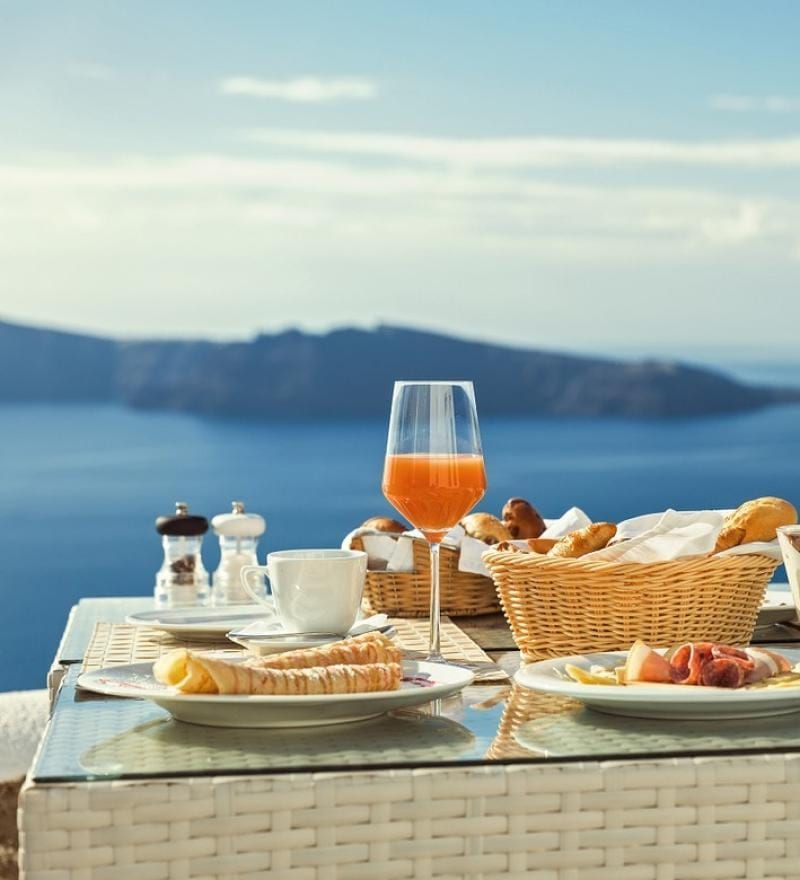
Koukouvaya
A hilltop café above Chania – Cretan coffee, warm bougatsa, and the bay laid out below in a single sweep. Koukouvaya sits on the Profitis Ilias hill, looking down over Halepa and the old harbour. The drill is simple: Cretan coffee or a freddo, a slice of warm bougatsa or galaktoboureko, and a chair on the terrace. Mornings smell of butter and orange peel; late afternoons hold the light until the sun drops behind the lighthouse. It's unpolished on purpose – the kind of place locals use as a meeting point, not a destination. Cash and card both work. Best paired with a slow walk back into town, downhill all the way.
Old Venetian Harbor
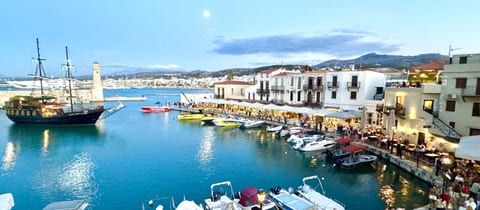
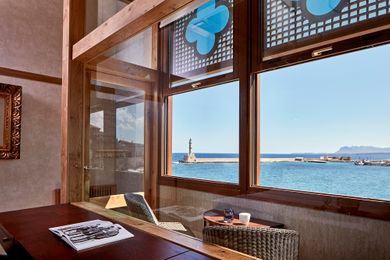
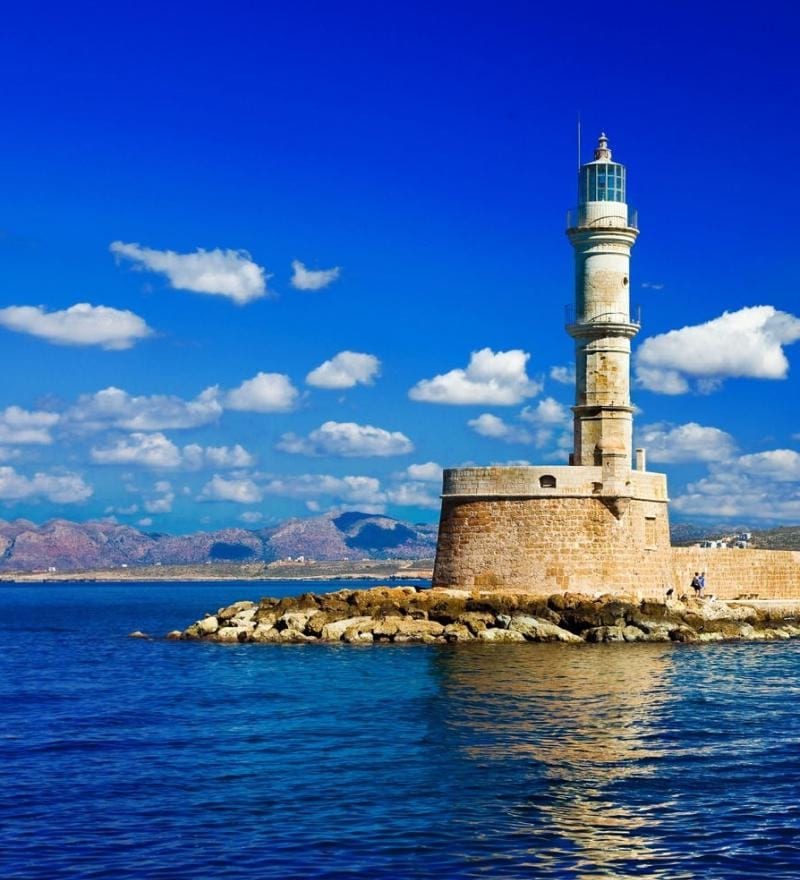
Dating from the 14th century, the old harbor is ringed by a promenade lined with seafood eateries and cafés; it buzzes with visitors in summer, and is totally enchanting by night. As you wander to the east of the old harbor, you'll pass by the small mosque, erected by the Ottoman Turks after they took Chania in 1645. Today it serves as a small art gallery. Beyond the mosque, stand the arsenals, where the Venetians repaired their galleys, and a yachting marina. This entire stretch of coast is protected by a breakwater, and on its tip stands a lighthouse-it was designed by an Egyptian architect in 1839 and is strangely reminiscent of a minaret. On the point across the water from the lighthouse stands the Maritime Museum and the Firkas Fortress.
Old Town
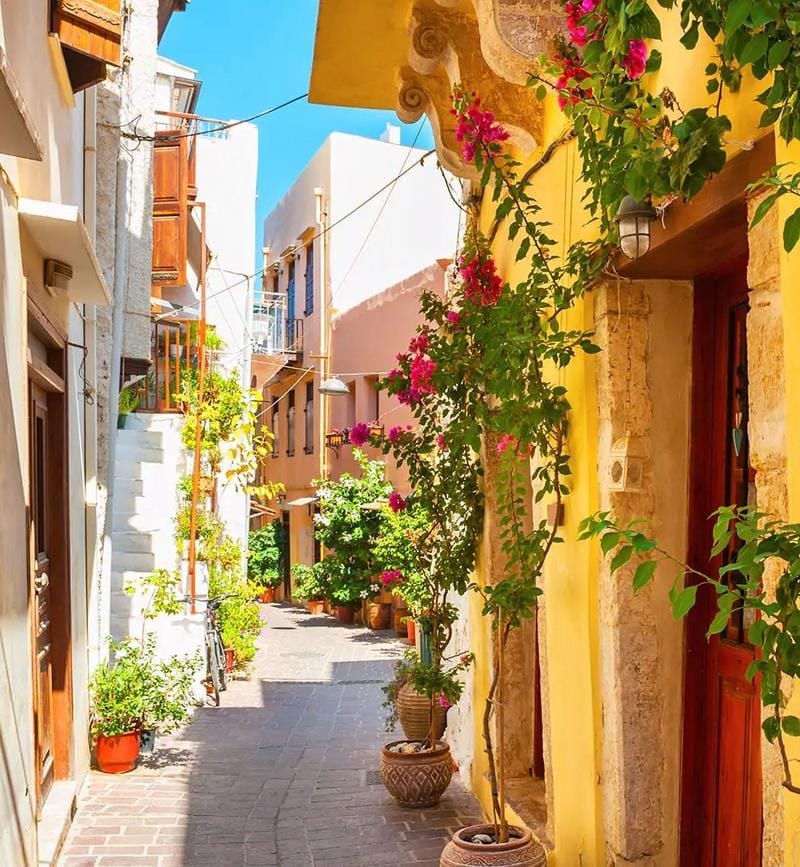
One of the best things to do in Chania is wander through the maze of narrow, pedestrian-only streets in the historic old town. An architectural style jumps out at you around every corner. Shops lining the streets and stairways sell souvenirs, and cute restaurants and cafés are tucked into shady patios. As you walk around, you'll come across four distinct areas, each with its own look and feel: Kastelli is hilly and quite old with very narrow, twisty walkways. If you come across a group of tourists, it's often too tight to pass. Topanas is just back from the old port and has narrow roadways. The Jewish District is easily identified by its wider streets. The Splantzia District has the greatest number of outdoor cafés and restaurants, mostly located around a huge plane tree in front of the Church of St. Nicolas.
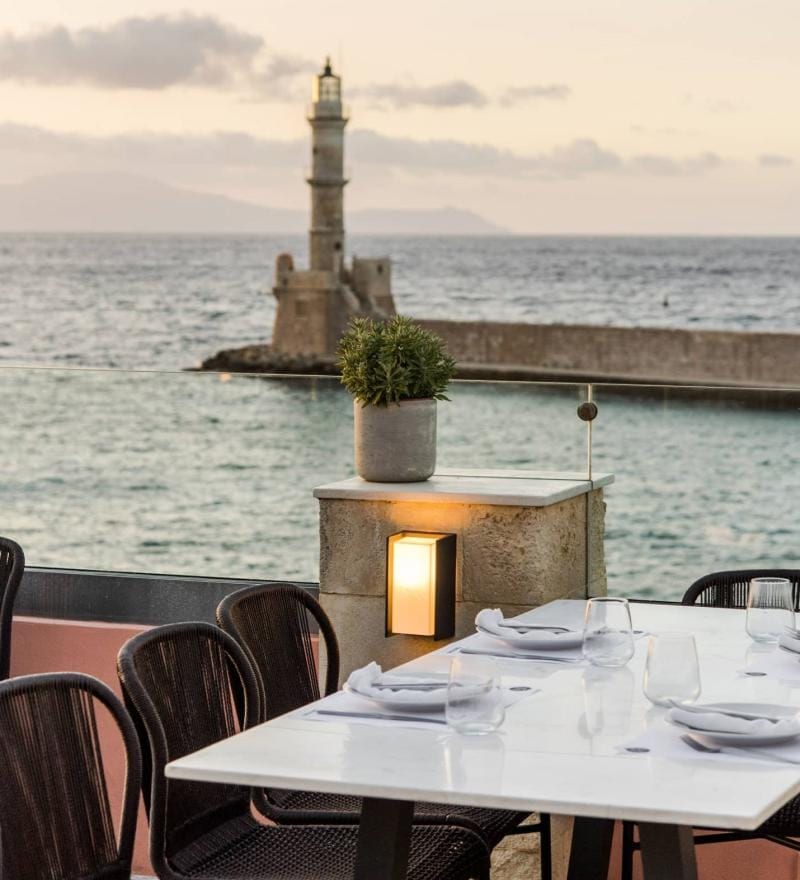
Pallas
Pallas boasts modern, quirky styles that are characterized by bright areas with sofas, wooden tables and bars, and a luxurious sense of comfort. Whether you choose to sit inside, or you prefer the tables outside, overlooking the sea, our music -electro, lounge, classic soul & funk- will accompany you, completing your experience and creating the ideal environment in which to enjoy our delicious food.
ChaniaDay 2
Balos lagoon & the far west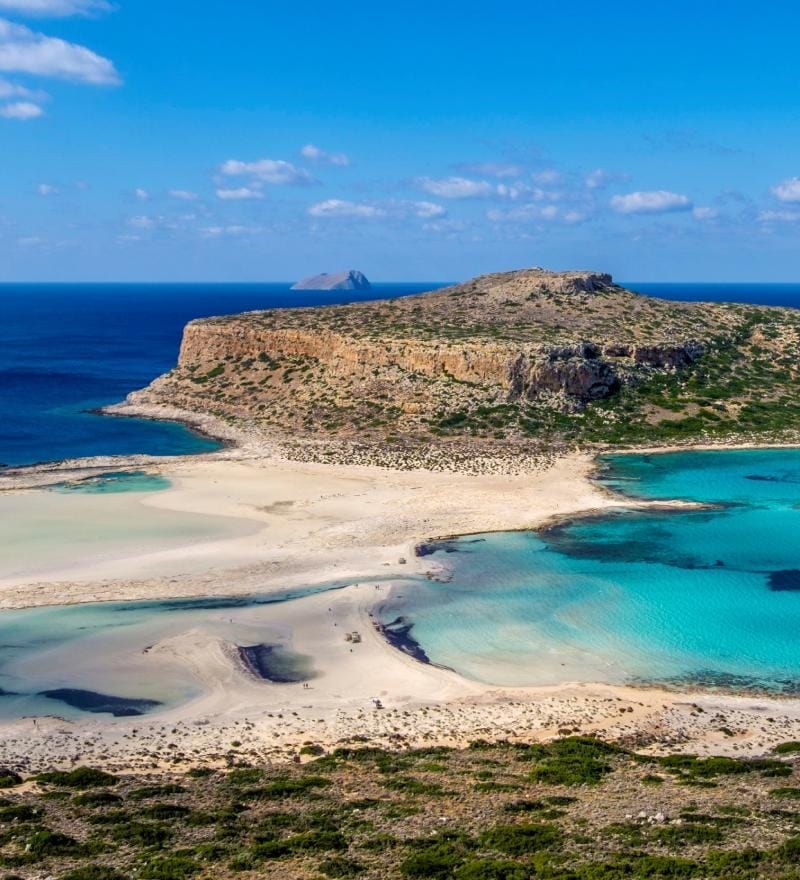
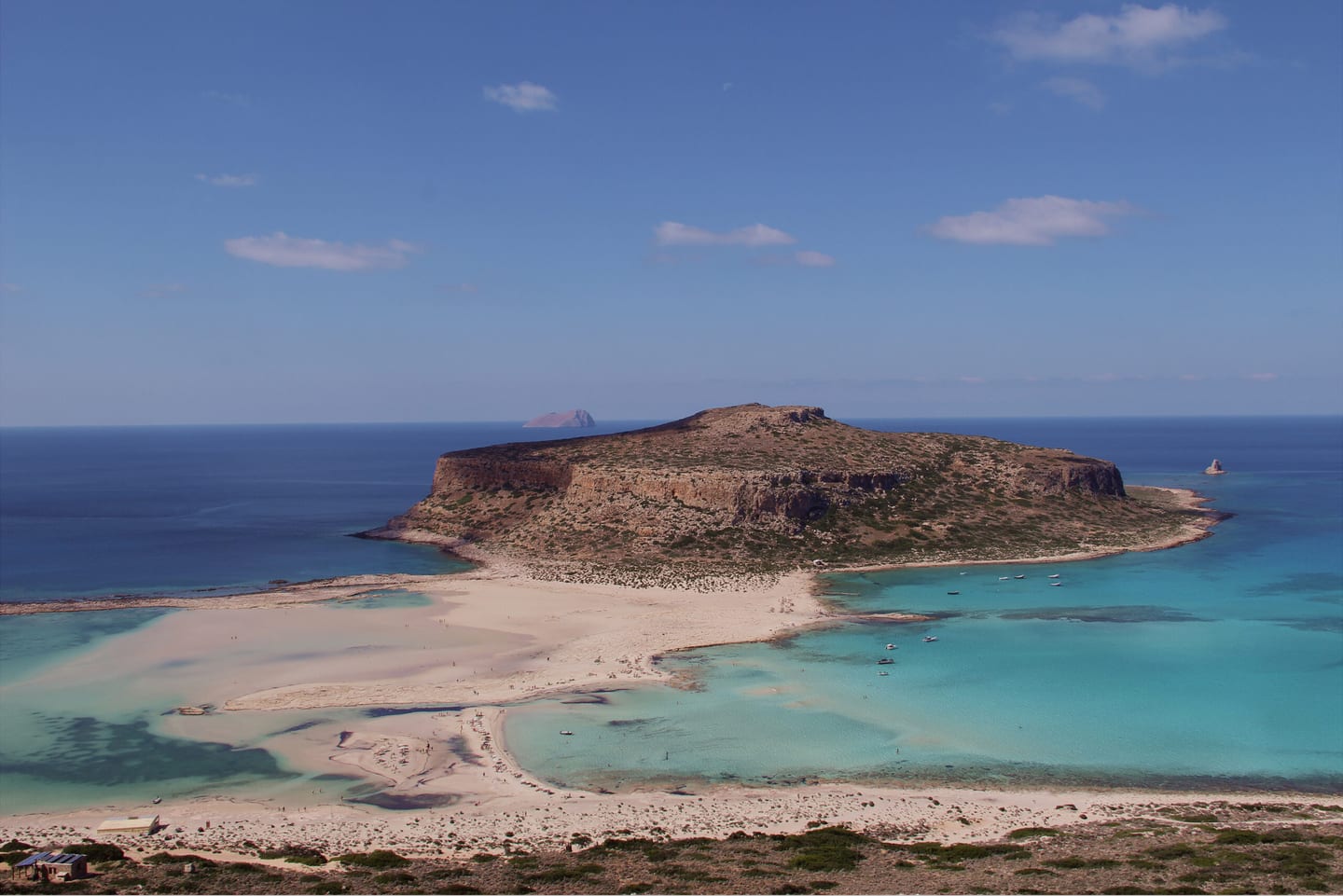
Balos beach
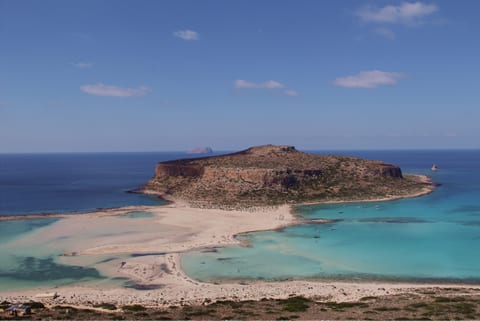
A pink-sand lagoon at the far north-western tip of Crete – and yes, the photos do not lie. Most people reach it by boat from Kissamos (about an hour) and combine it with a stop at the pirate islet of Gramvousa; the cliff-top hike down is the alternative for the energetic. Bring shoes you can walk in shallow water with.
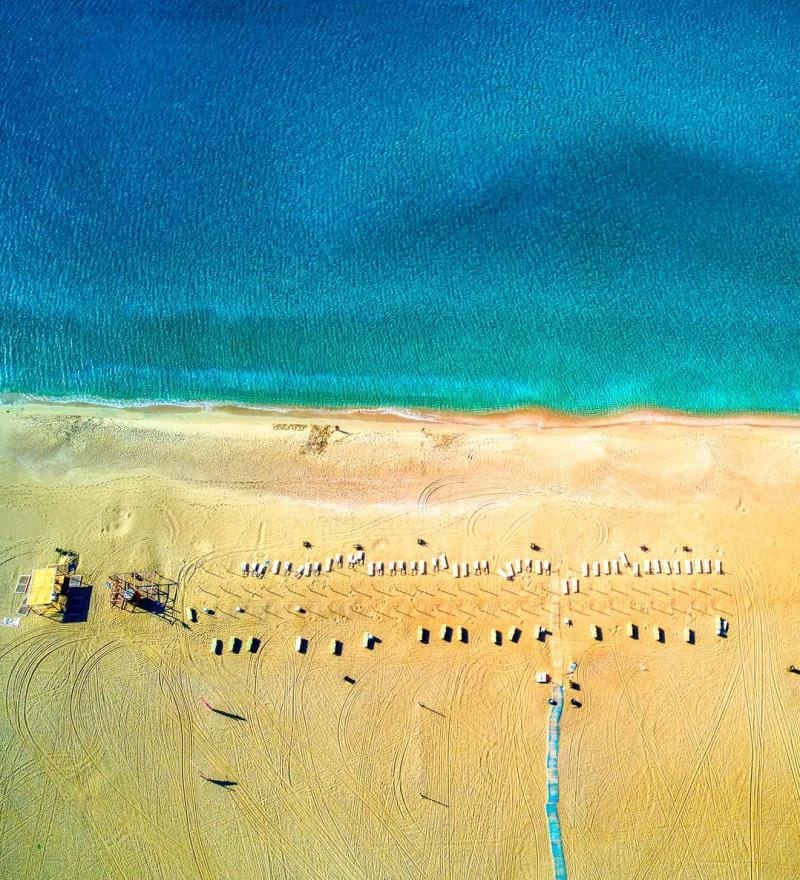
Falasarna beach
Falassarna beach is not only one of the most beautiful beaches in Greece, but has also been voted the best beach in Crete and one of the 10 best beaches in Europe! It is a huge bay which actually consists of 5 exotic beaches. Falassarna beach has pink sand, cyan-hued water, and an unreal landscape. The main beach of Falassarna is named Pahia Ammos and stretches for 1 km. Thanks to its huge size, this beach almost never gets crowded, so it’s a top choice for those who seek freedom! In Pahia Ammos you can find facilities, such as umbrellas, a canteen, a beach volley court, and water sports facilities, for the water sport fanatics!
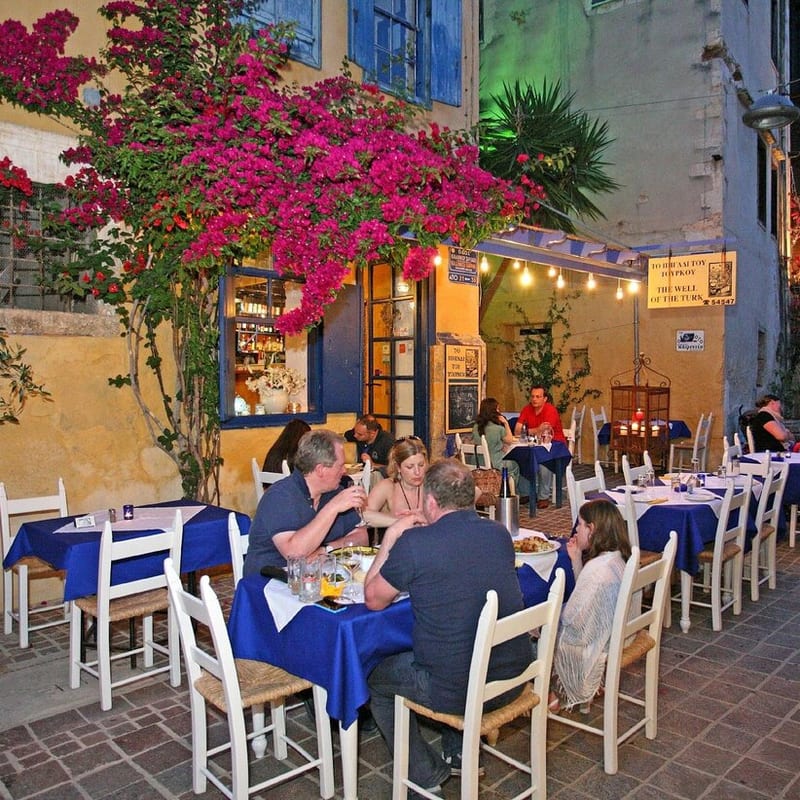
The Well of the Turk
Sandy's dinner call after the Balos day – "Mediterranean-meets-Middle-Eastern dishes" in the lanes of Splantzia. The drive back from the lagoon lands you in the old town hungry; this is where to point the evening.
ChaniaDay 3
The Samaria Gorge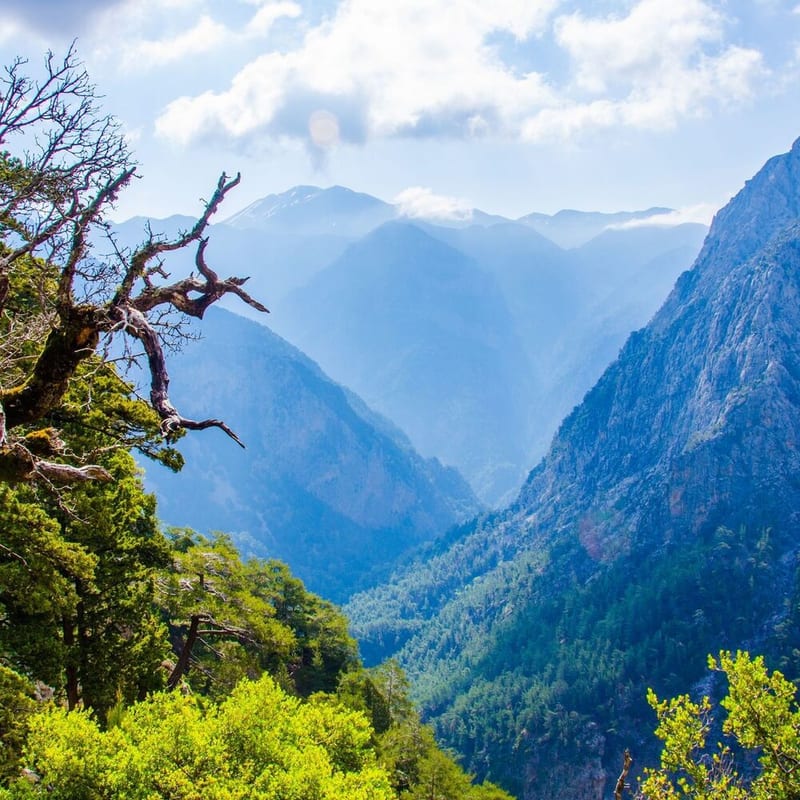
Samaria Gorge
The full sixteen-kilometre walk down the Samaria Gorge is one of the great Cretan days – start at Omalos before 09:00, finish at Agia Roumeli on the south coast, ferry back to Sougia or Chora Sfakion, bus back over the mountains. Plan a full day; arrive at your Chania hotel with sore legs and the feeling of having earned dinner.
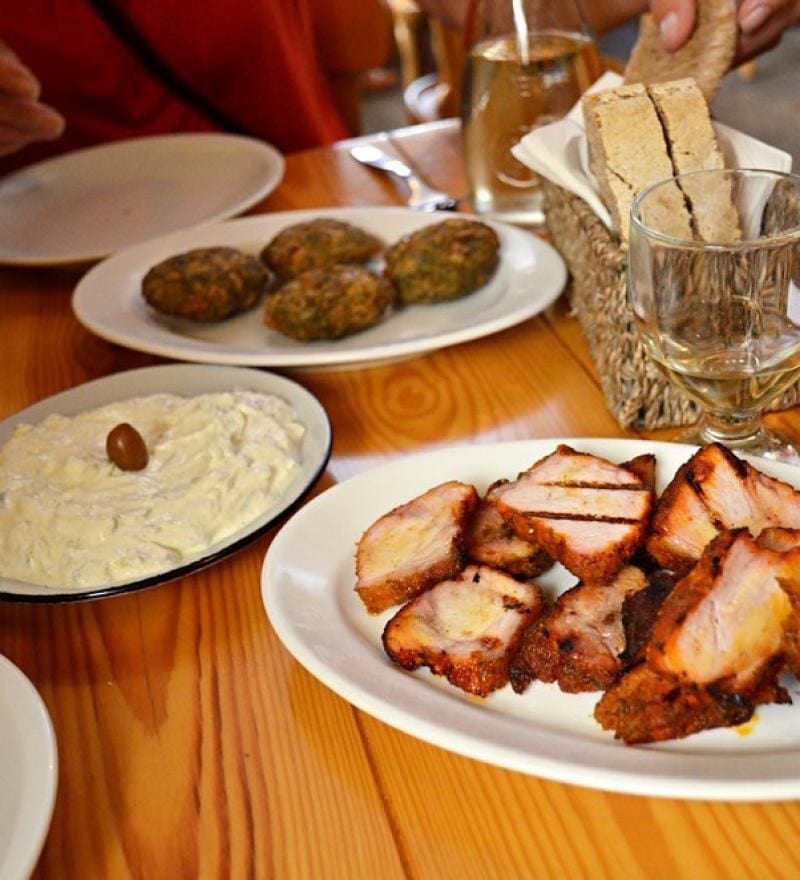
Tamam
A Cretan kitchen inside a converted Ottoman hammam – the old town's most reliable table for over forty years. Tamam tucks into Zampeliou, one of the narrow lanes climbing from the harbour into the old town. The room is the original 19th-century bath, low domed ceilings and arched alcoves, candle-warm at night. The food is Cretan with Levantine and Anatolian threads pulled through – eggplant slow-cooked with yoghurt, lamb with cumin and pomegranate, fava with caramelised onions. The menu is long, the portions generous, the wine list well-priced. Vegetarians eat very well here. Reservations are smart in high season, and the back tables in the vaulted room are worth asking for. A short stagger from the Venetian harbour when dinner's done.
ChaniaDay 4
Elafonisi's pink sand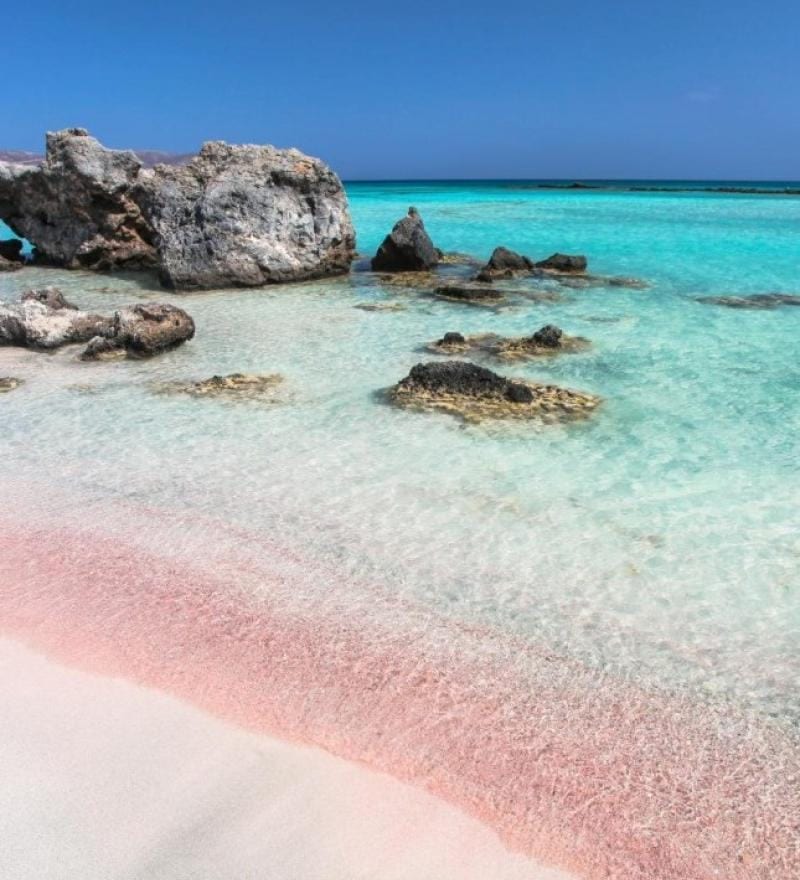
Elafonisi beach
Crete's pink beach, due to crushed shell mixed into the sand. The lagoon is shallow and warm enough that small children can wade out a hundred metres; the cedar-stand at the back gives shade in the heat of the day. Drive yourself for an early arrival – the tour buses don't roll in until late morning.
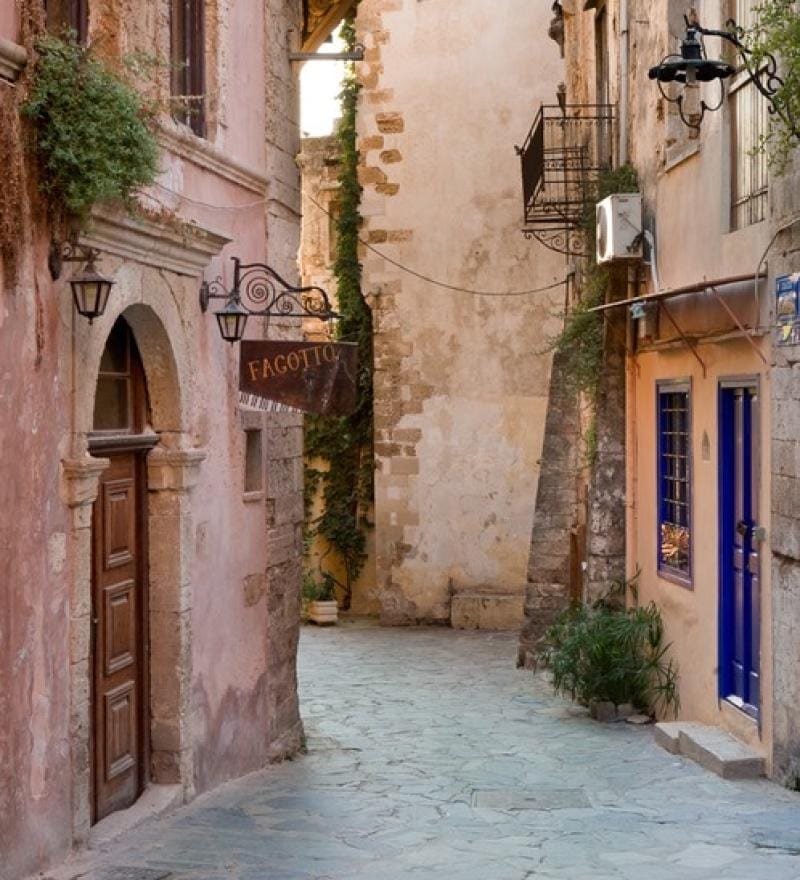
Fagotto Jazz Bar
Located on a backstreet right behind the Venetian harbor, Fogotto is a romantic jazz bar ideal for those of you looking for a quiet night out. If you decide to spend your night here, you will love the incredible romantic ambiance, the large variety of drinks, and attentive staff. You can sit inside the cozy and air-conditioned bar area, or you can choose to use the tables along the walkway. No matter your choice, Fagoto Jazz Bar is meant to impress you with its quality music and atmosphere.
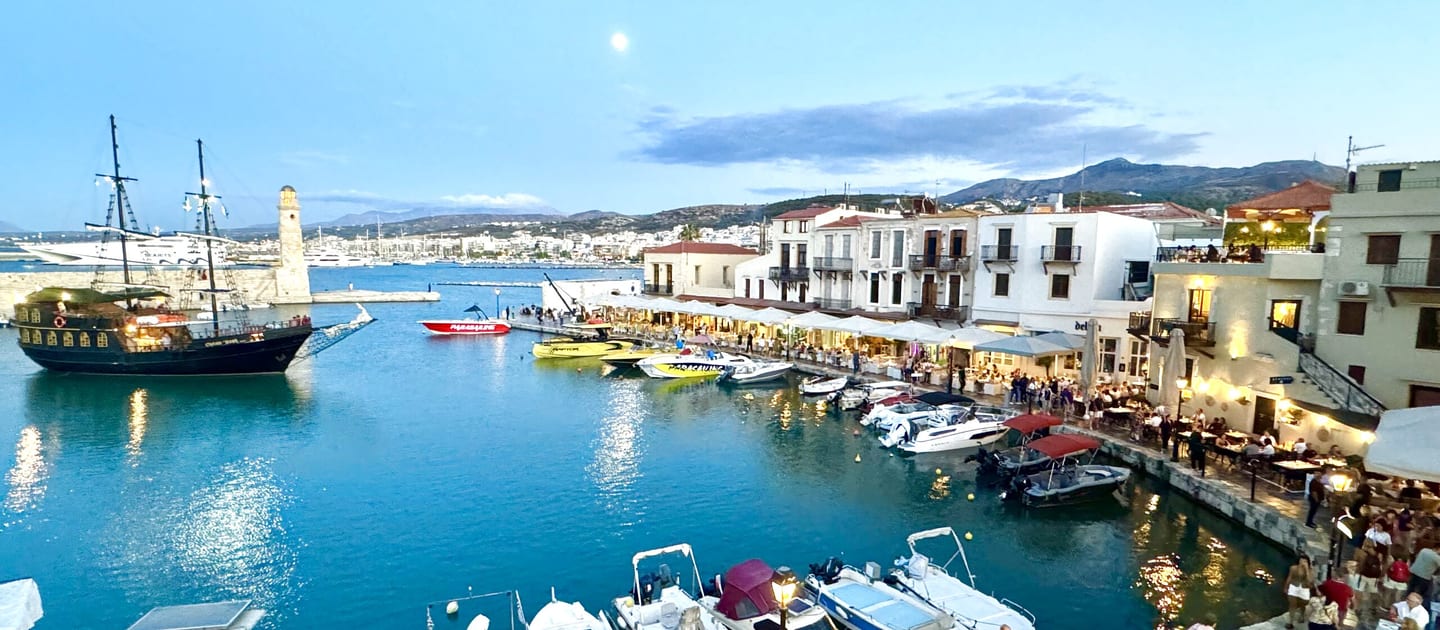
Rethymno
Days 5–7 of 14 · 3 nightsA compact Venetian town with a Fortezza at the top of the hill and a working old quarter at the bottom – and then the prefecture opens out into olive hills, mountain villages and Crete's only freshwater lake. Three nights here is the inland turn of the trip: Arkadi's monastery, the Spili lions and Lake Kournas on the way through.
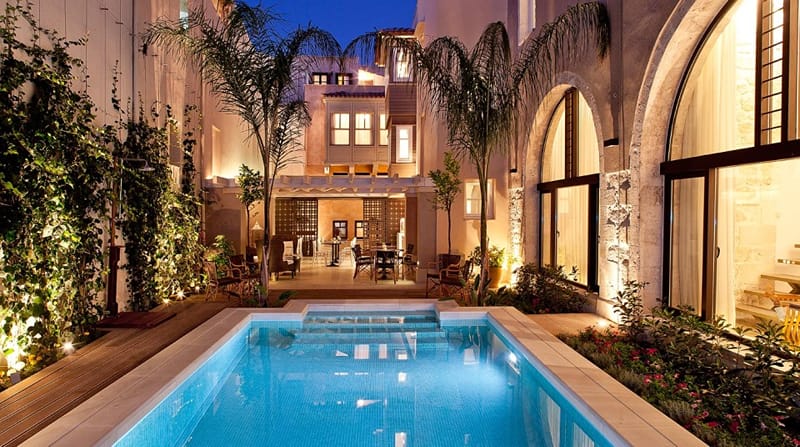 Where Sandy stayed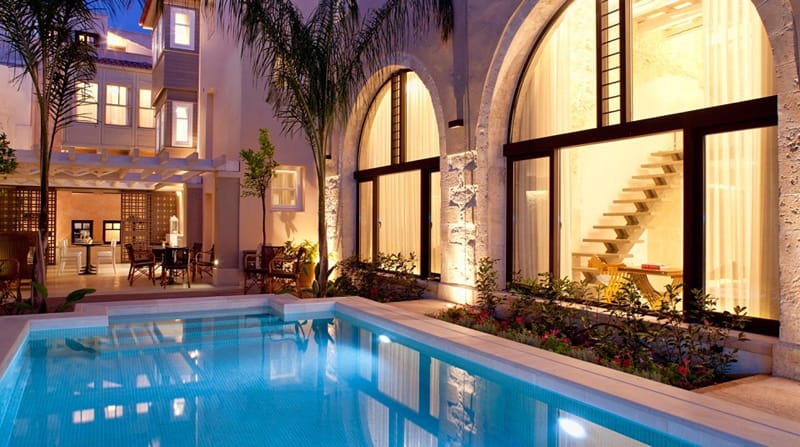
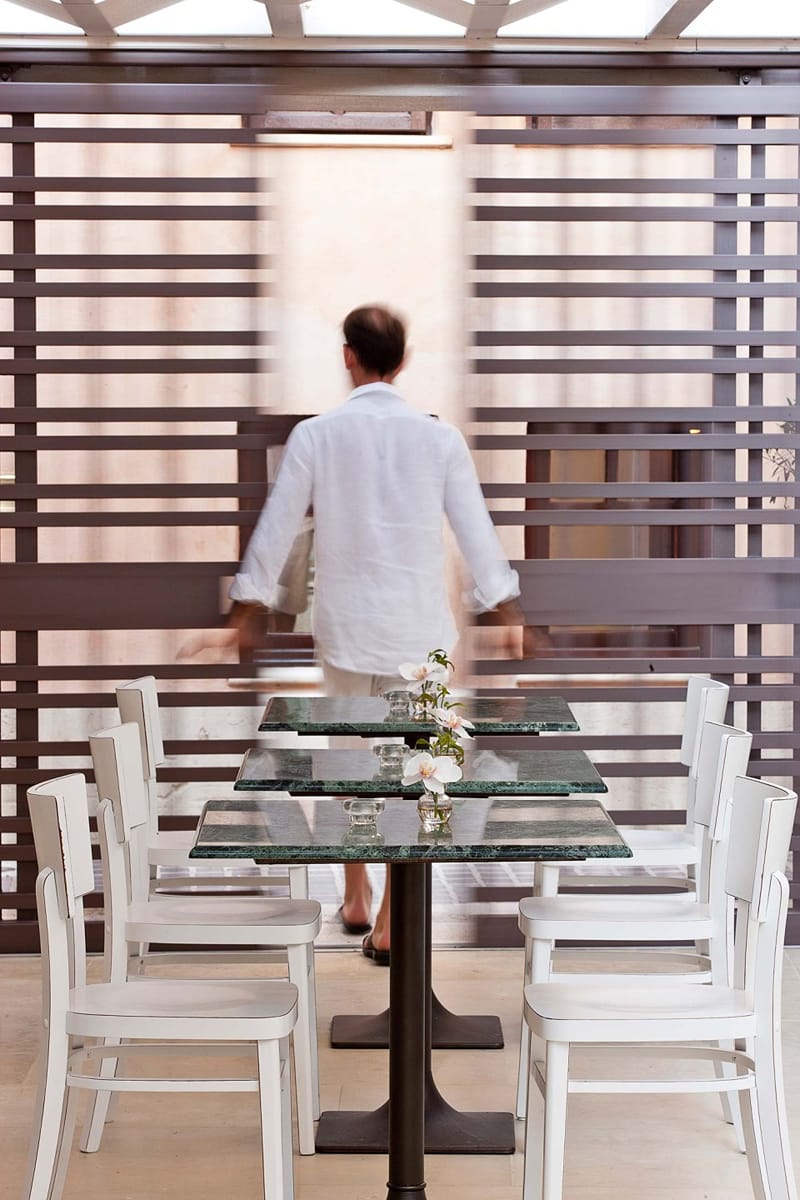
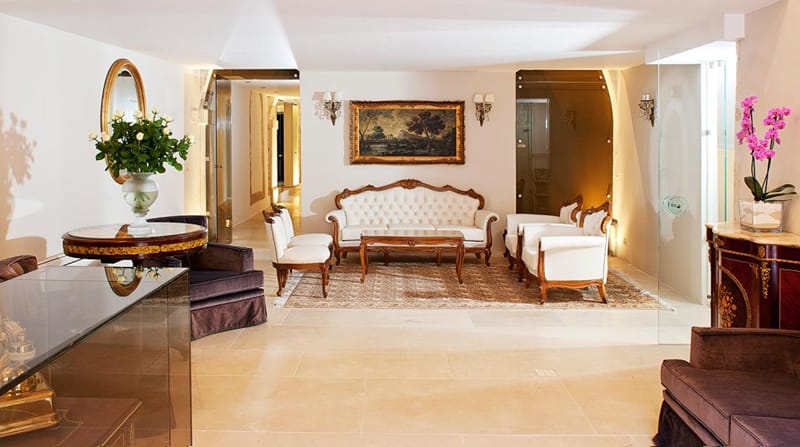
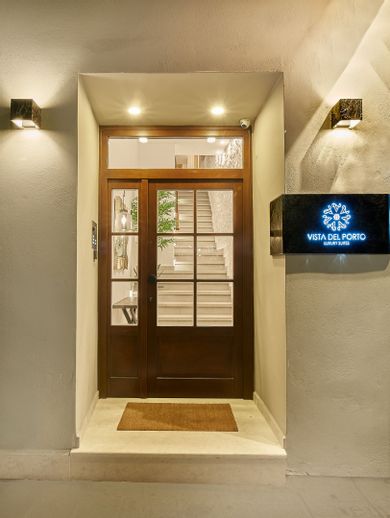
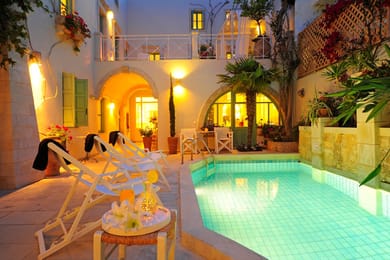
Rimondi Boutique Hotel
Her pick in the Venetian backstreets of the old town.
9.0 Alternative places to stay
RethymnoDay 1
The Fortezza & the Old Harbor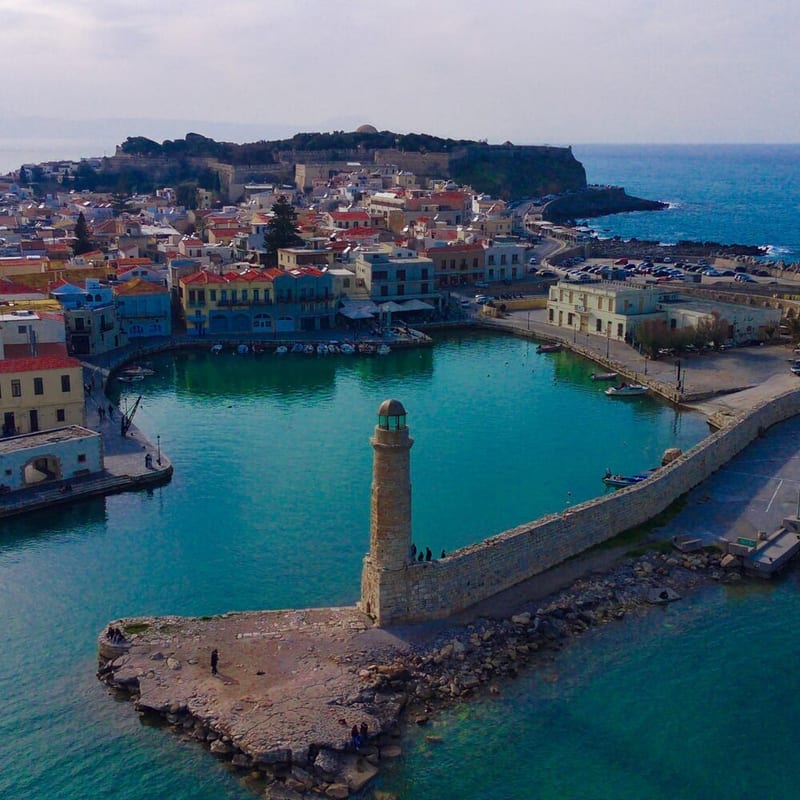
Old Venetian Harbor
Sandy's favourite stretch in town. Walk out along the breakwater to the Egyptian lighthouse at the end of the harbour – the view back across the old town and the Fortezza is the best in Rethymno, especially at sunset.
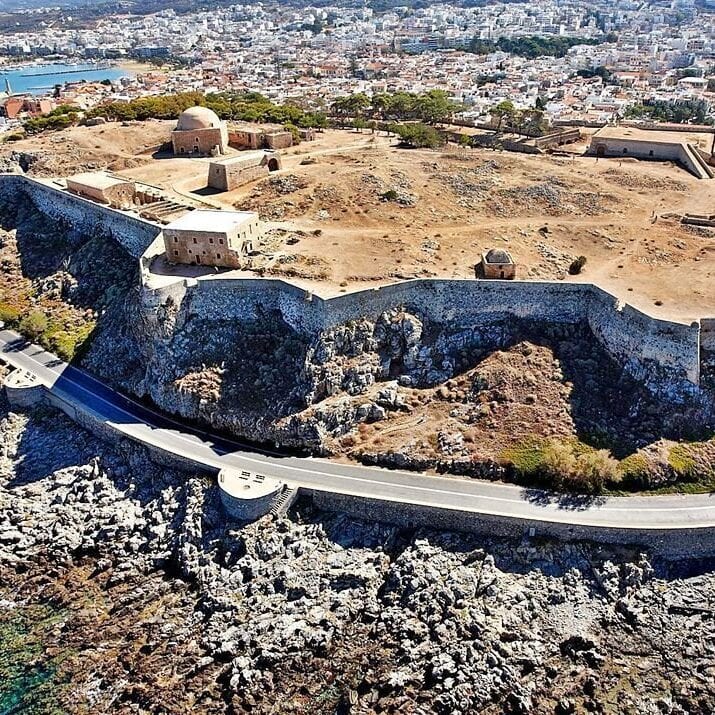
Fortezza
Venice's northernmost outpost – the Fortezza commands the headland at the top of the old town. The walls are largely intact; inside, the small mosque from the later Ottoman period sits next to the remains of a Venetian cathedral. Go in late afternoon for the soft light over the Cretan Sea.
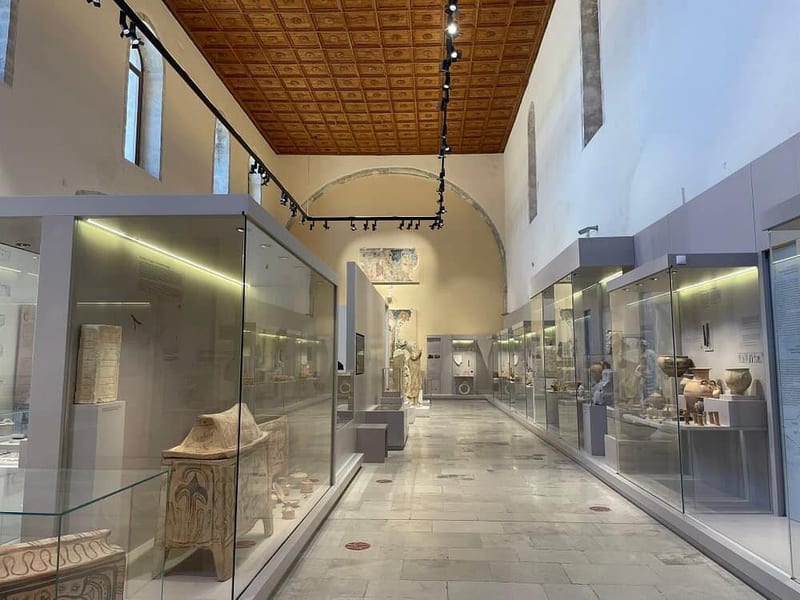
Archaeological Museum of Rethymno
Housed in a former Venetian prison just below the Fortezza, the museum gathers Minoan, Mycenaean and Roman finds from the surrounding prefecture – gold jewellery from Eleftherna, marble portraits, painted sarcophagi, and the small bronze figurines that turn up across the Cretan highlands. A focused, two-hour visit that grounds the rest of the trip; the courtyard café is a quiet pause after.
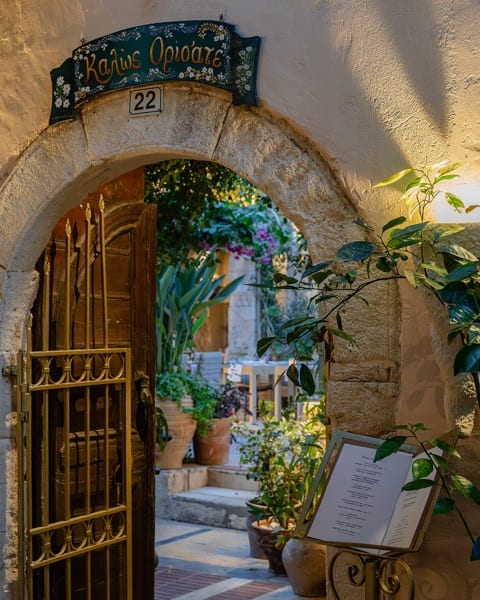
Avli
A 16th-century Venetian courtyard, 460 Greek wines, and Cretan cooking refined over three decades. Avli means "courtyard" in Greek, and everything here revolves around it – orange trees, bougainvillea overhead, stone arches framing the sky. Inside the renovated mansion, a barrel-vaulted dining room sets the winter mood. The kitchen takes island ingredients and applies fine-dining precision without sacrificing soul: mushrooms with cheese mousse, goat marinated in thyme honey, herb-crusted lamb. The wine cellar doubles as a destination in itself. Reservations essential, especially for courtyard tables.
RethymnoDay 2
Arkadi Monastery & the Neratze Mosque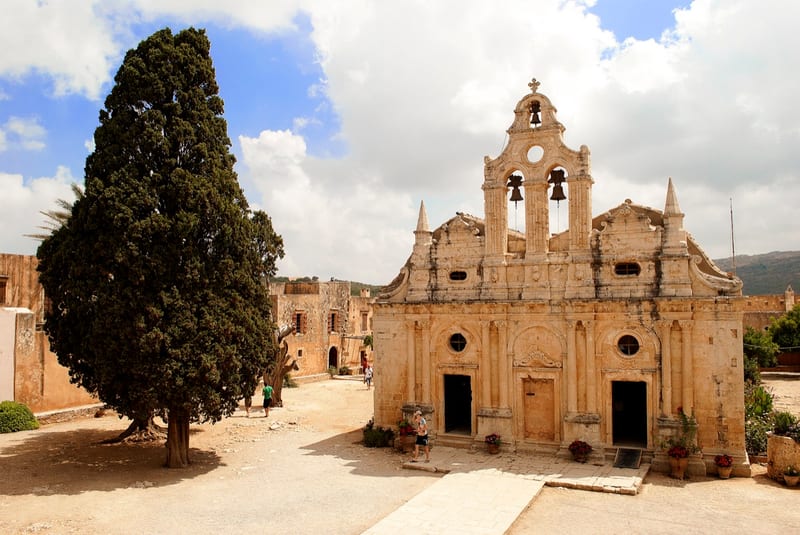
Arkadi Monastery
Crete's most storied monastery – Venetian baroque behind fortress walls, a symbol of Cretan defiance. In 1866, hundreds of Cretans besieged here chose to ignite their own gunpowder rather than surrender, a sacrifice that made Arkadi a byword for freedom across Europe. The katholikon's honey-coloured facade, with its twin belfries and Corinthian columns, is the finest Venetian church front on the island. Walk the rose-filled cloister, the old refectory with its sword-scarred table, and the roofless powder magazine left as the blast made it. Twenty minutes inland from Rethymno through olive groves – go late afternoon, when the stone turns gold and the tour buses have rolled back down the hill.
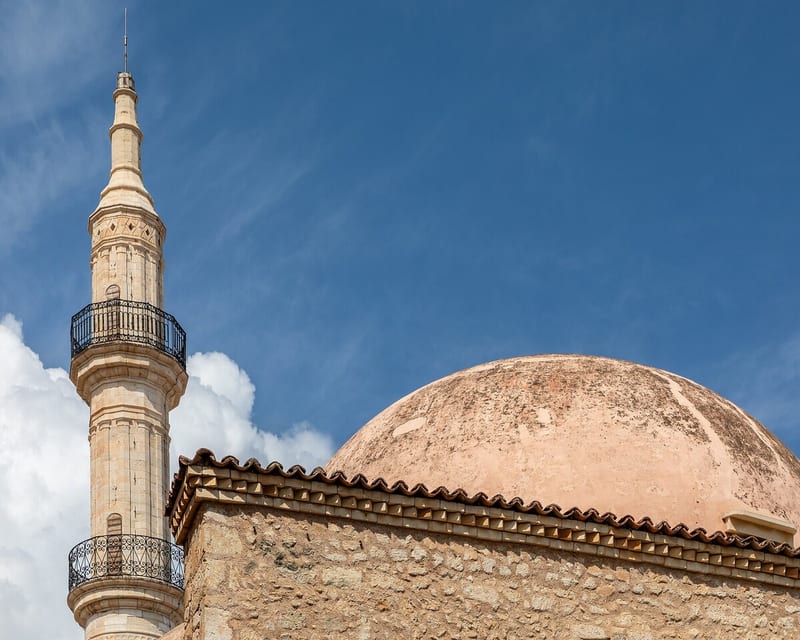
Neratze Mosque
Ottoman grandeur repurposed – Rethymno's tallest minaret marks a mosque-turned-concert hall in the old town. The Neratze Mosque stands at the heart of Rethymno's old town, its slender minaret the tallest landmark on the skyline. Built in the 17th century by converting an earlier Venetian church, it blends Ottoman and Venetian architectural DNA in ways that feel uniquely Cretan. Today it serves as the city's music conservatory – listen for rehearsal notes drifting through the courtyard. The minaret is one of the few in Crete you can still see intact. The surrounding streets are among the old town's most atmospheric, with arched doorways and weathered stone facades.
Castelo
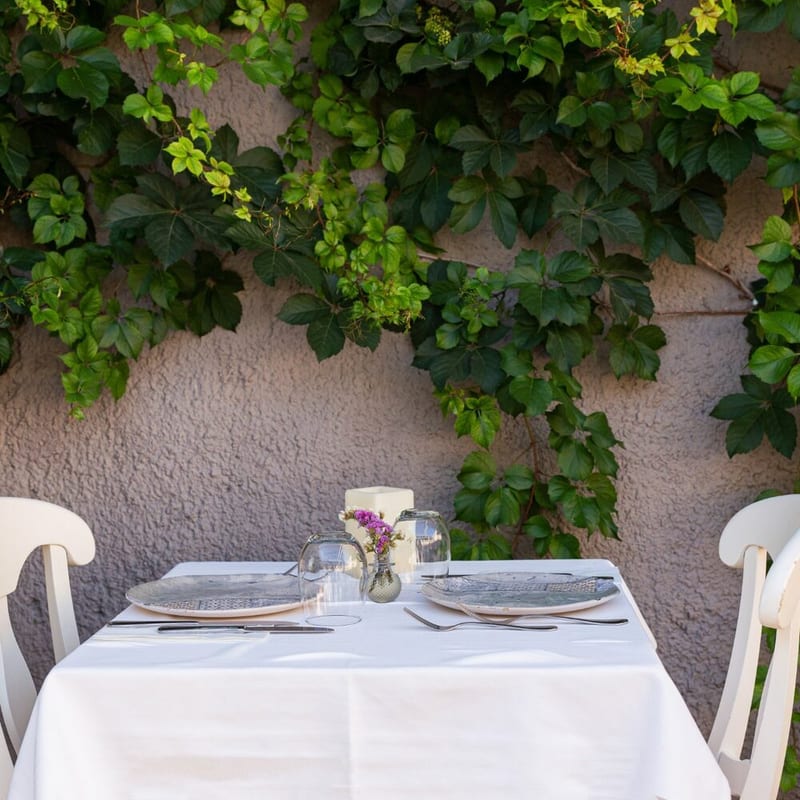
Sandy's pick for dinner – "dinner at Castelo": back in the old town, candlelight under the vines after a day inland.
RethymnoDay 3
Spili & Lake Kournas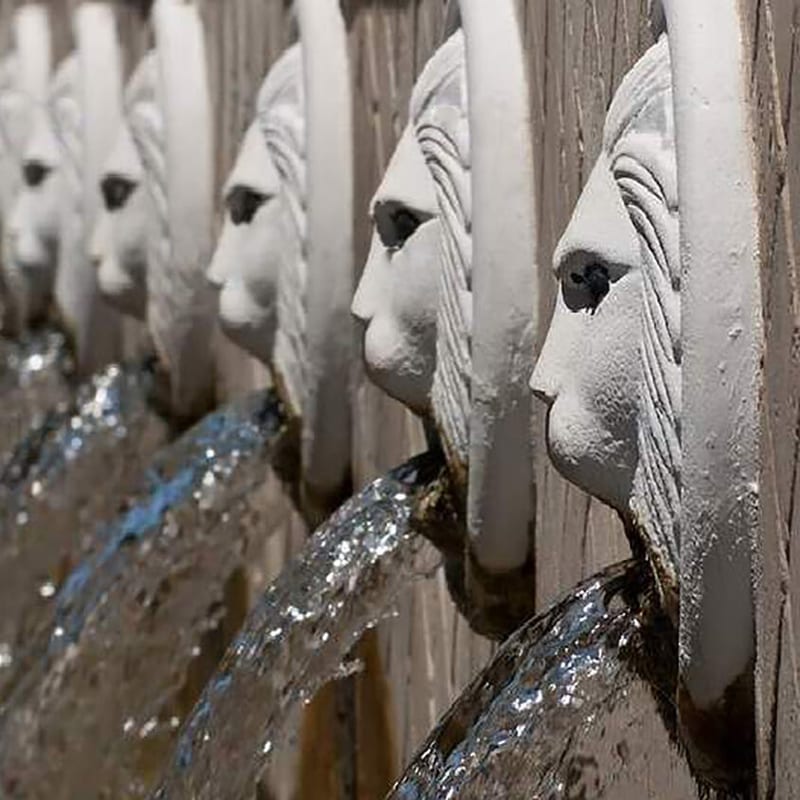
Spili Village
A mountain village halfway between Rethymno and the south coast, Spili centres on a single Venetian fountain – nineteen carved lion heads spilling spring water into a long stone trough, framed by plane trees and tavernas. The village is small enough to walk in half an hour; the appeal is the rhythm of an actual working hill town. Stop for a coffee and pita in the square, fill your bottles at the lions, and drive on.
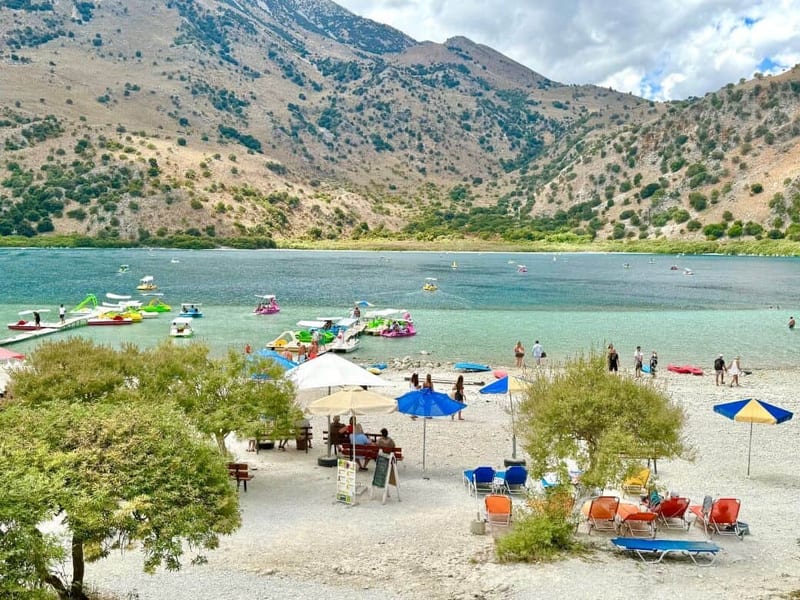
Lake Kournas
Crete's only natural freshwater lake sits cradled in the White Mountains foothills, ringed by terraces of tavernas and rented pedalos. The water shifts from turquoise to deep green by season; in summer the wind-still bays are perfect for a slow lap by paddleboat, and there's a quiet hike around the south shore for views back across the basin. Pair with a long lunch at one of the lakeside fish tavernas.
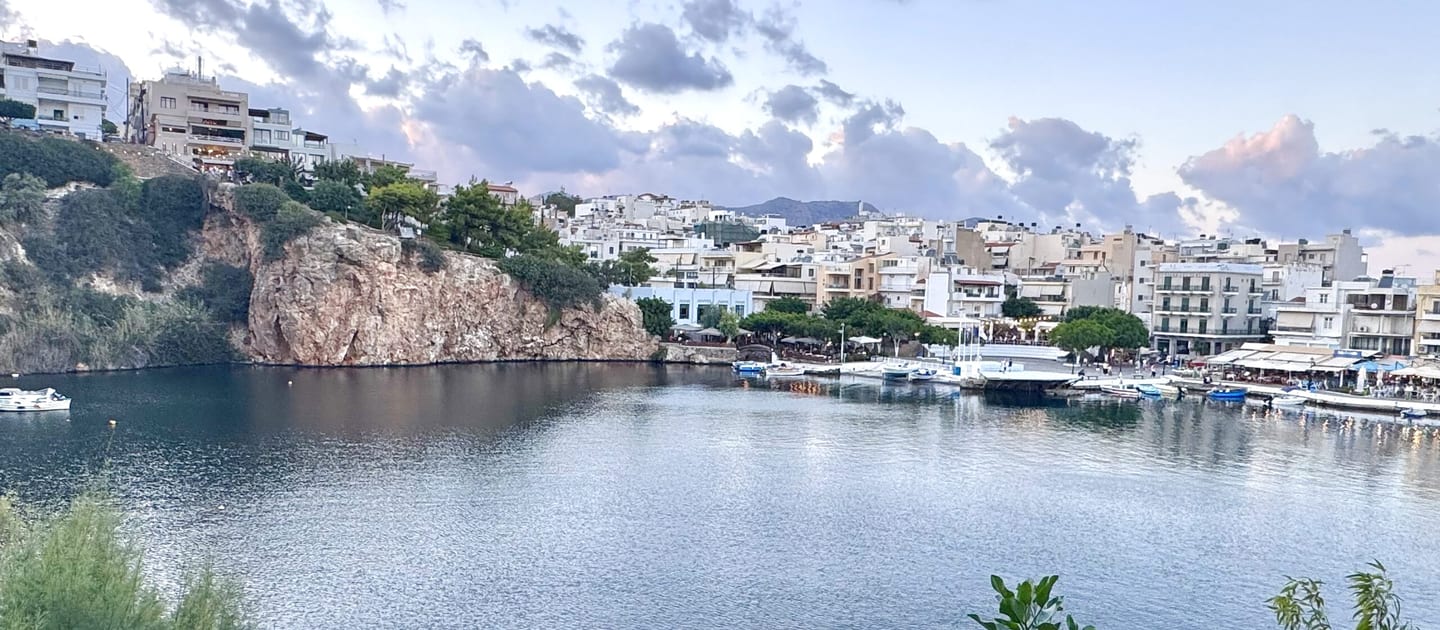
Agios Nikolaos
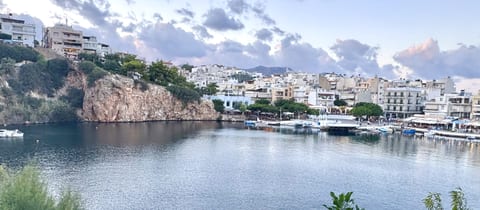
Days 8–10 of 14 · 3 nightsCrete's eastern coast is built around the Mirabello Bay – Agios Nikolaos with its bottomless lake at the centre of town, Elounda across the water, and Spinalonga island a short boat ride out. Inland, the Lasithi Plateau and the Dikteon Cave (where Zeus was hidden as an infant) are an unmissable mountain day.
 Where Sandy stayed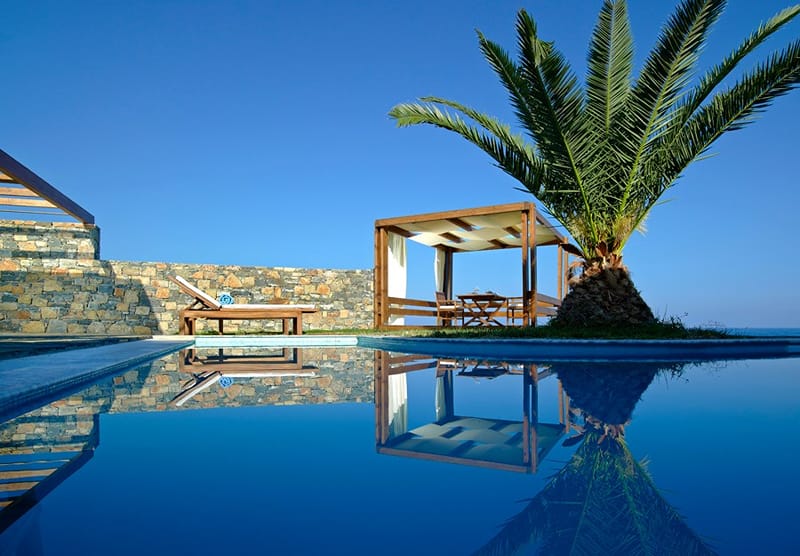
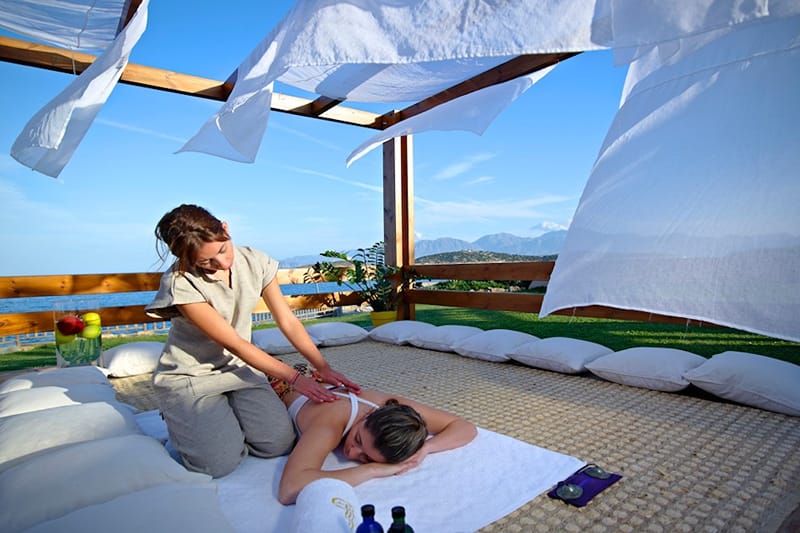
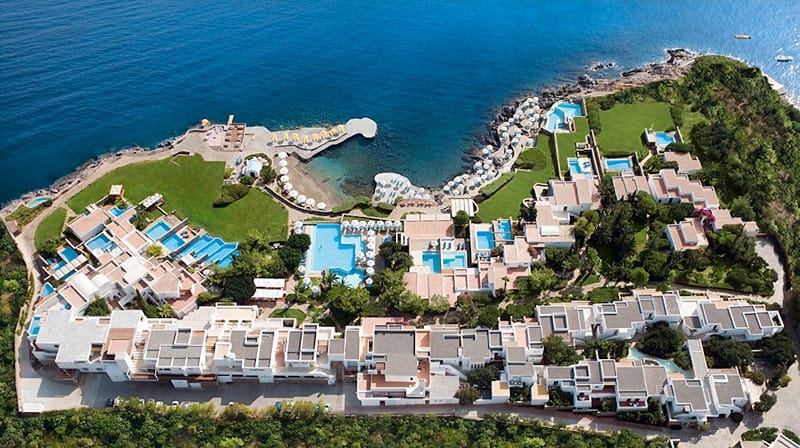
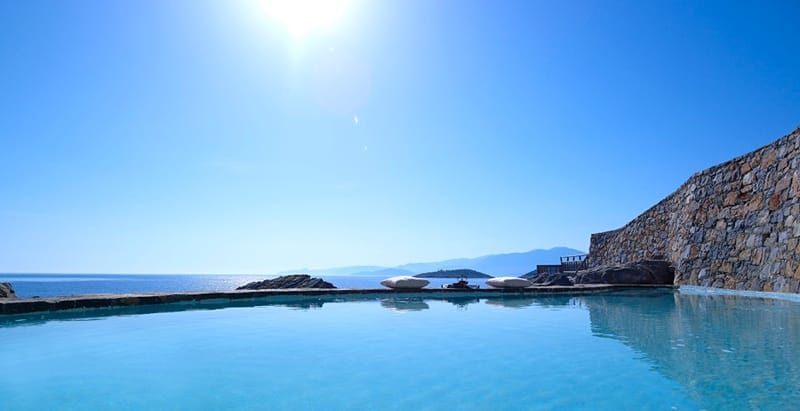
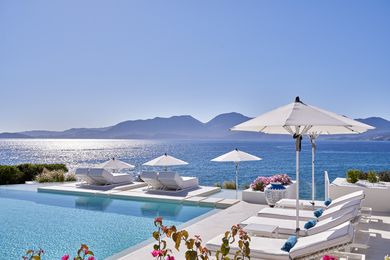
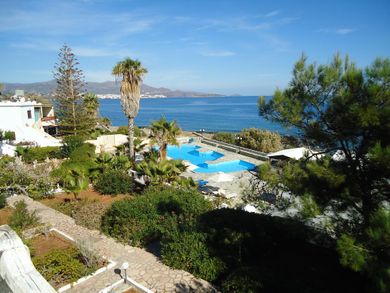
St Nicolas Bay Resort & Villas
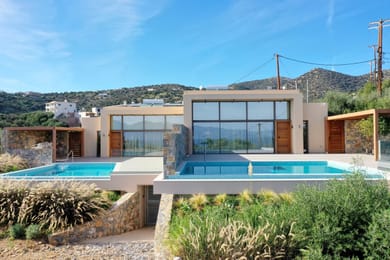
Her luxury call – a resort peninsula on Mirabello Bay, minutes from town. Her mid-range call: Hotel Polydoros, by the lake.
9.2 Alternative places to stay
Agios NikolaosDay 1
Voulisma & dinner above the lake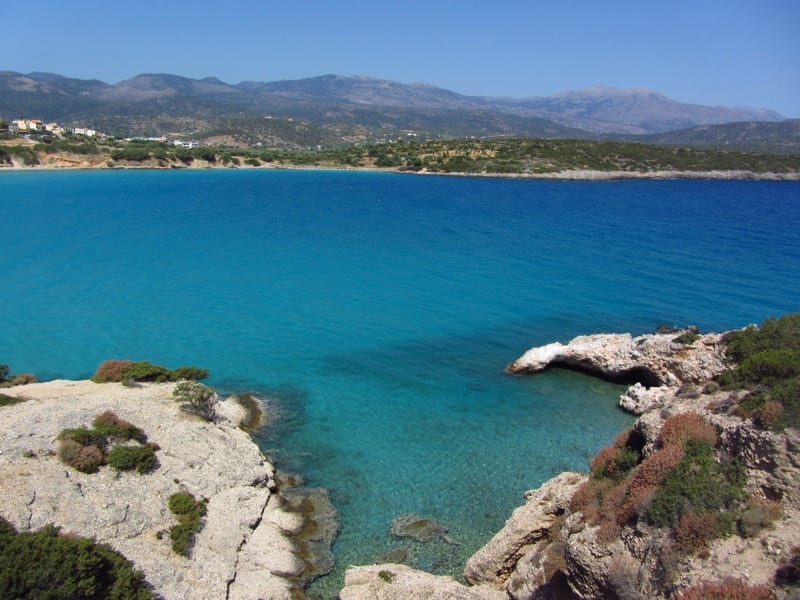
Voulisma Beach (Istron Bay)
The "Caribbean of Crete" – a curving white-sand beach in the bay of Istron, twenty minutes east of Agios Nikolaos, with shallow turquoise water and small tavernas at the back. Crowded in August but unforgettable. Pair with the smaller, quieter neighbouring coves of Karavostasi and Big Bay if you want to escape the crowds.
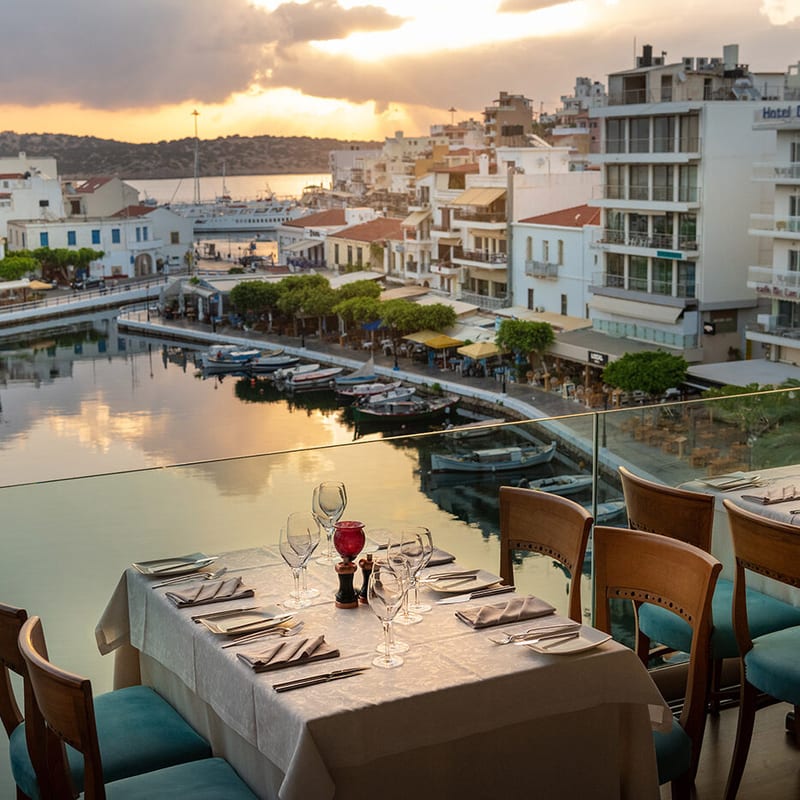
Migomis
Sandy sends you here for the Agios Nikolaos evening: "a great meal and unforgettable sunset views" over the water. Book the railing, time it for the last hour of light.
Agios NikolaosDay 2
Spinalonga & Elounda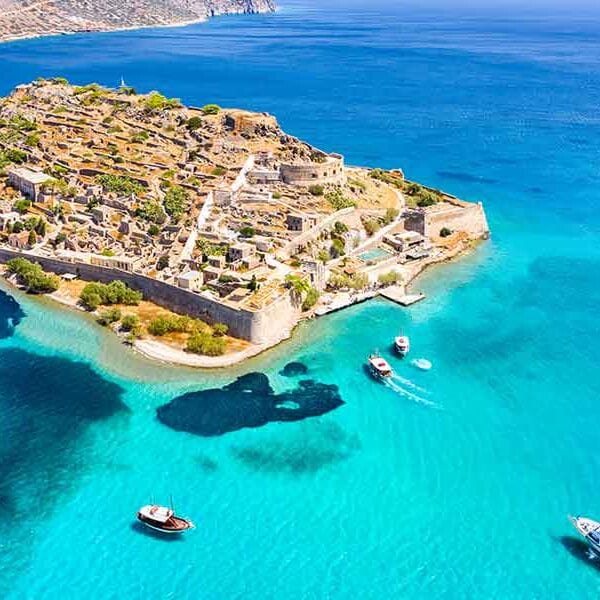
Spinalonga Boat Tour with BBQ
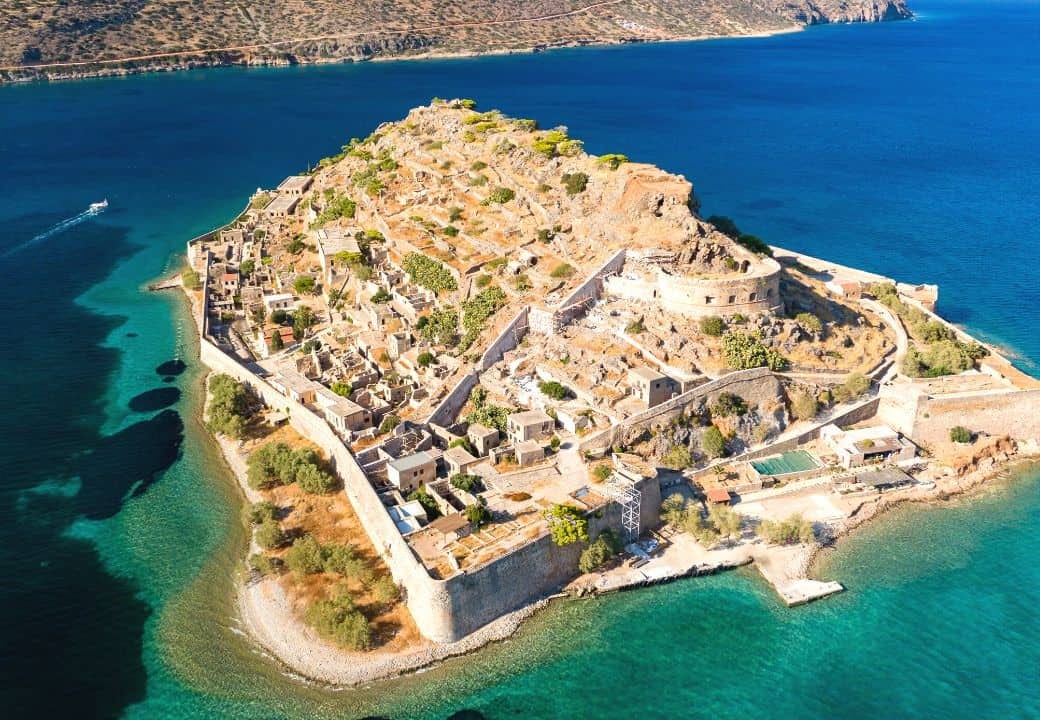
Sandy ranks the Spinalonga boat trip among Crete's top experiences. The island was a Venetian fortress, then an Ottoman village, then – most famously – a leper colony until 1957. Walking the perimeter and reading the small plaques takes about an hour; pair with a BBQ stop on one of the nearby coves on the return.
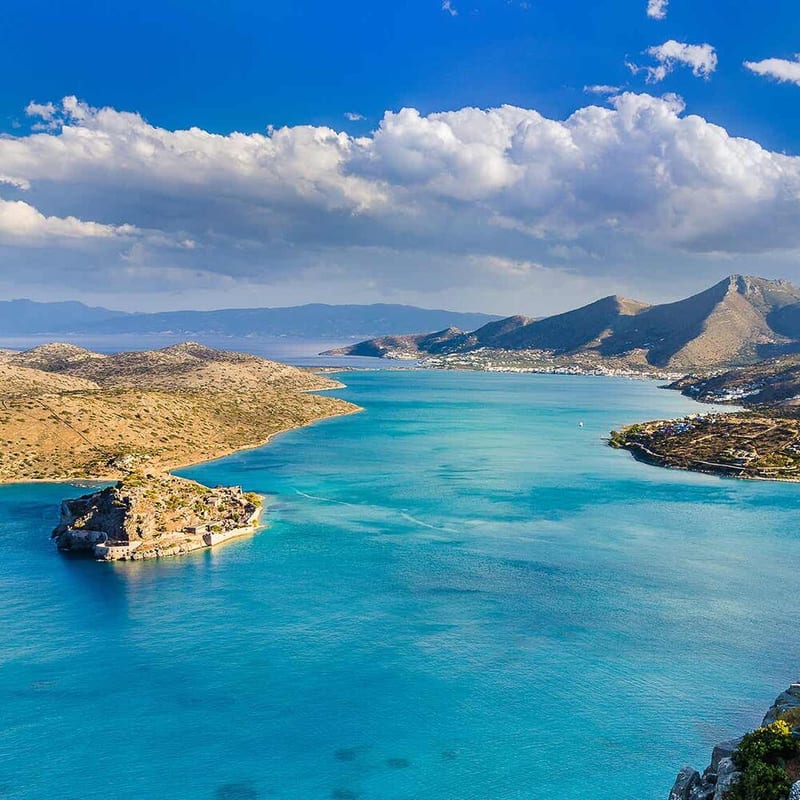
Elounda
A few kilometres north of Agios Nikolaos, Elounda spreads along a sheltered bay across from Spinalonga – historically a fishing village, now home to some of Crete's best-known luxury resorts. The waterfront is the draw: tavernas with their tables on the rocks, slow seafood lunches, the island opposite for context. Walk the breakwater out to the sunken city of Olous (the foundations are still visible underwater) and stay for a long dinner.
Agios NikolaosDay 3
The Lasithi Plateau & the cave of Zeus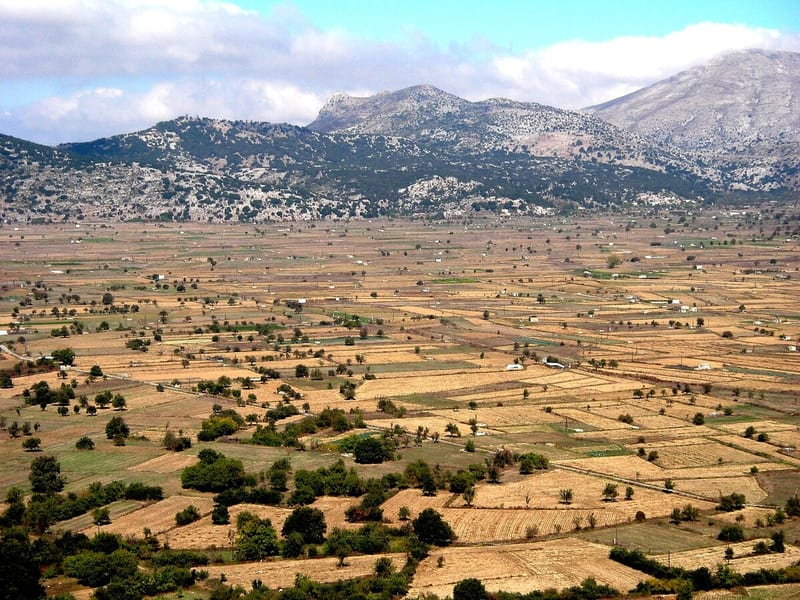
Lasithi Plateau
An hour's climb out of Agios Nikolaos and you're on the Lasithi Plateau – a high, flat valley ringed by mountains, scattered with stone-walled fields and white-sailed windmills that used to power the irrigation. Most of the windmills are decorative now, but the plateau is still farmed; the loop drive through Tzermiado, Agios Georgios and Psychro is one of the great Cretan country roads. Pair with Dikteon Cave at the south end.
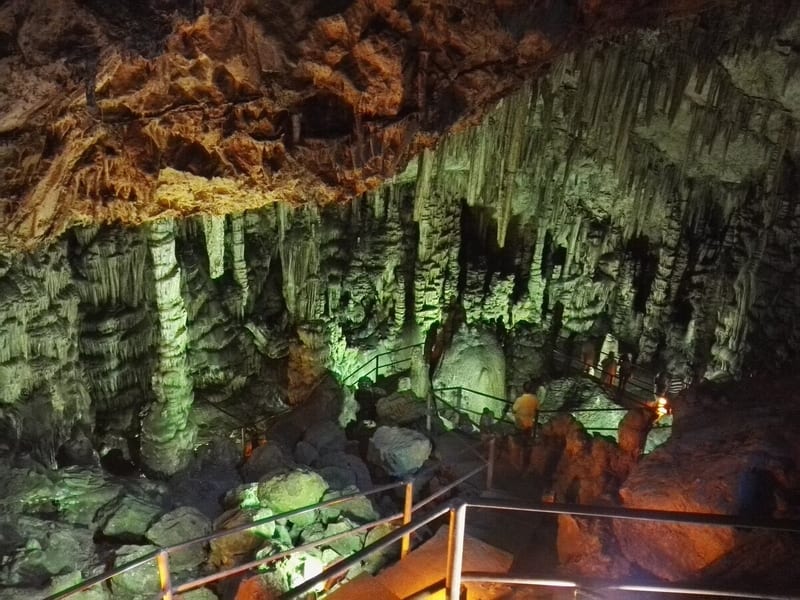
Dikteon Cave
According to myth this is where Zeus was hidden as an infant from his father Cronus – a cathedral-sized chamber with stalactites and an underground pool, set into the southern wall of the Lasithi Plateau. The climb up from the village of Psychro is fifteen minutes on a stone path; the cave itself takes about forty minutes to walk. Cool inside even in August. Wear grippy shoes – the path down inside is wet.
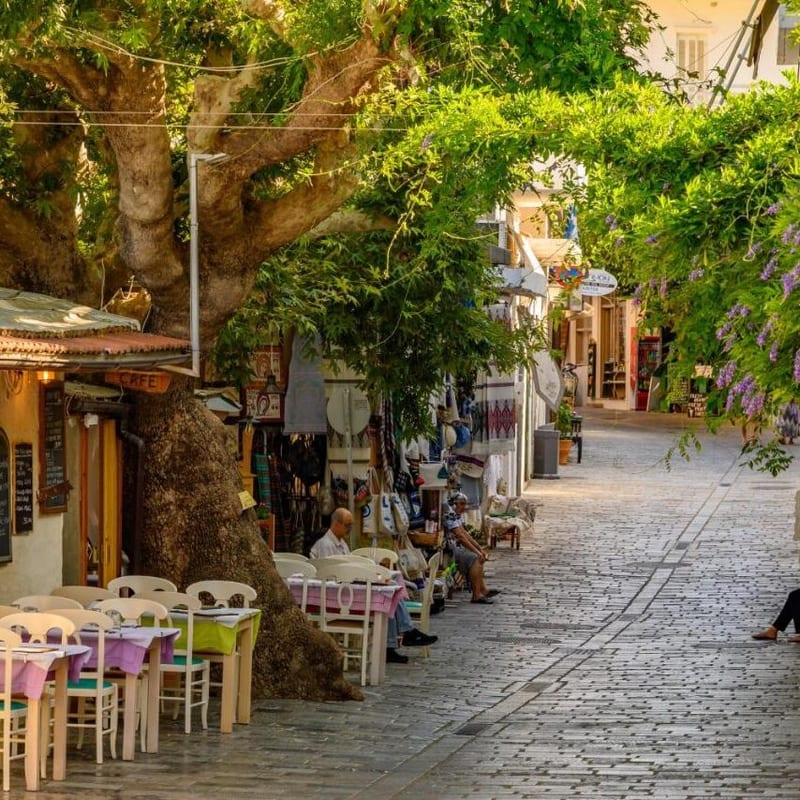
Kritsa Village
One of Crete's most photogenic mountain villages – a steep cluster of whitewashed houses, narrow stone alleys, and a famous co-op of weavers selling handmade textiles from doorways. Eleven kilometers inland from Agios Nikolaos, perched in the foothills of the Lasithi mountains, with views all the way down to Mirabello Bay. The 13th-century Panagia Kera church on the way is one of the most important Byzantine churches in Crete.
Heraklion
Days 11–14 of 14 · 4 nightsFour nights to close the trip – Knossos and the Archaeological Museum (read in tandem, they are one of the great archaeological pairings in Europe), then the south coast in earnest: Matala and Phaistos, Kommos and the Agia Marina donkeys, and a last swim in the coves past Matala – with a Peskesi dinner to open the stay and the morning flight out of Heraklion to close it.
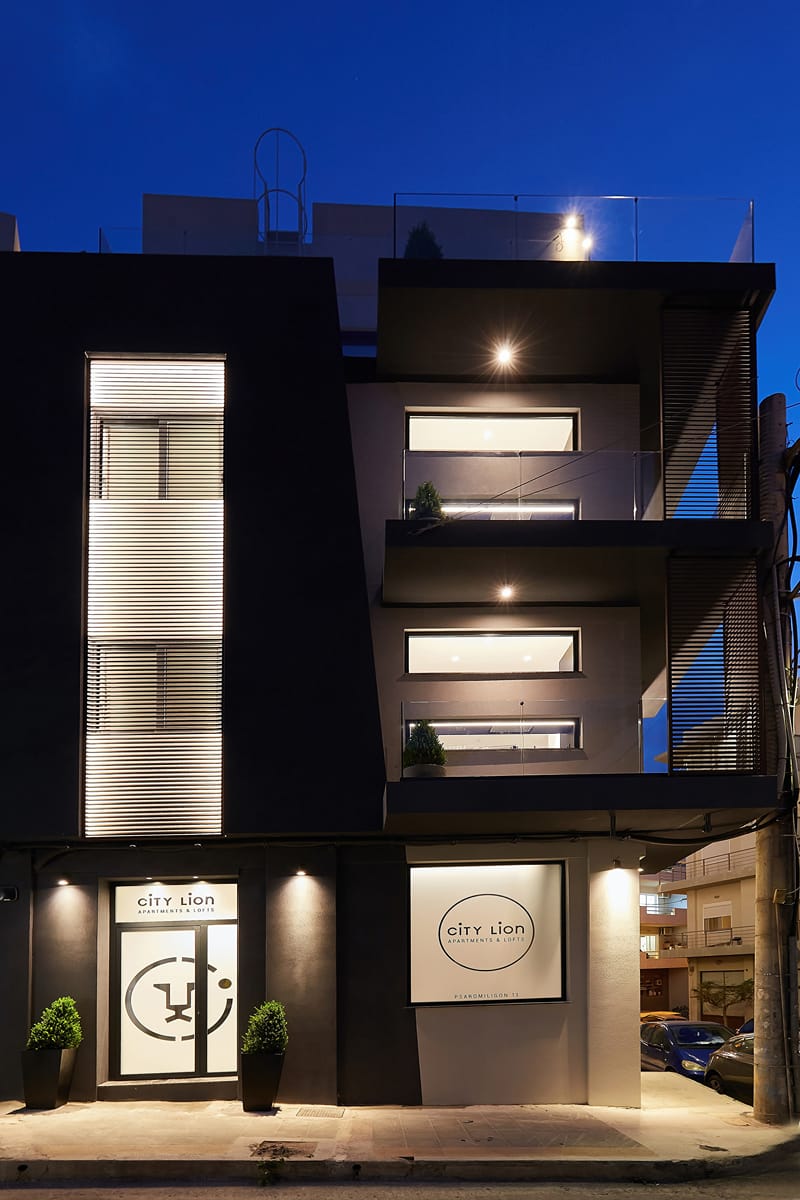
City Lion Heraklion
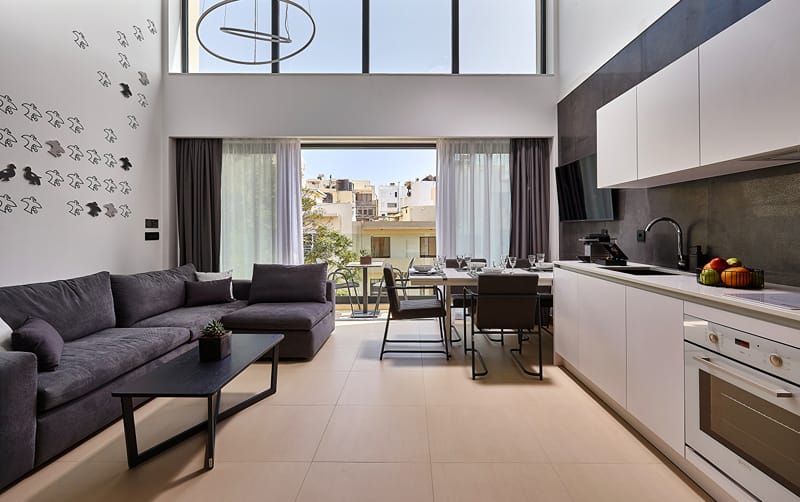
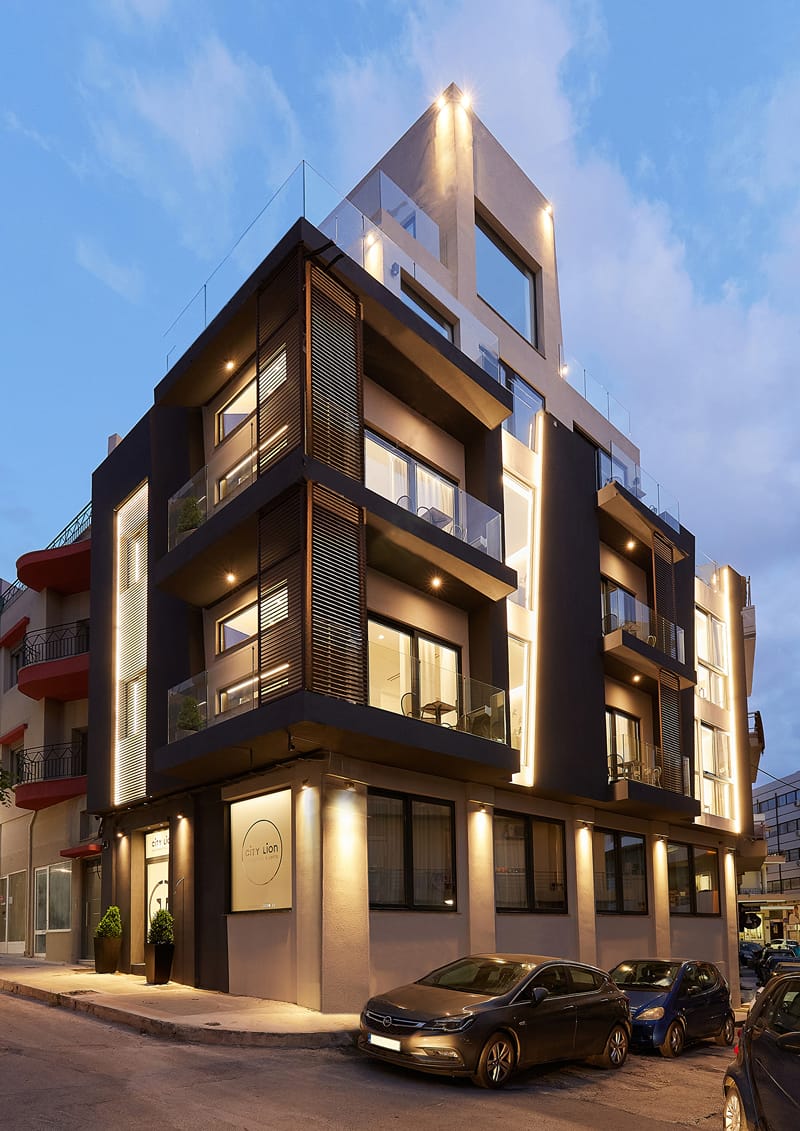
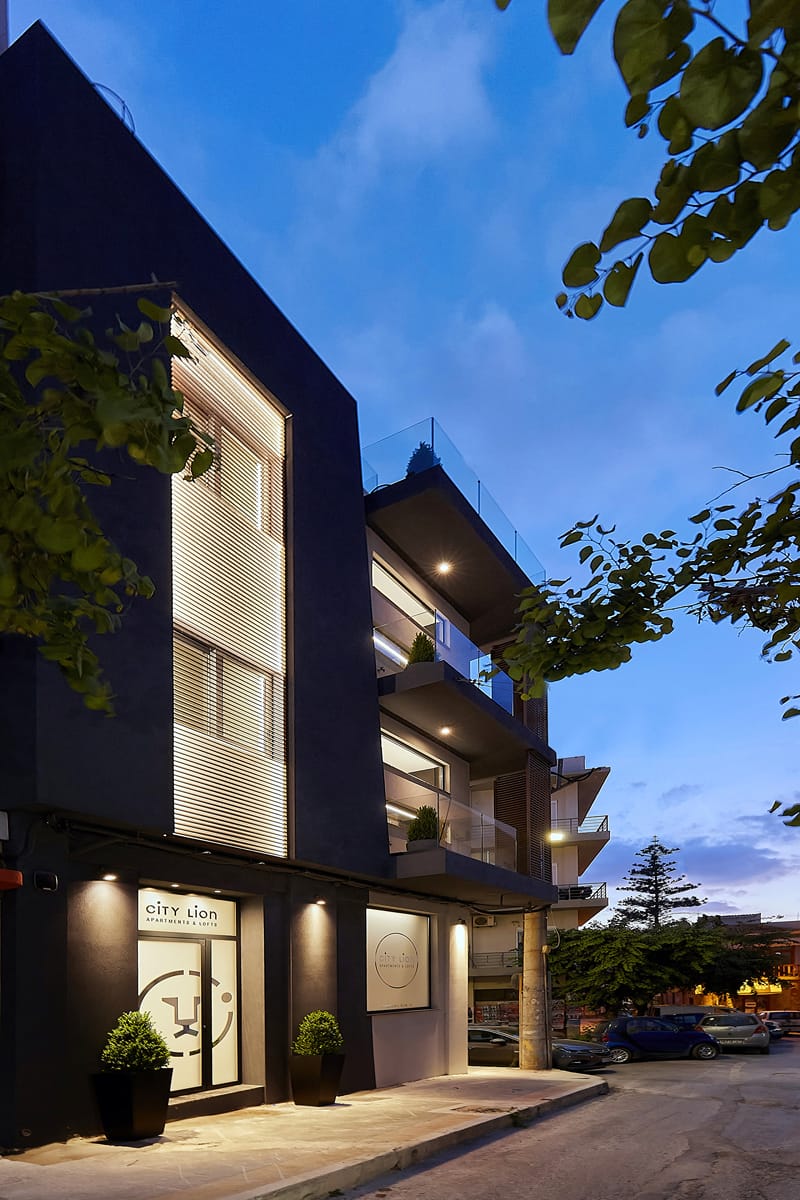
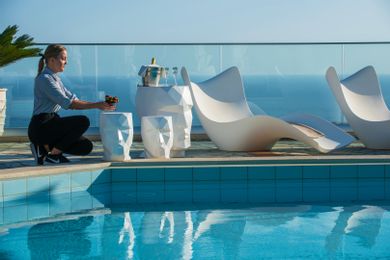
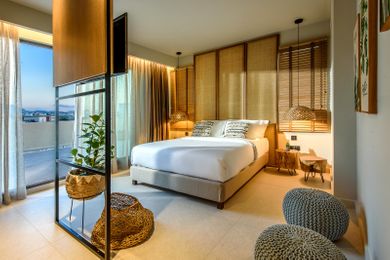
Modern apartments in the heart of the old town, walkable to the museum and the harbour.
9.6 Alternative places to stay

HeraklionDay 1
Knossos & the Archaeological Museum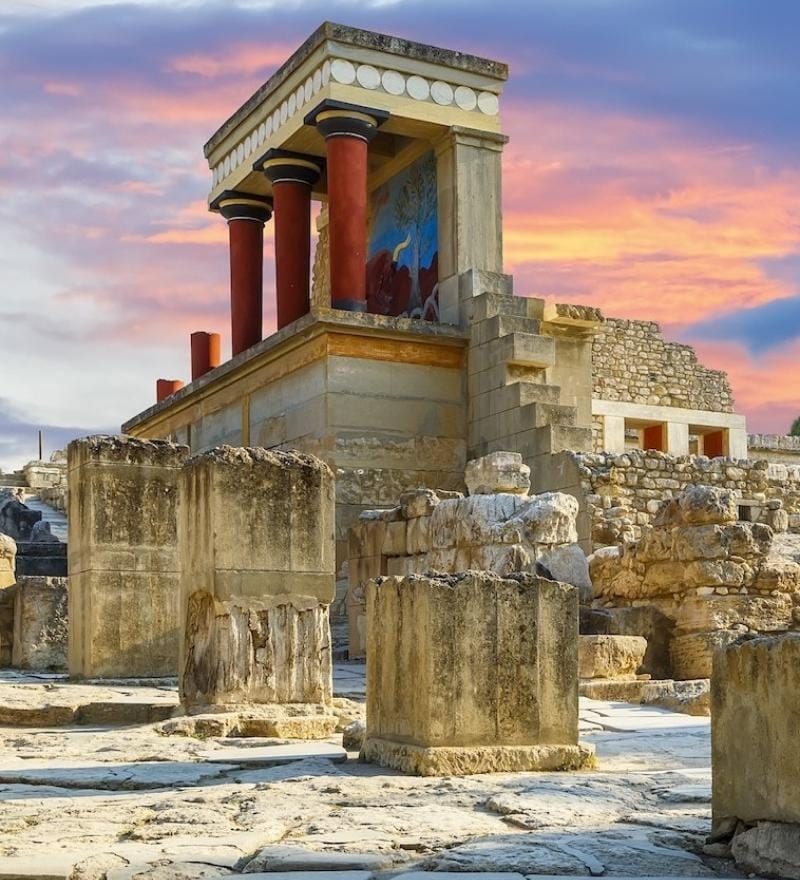
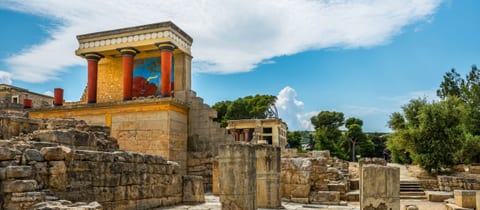
Knossos Palace
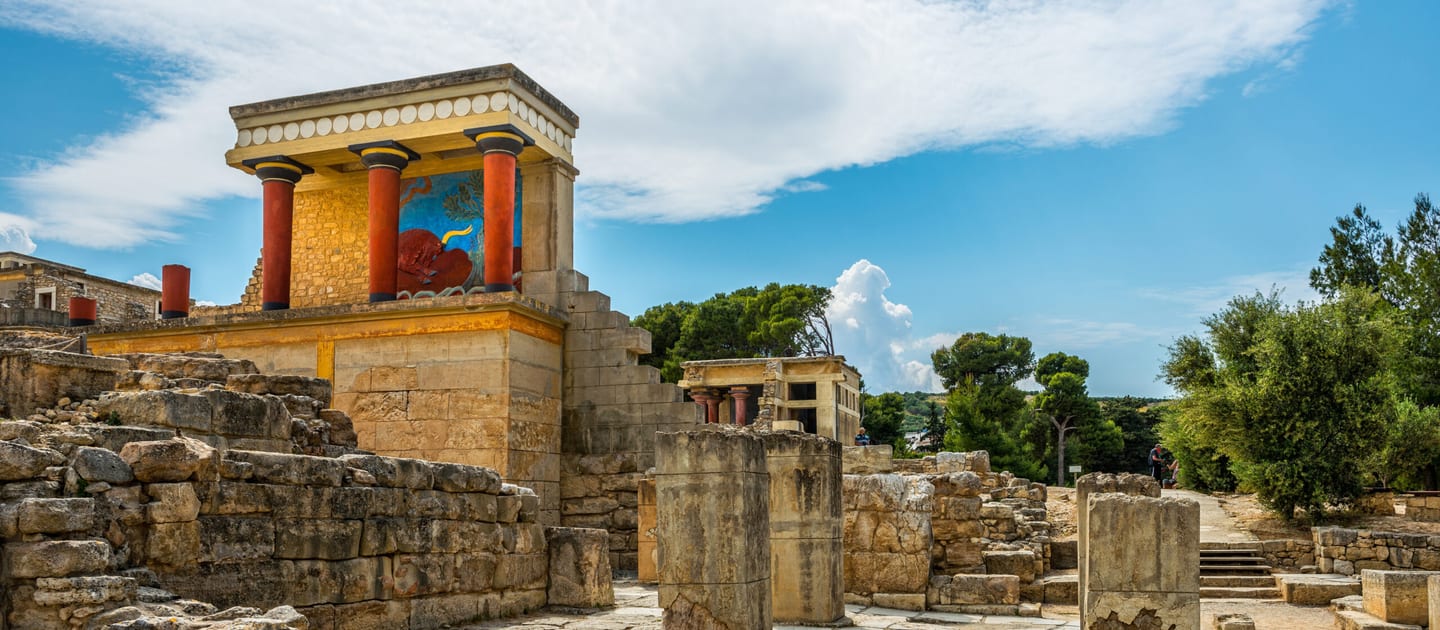
The most famous Minoan palace – and the most reconstructed, which is part of why Knossos is divisive. Arthur Evans's restored frescoes and red columns are part of the place's identity now. Pair the visit with the Archaeological Museum in town to see the originals; one without the other is half the story.
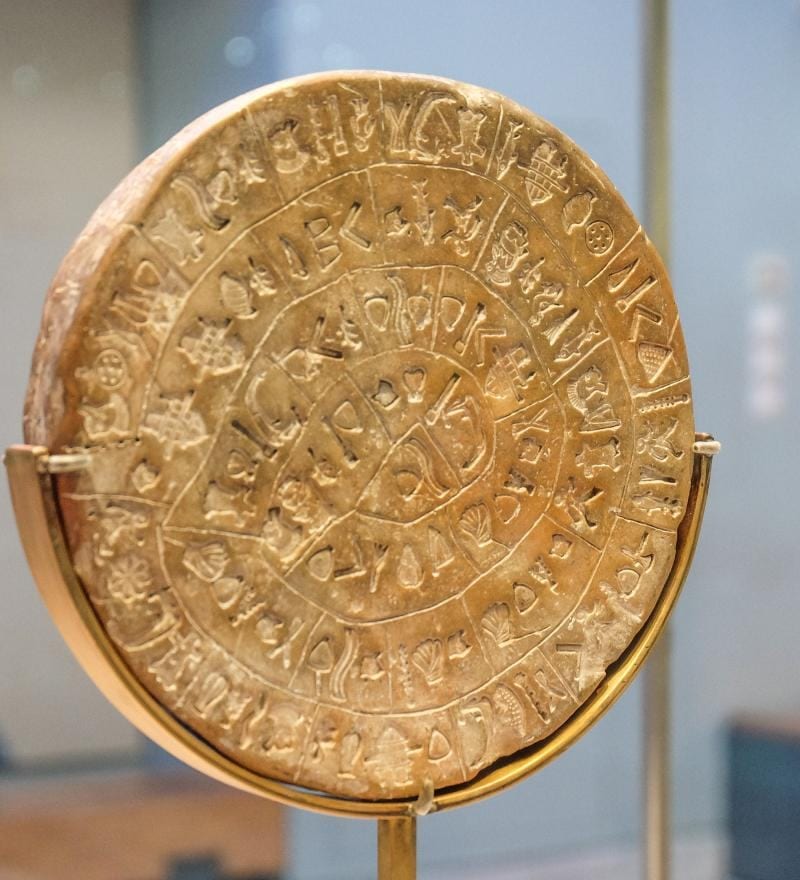
Heraklion Archaeological Museum
Magnificent 3,500-year-old frescoes from Knossos, including Prince of the Lilies and Bull-Leaping, are on display at this museum. Be sure to check out the Snake Goddess, a glazed ceramic figurine of a lady holding two snakes, dated 1600 BC, and the Phaistos Disk, a clay disc bearing a curious spiral of symbols from around 100 BC. The museum's treasures are spread out over 27 different galleries and cover more than 5,500 years of history. The courtyard area has the preserved remains of the Venetian Monastery of St. Francis, destroyed in an earthquake in 1856. This world-class museum is Heraklion's principal tourist attraction, apart from the actual site of Knossos, and lies in the eastern part of the old town.
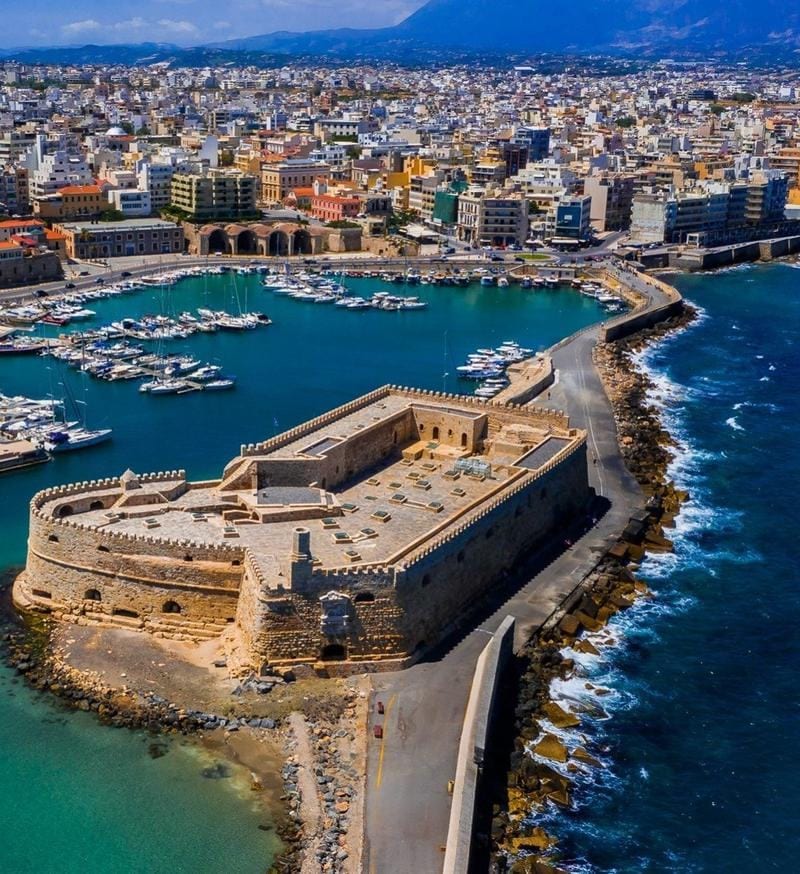
Koules Fortress
Guarding the Venetian harbour is a square-shaped fort built when the island was under the control of the Republic of Venice in the 16th century. Koules Fortress went up between 1524 and 1540 and took the place of an earlier fort built after the Venetians first took Heraklion in the 1200s. It’s no mystery why Koules Fortress has stood the test of time, as it was built to last, and has external walls up to 8.7 metres thick. The building was involved in the second-longest siege of all time, during the Siege of Candia (Heraklion), when the Ottomans were at the gates for 21 years from 1648 to 1669 before the city finally fell. The fort’s upper level has a clear view of the harbour, while in the vaulted passageways below are cannons, hundreds of cannonballs, piles of amphorae, information panels and a brief film about the history of the fort.
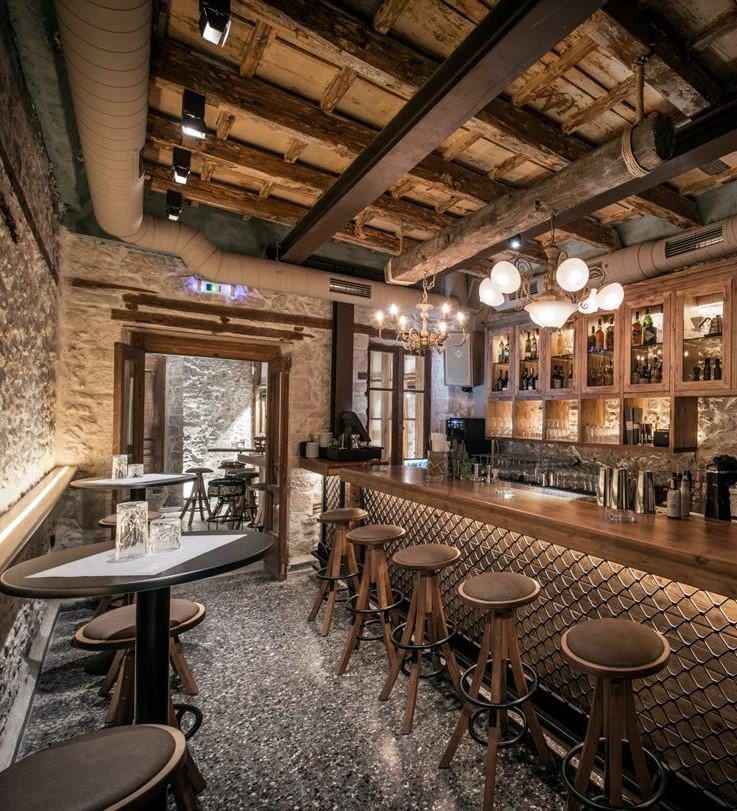
Peskesi
Farm-to-stone-table Cretan cooking in a restored mansion – the EU's pick for Best Organic Restaurant in Europe. Peskesi grows its ingredients on a 60-acre farm in Harasso, revives forgotten Cretan recipes, and serves them in rooms where the stone walls have witnessed centuries of meals. Wild herbs, raw honey, olive oil pressed from their own groves. The menu reads like an edible archive of the island: dakos with aged myzithra, slow-braised lamb with stamnagathi, desserts built on carob and petimezi. Arrive hungry; portions honor the Cretan tradition of abundance. Reservations recommended.
HeraklionDay 2
Matala & the Dafnes vineyards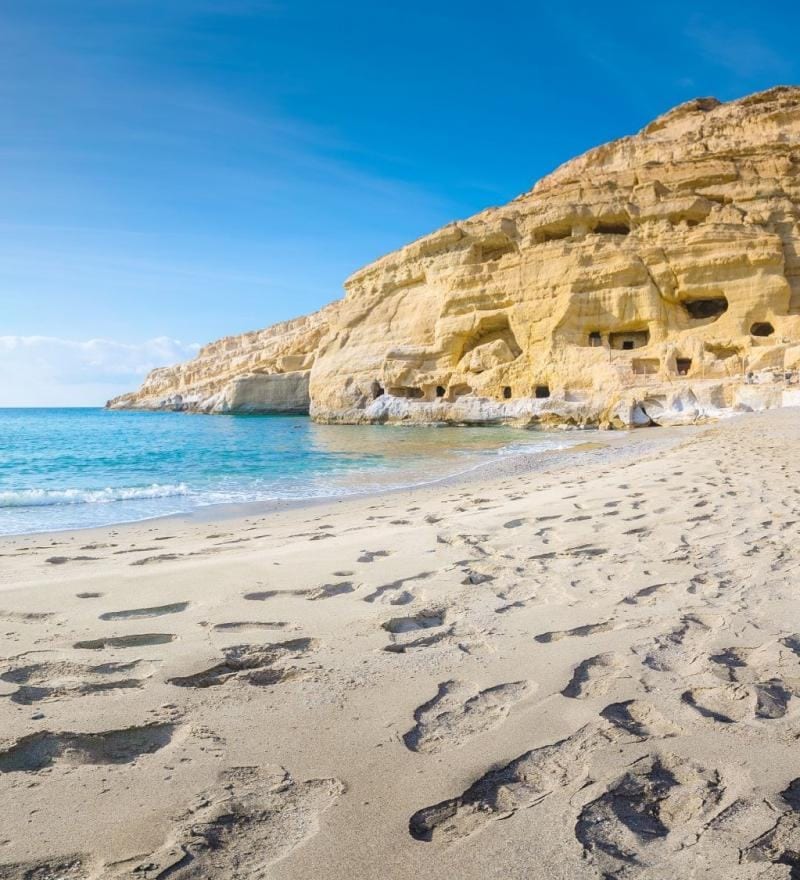
Matala beach
Matala is the cliff-cave beach made famous by Joni Mitchell and the 1960s – the Roman-era tombs cut into the cliff face are still there, and the bay below keeps its long sandy sweep. Swim out past the rock line and look back at the caves as the light moves across them. Pair the visit with a winery stop in the Dafnes hills on the drive back – Phaistos and the south coast fill the next two days.
Douloufakis Winery
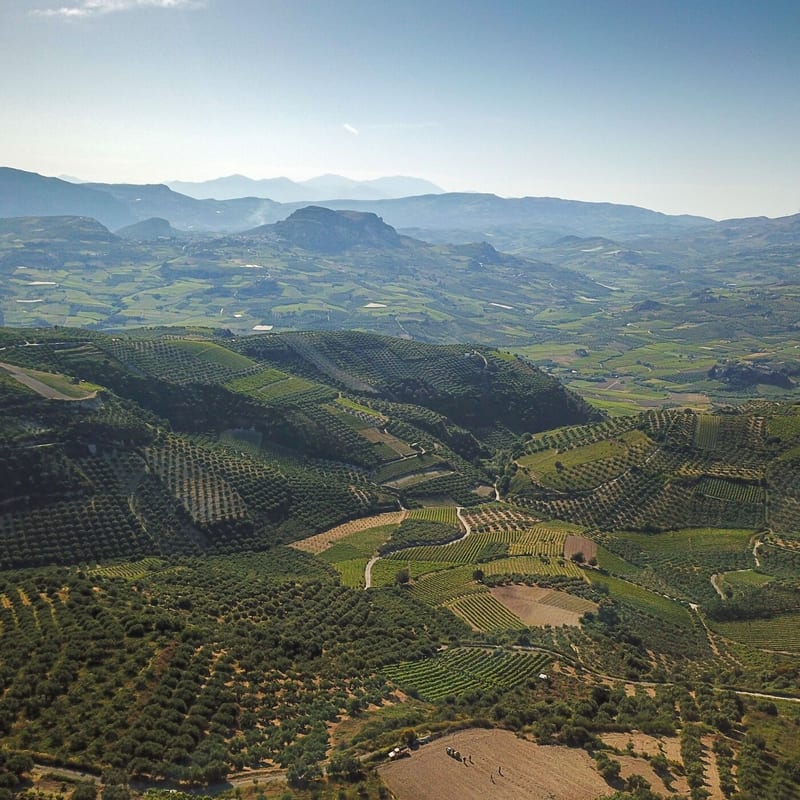
Family-run for four generations in the Dafnes wine region west of Heraklion, Douloufakis champions indigenous Cretan varieties – Vidiano, Vilana, Plyto, Liatiko – pressed and aged in a modern cellar carved into the hillside. The tasting room overlooks the vines; flights are paired with bread, the family's olive oil, and local cheeses. Visits are intimate (book ahead), the staff speak unhurried English, and the wines hold up against anywhere on the mainland. Less than 30 minutes from the port – pair with neighbouring Lyrarakis for a fuller day among the vines.
HeraklionDay 3
Phaistos, the donkey rescue & Kommos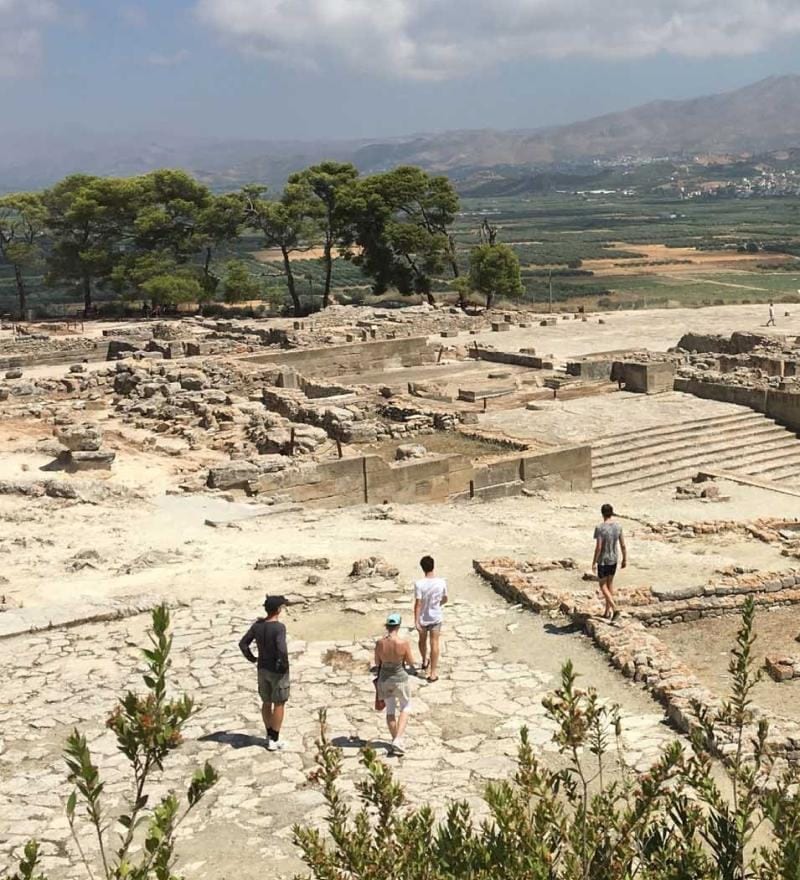
Phaistos
The second-largest Minoan palace, perched on a hill over the Messara plain. Less reconstructed than Knossos and quieter for it; the Phaistos Disc (whose script is still undeciphered) was found here. Stop on the south-Crete day after Matala.
Agia Marina Donkey Rescue
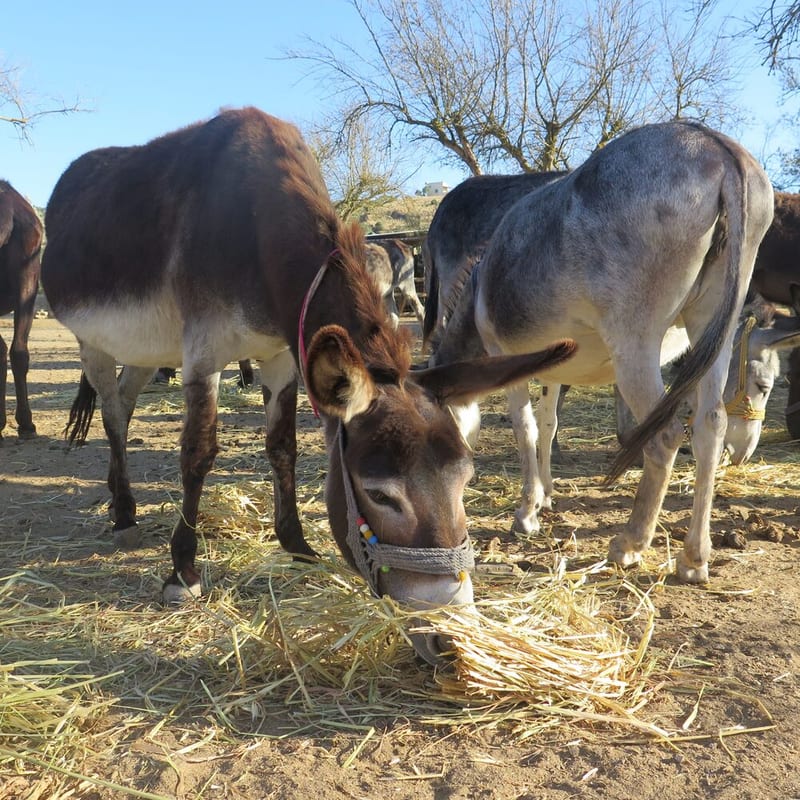
"Be sure to stop," says Sandy – her readers' Facebook group sponsors two of the residents, Angelis and his mother Limeni. Say hello to them; purchases and donations go straight to the animals' care.
Kommos Beach
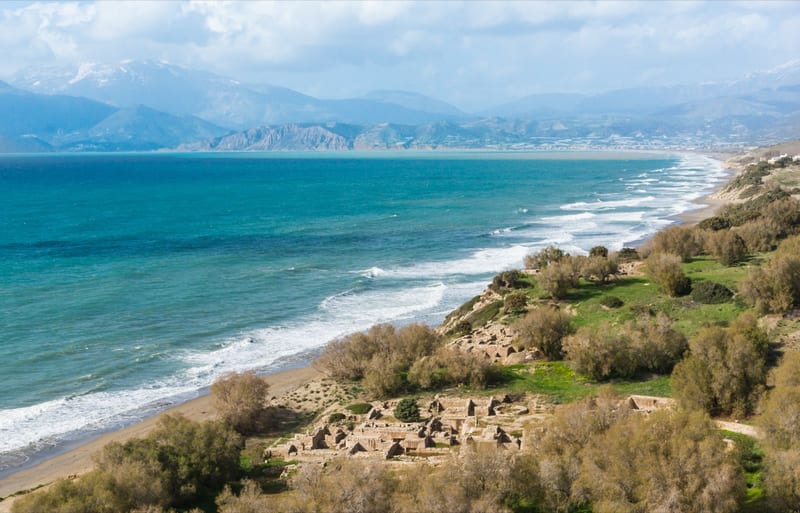
Kommos is the kind of beach Crete does effortlessly – a long, wide sweep of pale sand south of Phaistos, washed by clean blue water and backed in spring by the snow-capped Psiloritis range. At its northern end lie the ruins of a Minoan harbour town, the port that once served Phaistos, its streets and storerooms still visible behind a low fence. The central stretch has a taverna or two and a few loungers; the southern end stays wild and quiet. The water deepens quickly and can pick up an afternoon breeze. Pair the ruins with a long swim in one easy morning.
HeraklionDay 4
Last swims – Agiofarango & Red Beach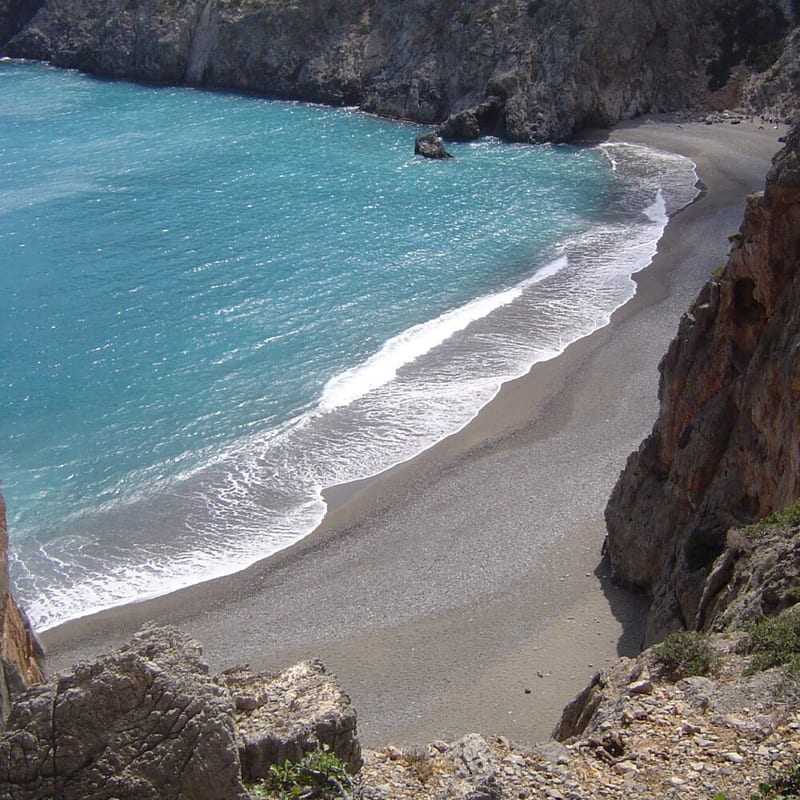
Agiofarango Gorge
Agiofarango is the south coast at its most elemental – a short, easy walk down a dry gorge in the Asterousia mountains that opens, all at once, onto a flawless pebble cove on the Libyan Sea. Climbers come for the sheer limestone walls; everyone else comes for the swim and the silence. Halfway down stands the tiny chapel of Agios Antonios, and near the shore a deep round cistern the old hermits used. There are no tavernas and no loungers – bring water, food and shade. The trailhead is a rough drive past Odigitria monastery, then about 25 minutes on foot. The reward is a beach you will not forget.
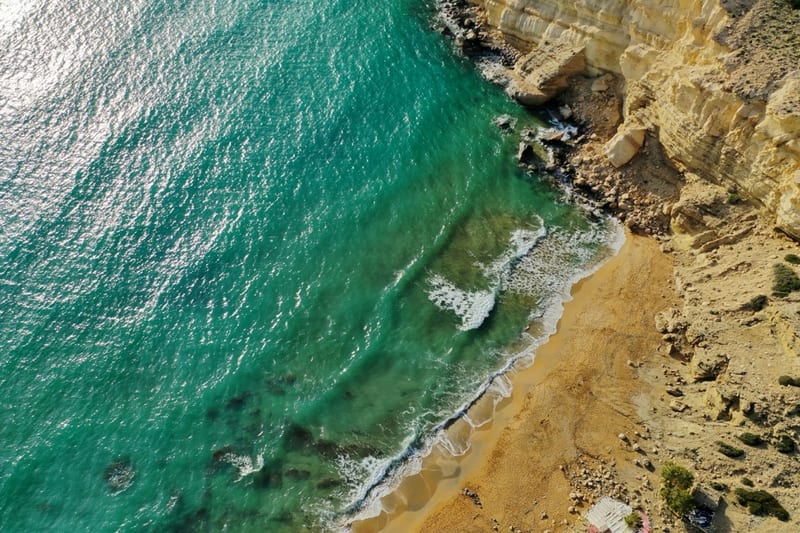
Red Beach (Matala)
Over the rocky headland south of Matala, a 20-minute footpath climbs and drops to Red Beach – Kokkini Ammos – a cove of coarse red-gold sand under ochre cliffs, open to deep, clear water. The walk keeps the crowds thinner than Matala's main strand, and the swimming is some of the best on this coast. A single seasonal canteen is the only comfort and shade is scarce, so carry water and something for the sun; trainers make the path easier than flip-flops. It has long drawn a free-spirited, clothing-optional crowd – a quiet echo of Matala's 1960s days. Go in the morning, before the light flattens.
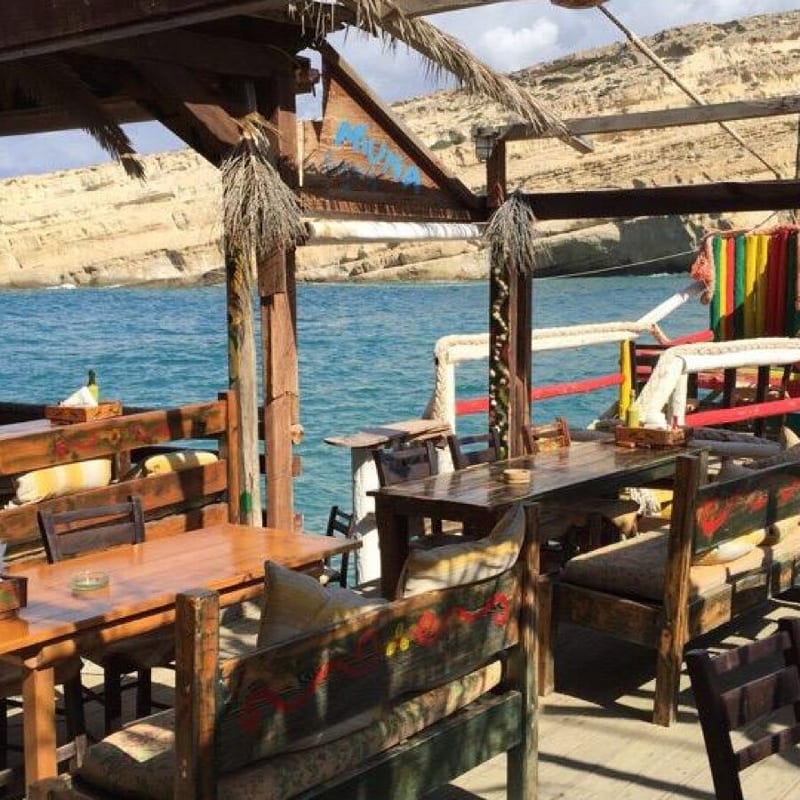
Hakuna Matata
Sandy's beachfront dinner in Matala – "fresh seafood or local dishes like lamb with stamnagathi" as the cave cliff catches the last light across the bay.
Your whole trip in one booking
With WeAreTravelers – a licensed, Athens-based travel agency.
- Zero service fees. Same price as if you organized everything on your own.
- One booking and one payment for the whole trip (instead of separate bookings for each hotel, ferry and flight).
- One local point of contact, who has your back – before you travel, and while you're here.
- Covered by the EU package travel rules. Your payments are protected by law.