 ×
×
 2 Weeks in Greece
 A trip by Sandy PapasGreece Travel Secrets
2 Weeks in Greece
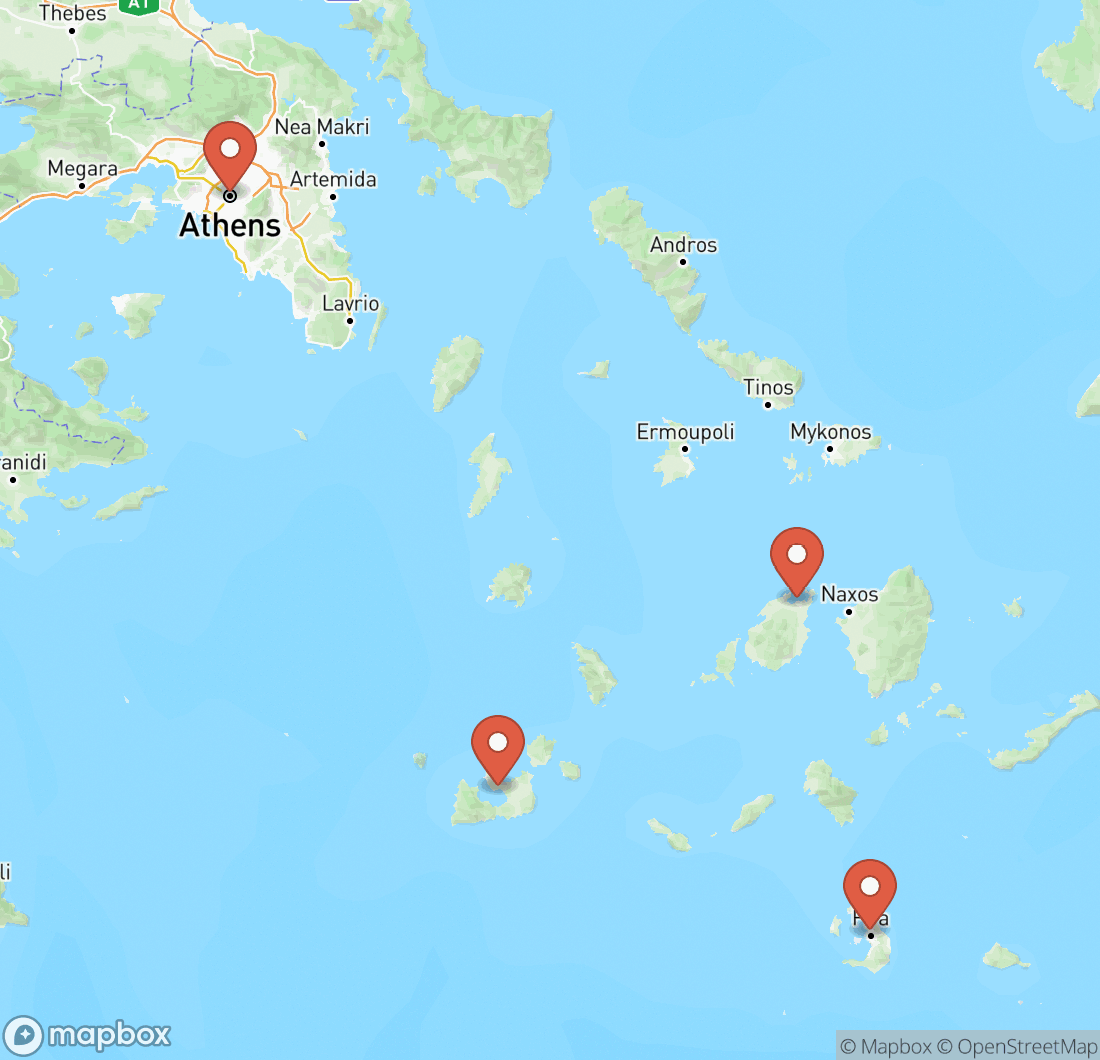
Most first-time visitors to Greece quickly realise why most people return again and again. With so much to see and do and so much diversity across the mainland and the different groups of islands it's impossible to see much in a short time. But if you only have 2 weeks in Greece for your first visit, it is possible to cover a lot of ground and ensure you're planning your next visit before you've even left!
Santorini
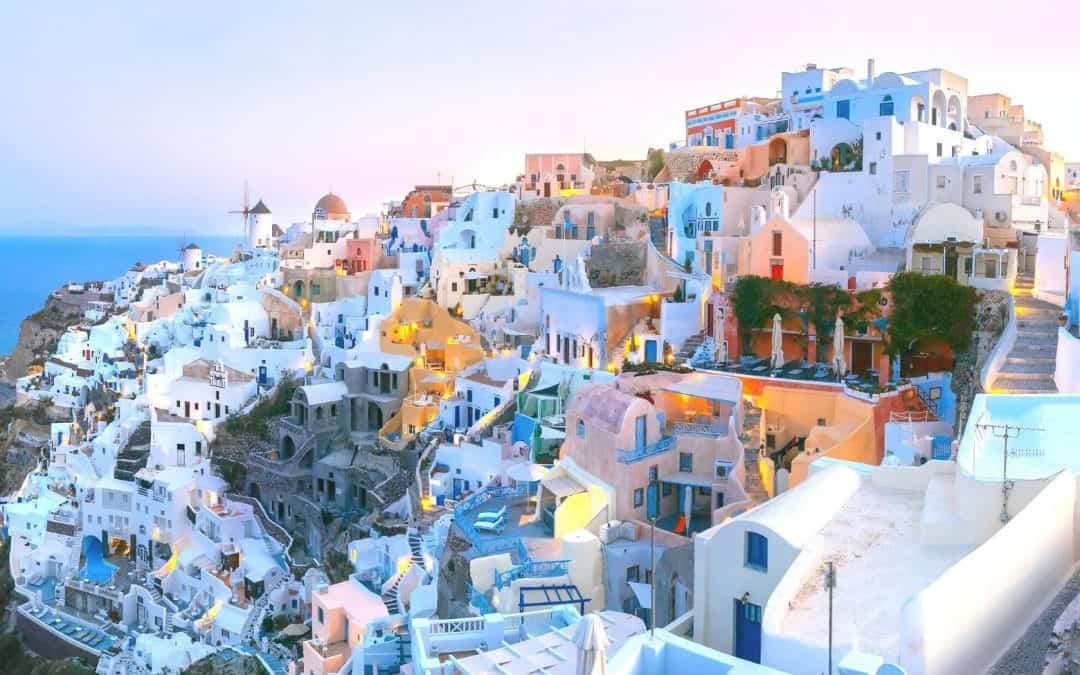
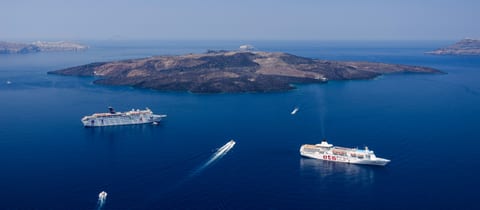
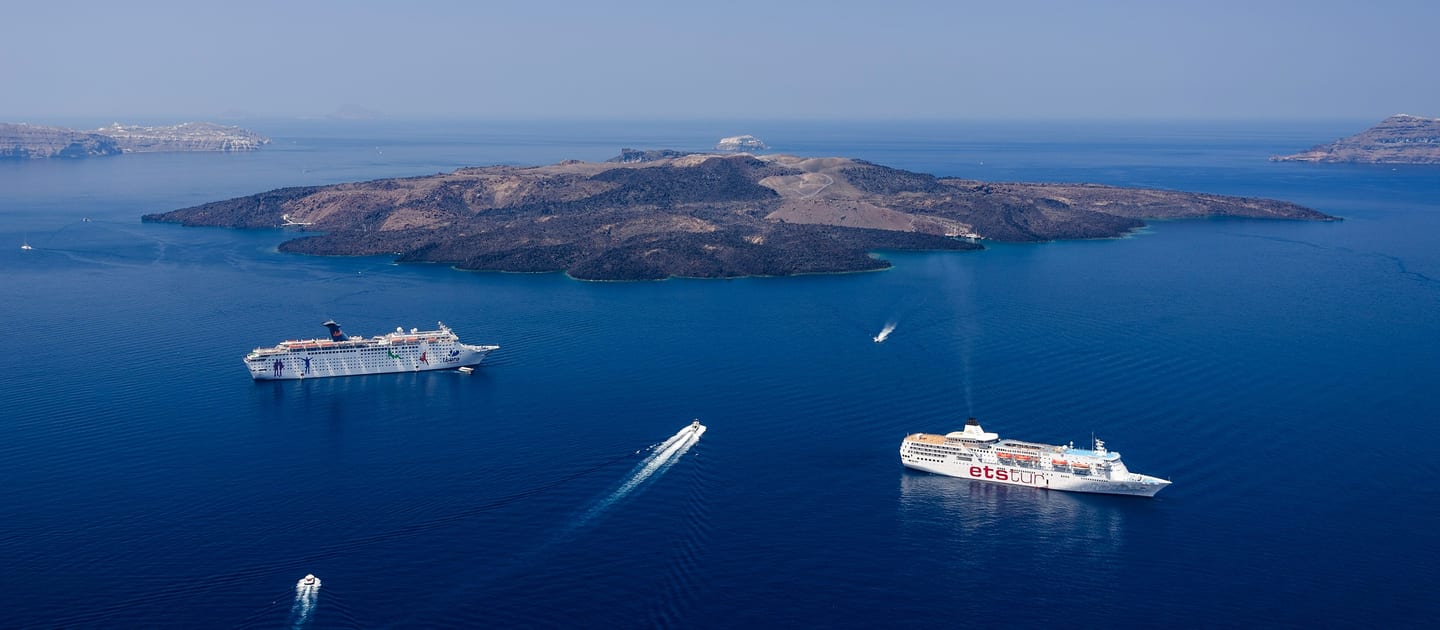
Days 1–3 of 14 · 3 nightsSantorini is a bucket list destination for most people and for good reason. Despite the cruise ships and the crowds, it remains one of those places that not only meets your expectations but probably exceeds them. If you choose where to stay carefully, you can enjoy your own jaw-dropping views over the Caldera and have a place where you can escape from the day trippers.
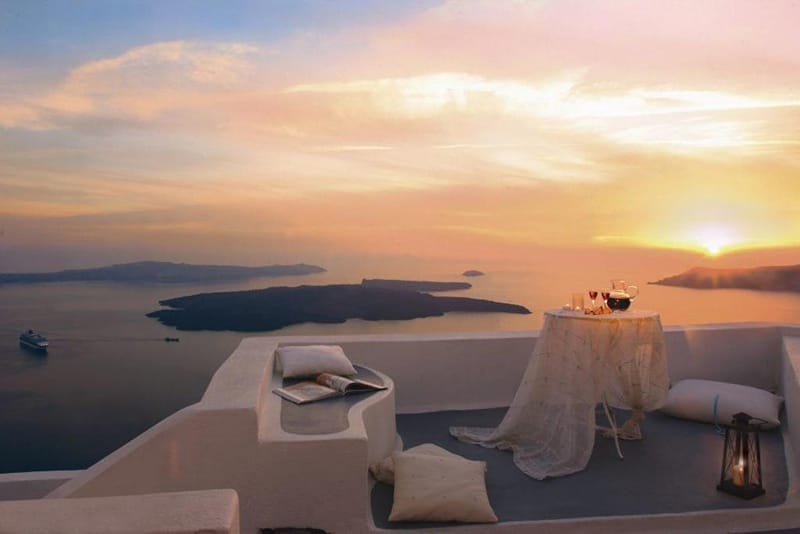
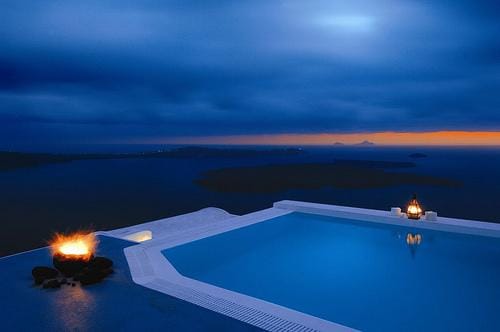
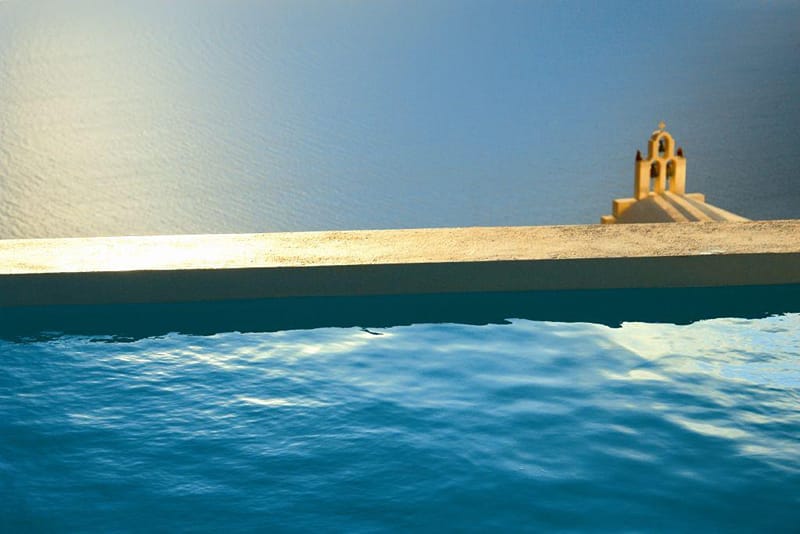
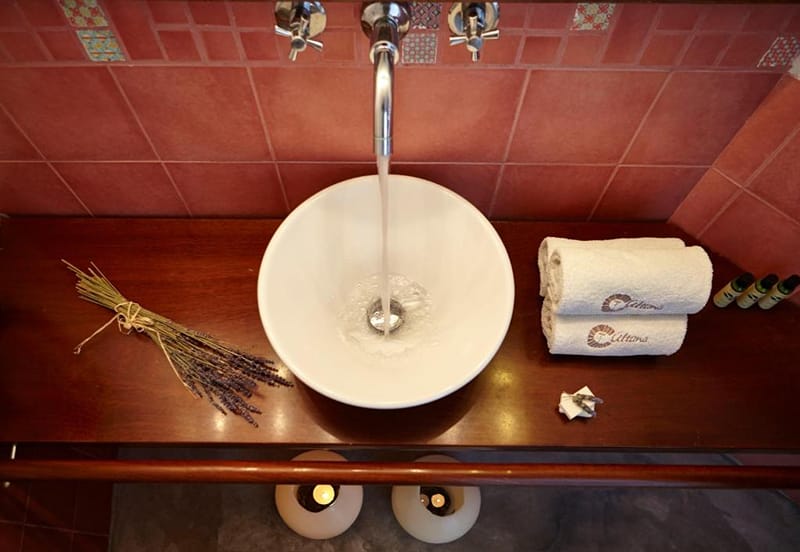
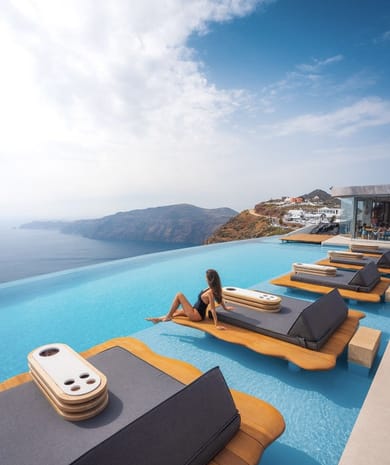
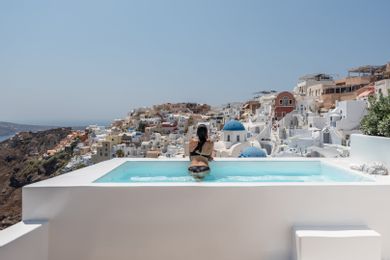
Altana Heritage Suites Santorini
Cave suites and apartments on the Imerovigli caldera edge – a sunset terrace, a small pool, Skaros Rock a short walk away.
 9.9
9.9 Alternative places to stay

SantoriniDay 1
Kamari, Ammoudi Bay & Oia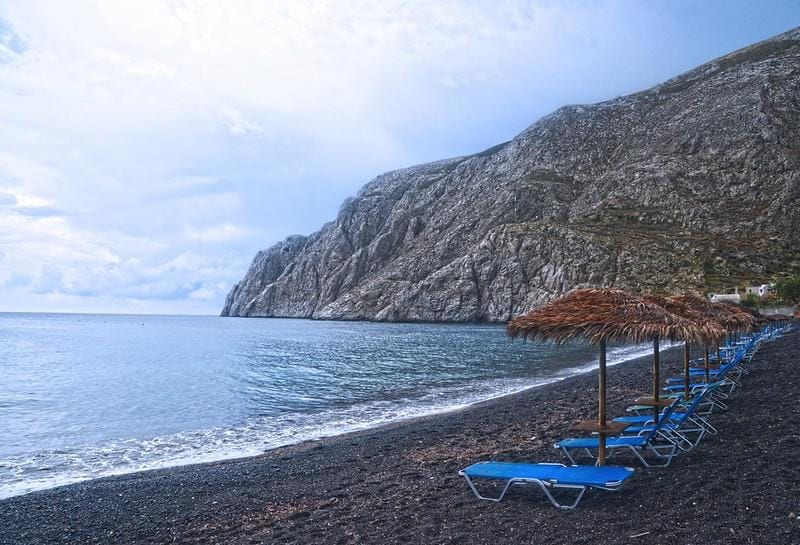
Kamari beach
Kamari Beach is one of the most popular and most visited beach resorts in Santorini. It is located in the seaside village of Kamari. The beach is composed of black volcanic sand and is 5 kilometers long, among the 3 longest beaches in Santorini, with deep crystalline waters and a series of trees. It is fully organized with hundreds of sunbeds and umbrellas, showers, a lifeguard on duty and numerous facilities.
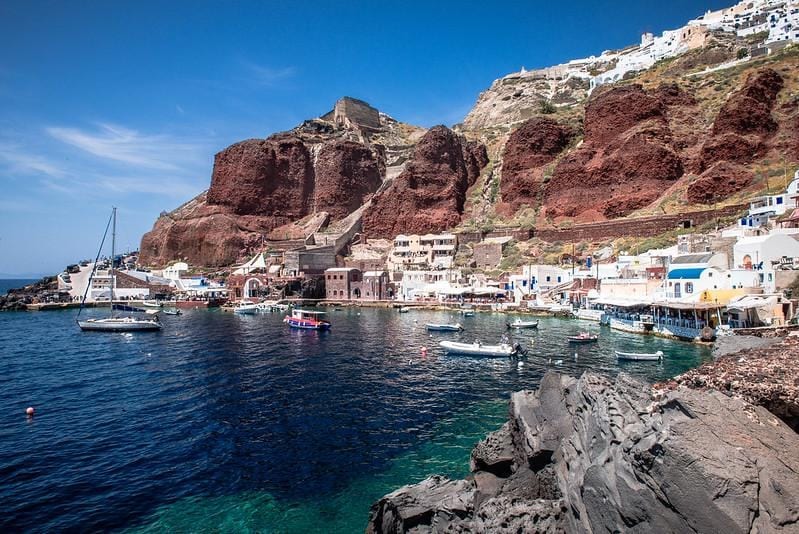
Ammoudi Bay
At the bottom of the scenic village of Oia, lies the charming, small port of Ammoudi. It is a beautiful, tiny cove with crystalline waters and fishing boats lying in the sea. Here there are no beaches, sand, sunbeds and umbrellas but you can have a distinctive experience by swimming from the dock. Nevertheless, it is preferable that you follow the path, past the taverns, that ends up in an awesome diving area with crystal clear waters.
Oia
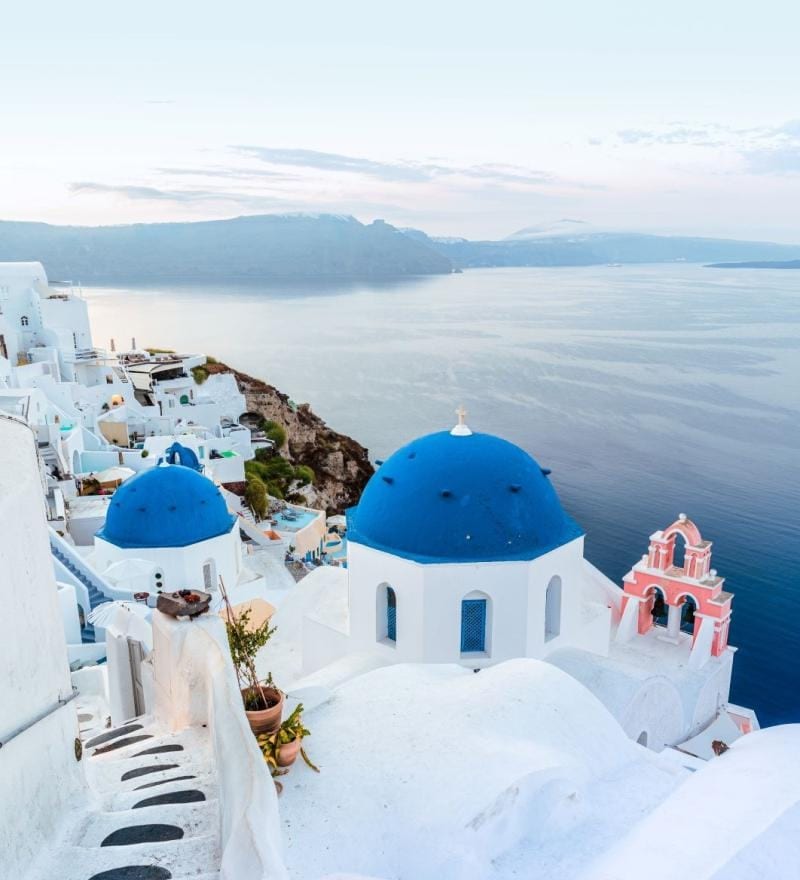
World’s most iconic sunset on this cliffside village of astounding beauty. Narrow alleys wind their way through whitewashed buildings adorned with blue-domed churches and vibrant bougainvillea, while the island’s caldera and the azure sea, stretching out as far as the eye can see, offer a dramatic backdrop to the scene. Visitors can explore the village's charming streets, lined with boutiques and cafes, and soak in the laid-back atmosphere. Oia was the first village in Greece to become a heritage site as its greatest part has been built below ground level partly hewn within the rock. As the sun sets, the sky transforms into a riot of colors, making for an unforgettable experience that will stay with visitors long after they've left this magical place.
Strogili
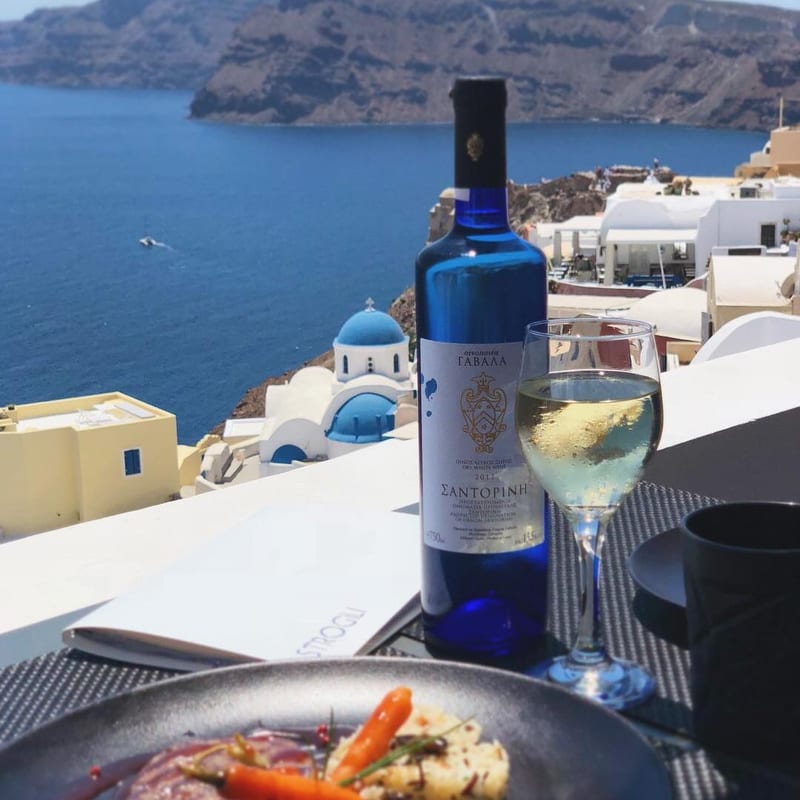
Walk Oia in the afternoon, then book a restaurant like Strogili for dinner at sunset. Do the booking before you fly – a caldera table on the walkway is not something Oia hands out on the night.
SantoriniDay 2
The Wine Tasting Tour & the Greek Wedding Show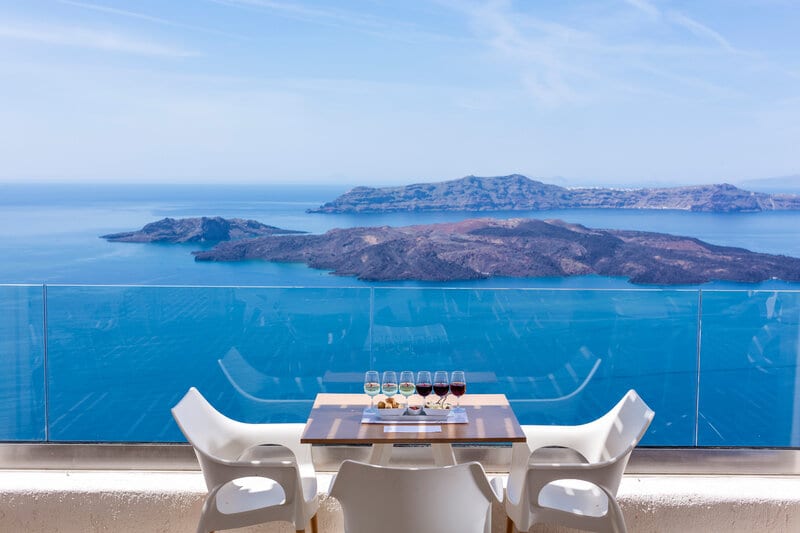
Wine Tasting Tour
Santorini's wineries cluster around Pyrgos and Megalochori on the south of the island – Santo (the biggest, with sunset terraces), Domaine Sigalas, Argyros Estate. A guided tour with a sommelier is the easy way to do four in an afternoon; finish at Santo for the sunset.
The Greek Wedding Show
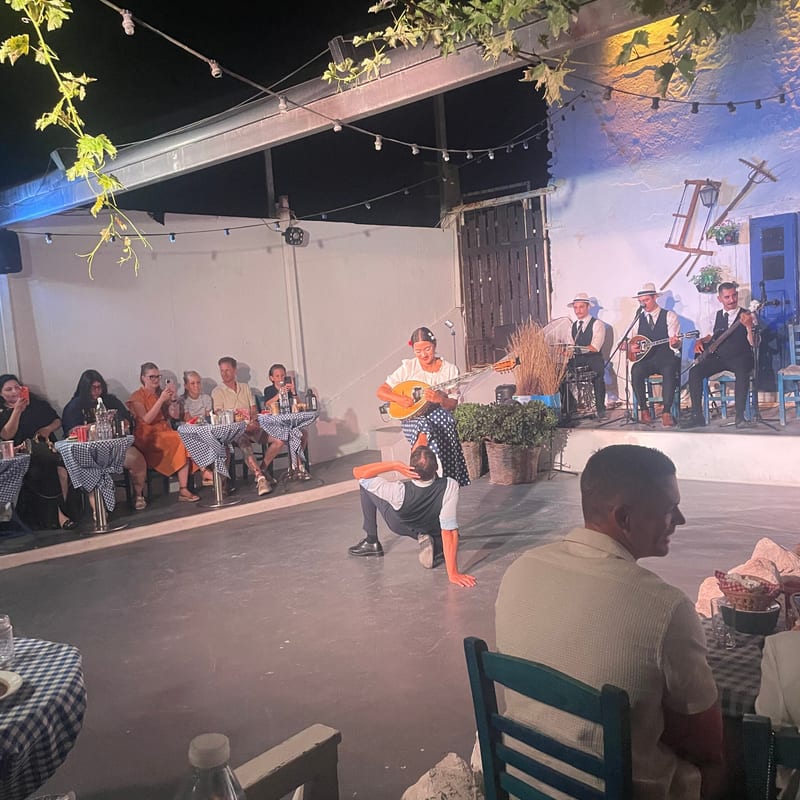
Do a highlights tour including wine tasting and sunset. If you're up for it, then take in The Greek Wedding Show too! It closes the island's biggest day – tour, wine, caldera sunset – and it asks nothing of you but turning up hungry and willing to dance.
SantoriniDay 3
Red Beach, Akrotiri & Lost Atlantis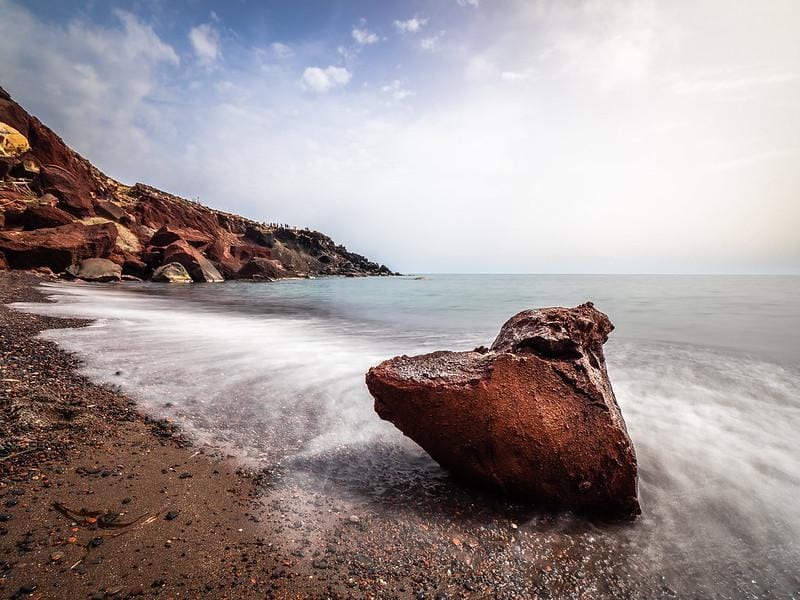
Red Beach
A huge attraction of the island and arguably the most famous beach lies on the southernmost part of Santorini. It is located in Akrotiri village, 12 kilometers south west of Fira. Red Beach is without a doubt worth a visit considering that it is a rare sight, probably unique in the whole world, where red is the dominant color. It is enclosed by steep red hills that create a captivating, wild scenery. If you stand on the top you will set eyes on enormous volcanic rocks situated in the sea, small pebbles and sand of various colors, mainly red, all along the beach and appealing dark blue waters. To reach the beach you have to walk a couple of minutes on a downhill path or you can access it by boat from Akrotiri port, Kamari or Perissa. The beach is semi-organized with white sunbeds and umbrellas. There are no facilities (make sure you provide yourself with the necessary supplies from the two canteens you can find right before the beginning of the path) or water sports on this small beach but you can take pleasure in snorkeling as there are interesting rock formations and rich marine life.
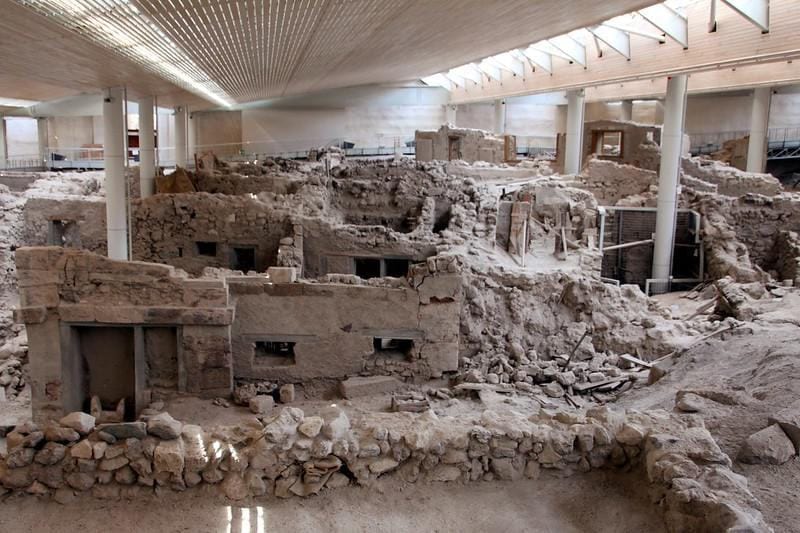
Ancient Akrotiri
Close by picturesque village Akrotiri, you can visit one of Greece's most important archaeological sites, a Prehistoric settlement that was discovered buried under the ashes of the volcano. It was first inhabited in the Late Neolithic Period and prospered during the Bronze Age. Its architecture shares many common elements with that of the Minoan cities. Observe the multi-storeyed houses, stone-paved streets and squares, the sewerage network and murals.
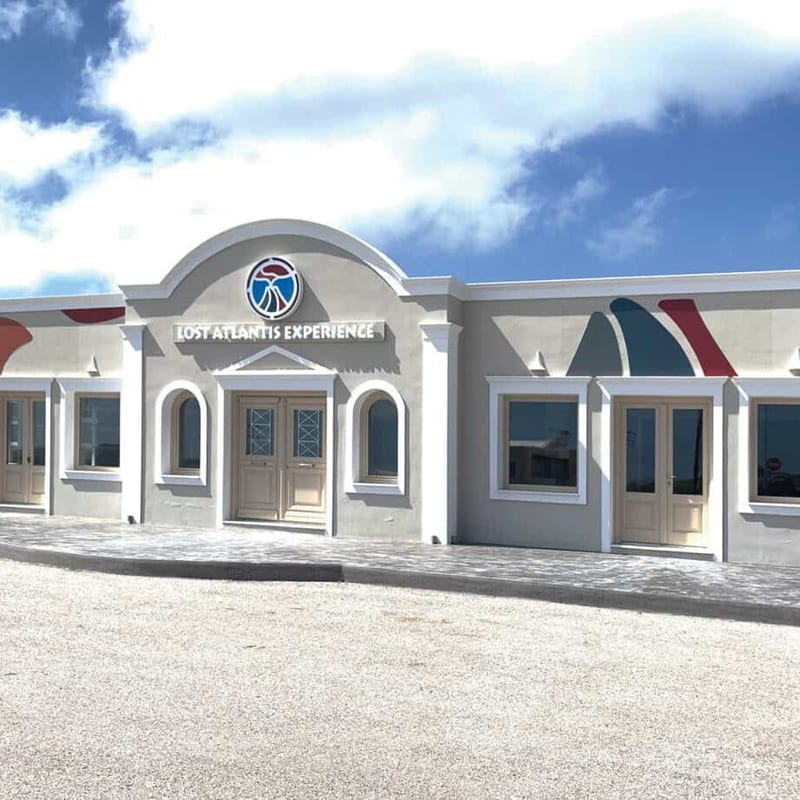
Lost Atlantis Experience
Visit Akrotiri, Greece's Pompeii, and Red Beach. Follow it up with the 9D Atlantis Experience and, if time permits, a few wineries as well. The order is the whole trick: the excavation gives you the town, the show gives you what happened to it, and the wineries give you the volcano's last word – the vines are growing in what it left behind.
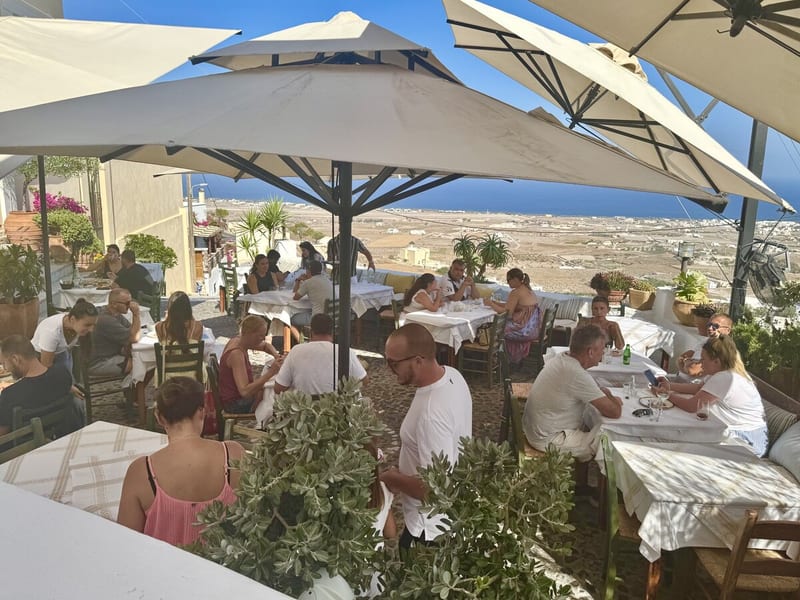
Metaxy Mas
In a hospitable and relaxing space, reminiscent of an island house porch, and an atmosphere full of the Aegean Sea's colors and aromas, you will savour excellent dishes inspired by the islands of Santorini and Creta. Enjoy cool Cretan salads with dakos (barley rusk) and caper, as well as krasotigania and pork from Creta. The friendly staff here uses fresh ingredients from the restaurant's kitchen garden, refreshing raki (the iconic grape-based pomace brandy of Crete) and handpicked wines to ensure that, upon leaving Metaxy Mas, you have a full stomach, and sweet memories!
Milos
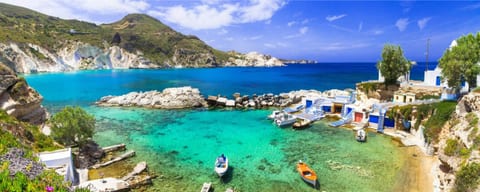
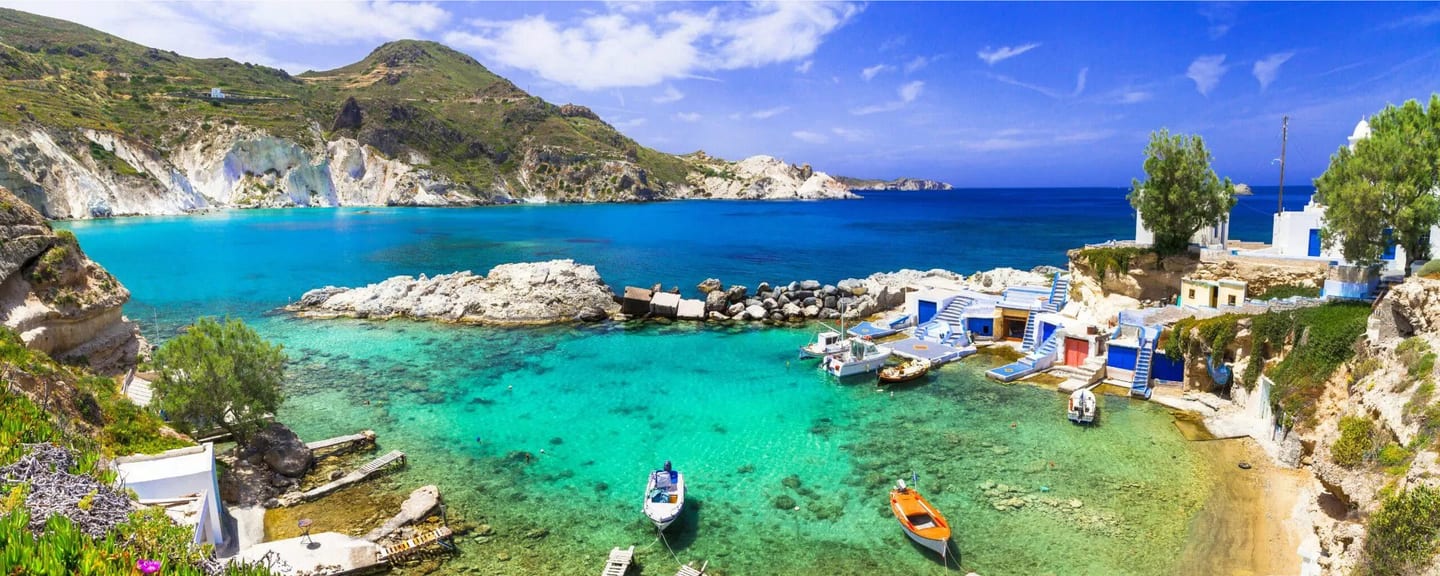
Days 4–7 of 14 · 4 nightsWe spent 5 days on Milos and loved every minute of it. We've sent many friends since and will definitely be returning. It's a special place – whilst part of the Cyclades it is quite unique in many ways and luckily unable to get very busy YET with little development and still under the radar of most cruise ships and big tour groups. 3 days will allow you to get a good feel for Milos and you should be able to see most of the best sites.
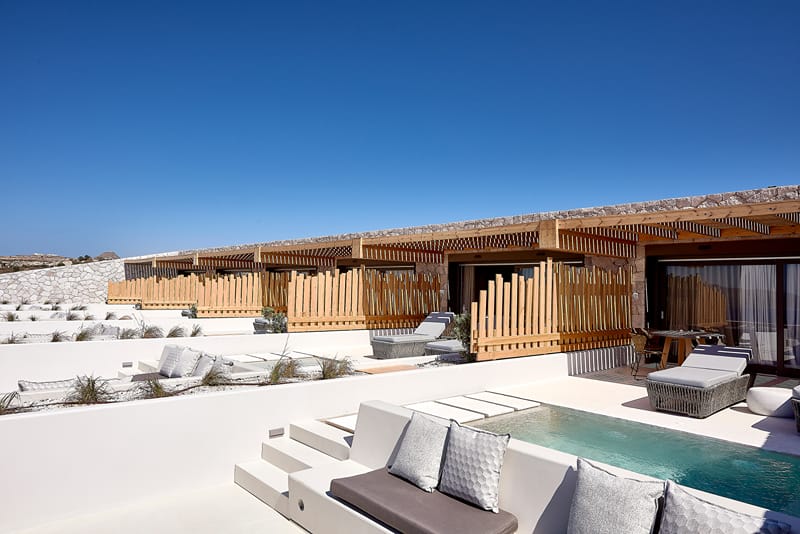
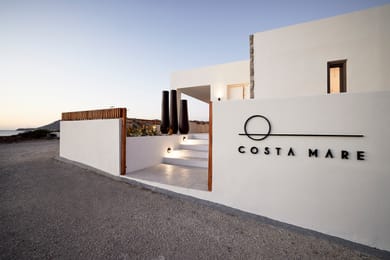
Cave Suites
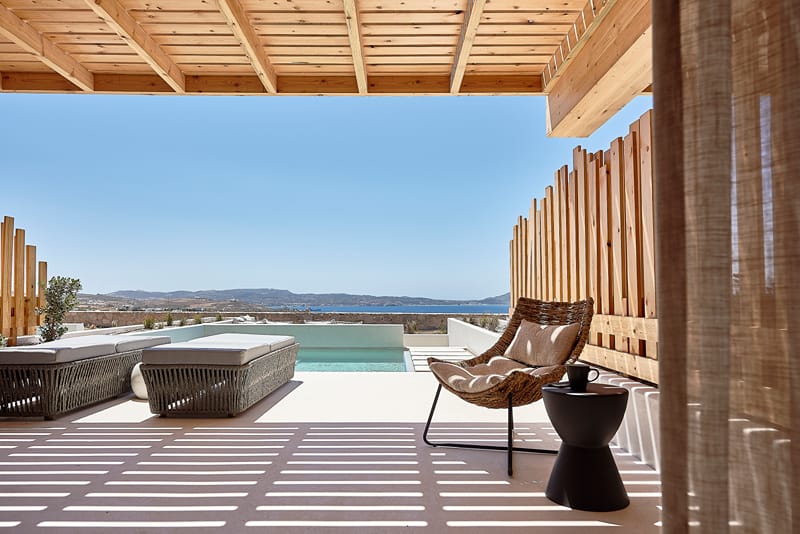
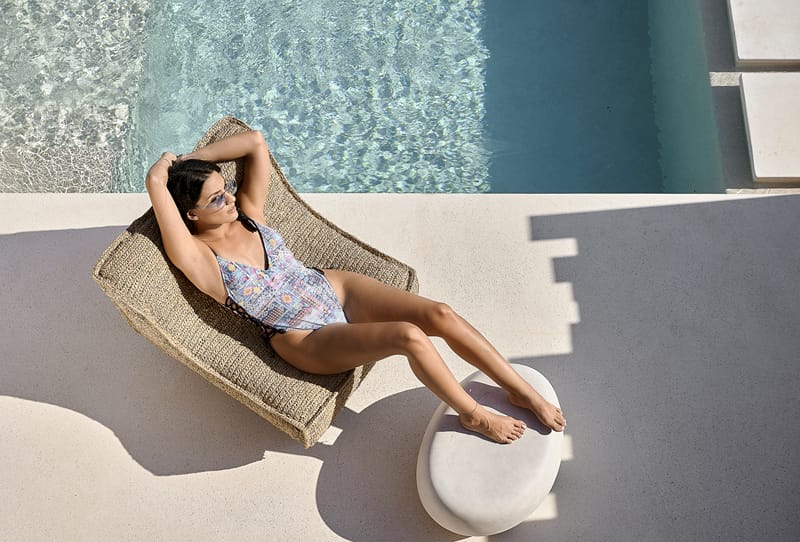
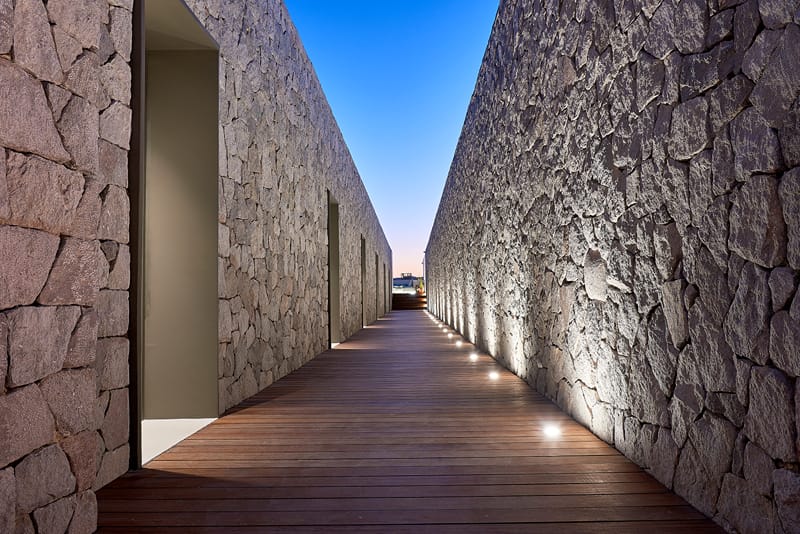
Private-pool suites with wide sea views, built for quiet.
9.8 Alternative places to stay
MilosDay 1
Pollonia waterfront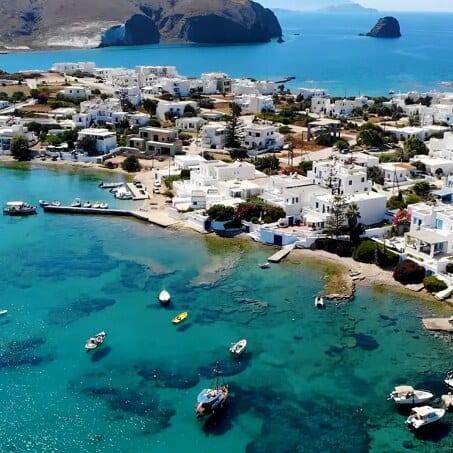
Pollonia
Sandy's recommended Milos base – Pollonia is a quieter fishing village on the north-east corner of the island, with a sandy bay, a strip of tavernas right on the water, and quick access to Sarakiniko, the Kostantakis winery, and the Apollonia-Pollonia ferry to Kimolos. Stay here over the busier Adamas if you can.
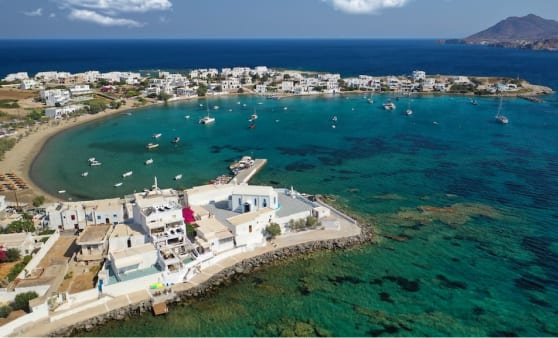
Pollonia Beach
A lovely sandy crescent shaped beach with amazing waters in a quiet bay overlooking the boat harbor. Pollonia is a small mid-sized protected beach with lots of trees providing shade, so there is no need to hire sun loungers. A really relaxed beach, usually peaceful and uncrowded with good access to cafes and restaurants. Pollonia beach is absolutely brilliant for families. The water gradually becomes deeper and the water is still warm even in autumn. It is very safe for children and there is a play park on the promenade as well. An excellent beach for lazing in the sun and swim.
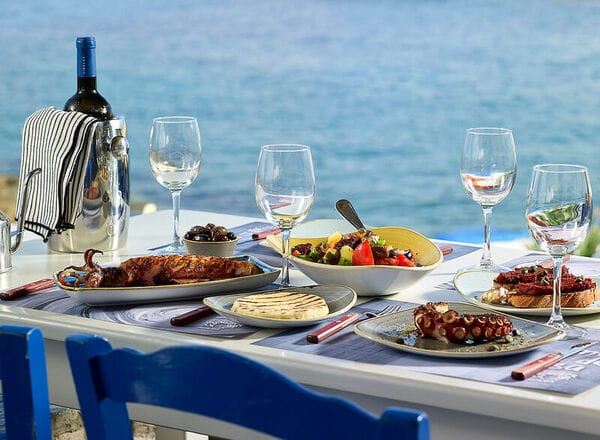
Medusa Taverna
In Mandrakia you will find Medusa Taverna – the only taverna in this tiny village but a very good one. With the traditional hanging octopus, sometimes in a screened box to protect it from insects and wind, you can't miss Medusa and you won't regret lunch here either. Very well priced in a truly unique and very special setting.
MilosDay 2
Sarakiniko & Plaka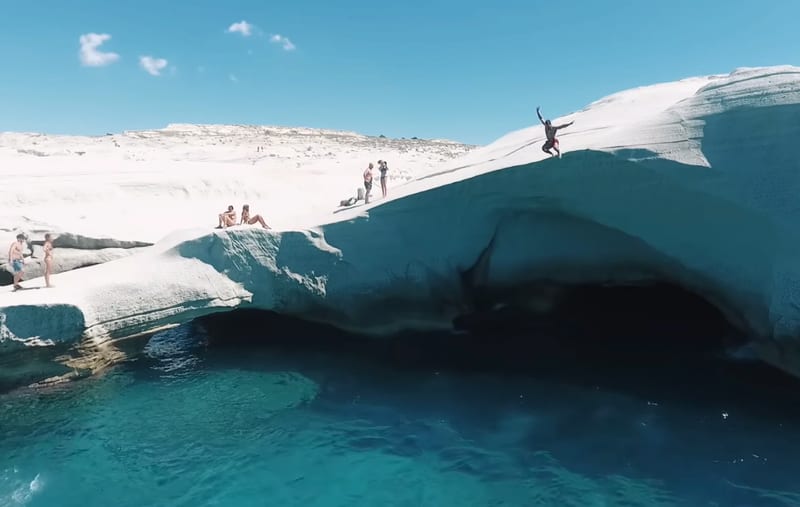
Sarakiniko Beach
Sarakiniko is Milos's signature – white volcanic rock sculpted by wind and sea into a lunar landscape on the island's north shore. There's no shade and no facilities; bring water and a hat, and come at sunset for soft light. Sandy's tip: the cliff jumps are visible from the path; admire from a safe distance and stick to the swim-safe coves below.
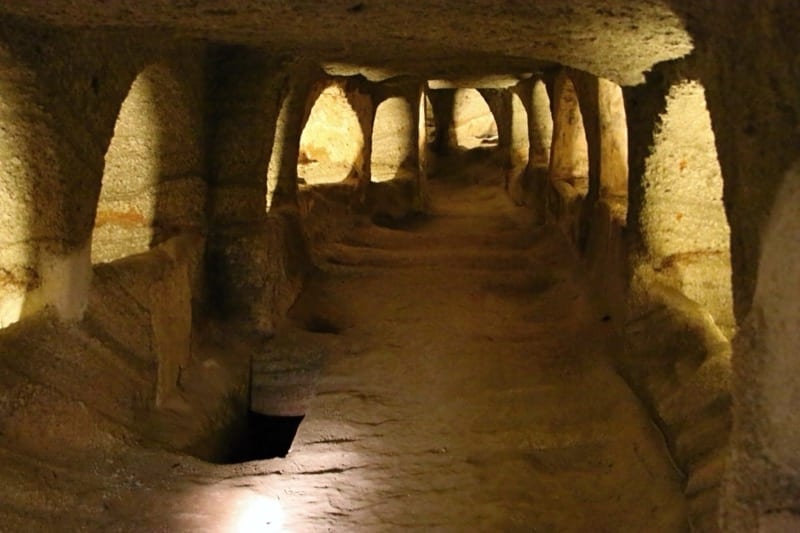
Catacombs of Milos
One of the most important early-Christian monuments in the world – a 2nd-century underground burial complex carved into the volcanic hillside above Trypiti. Three connecting galleries, hundreds of arched tombs, and traces of original wall paintings. A short, atmospheric visit and an unexpected counterpoint to the island's beach reputation. Closed Tuesdays.
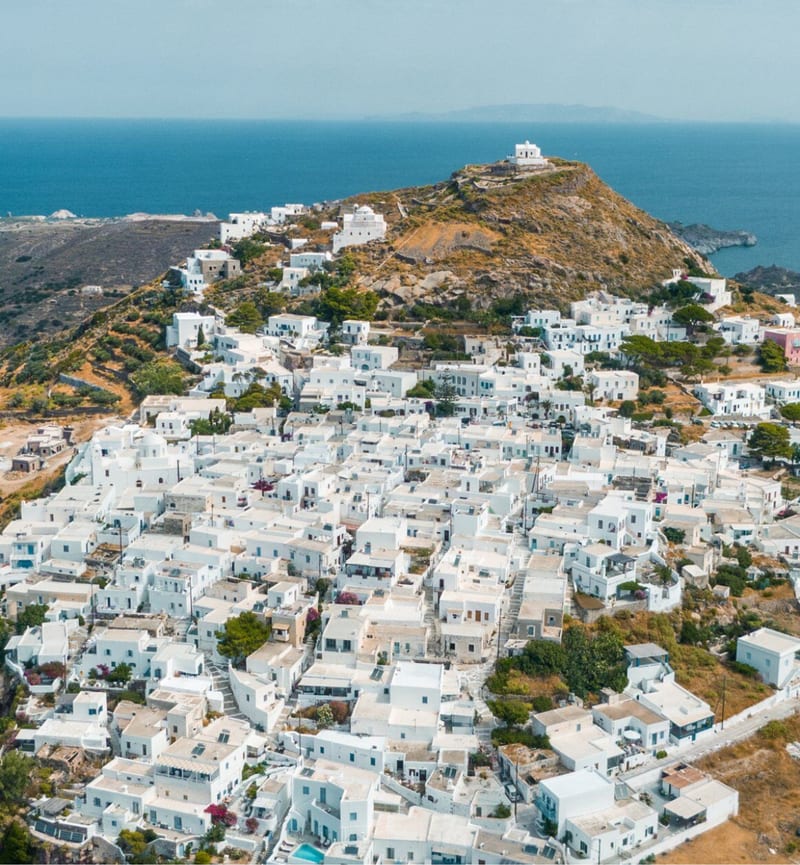
Plaka Village
Plaka is the chief town in Milos, a Greek island in the Cyclades group. It is perched on the top of large rock, overlooking the gulf of Milos. No cars can enter the village because of the narrow spaces between walls and buildings. Motorbikes, mopeds and the like are the only usable vehicles.
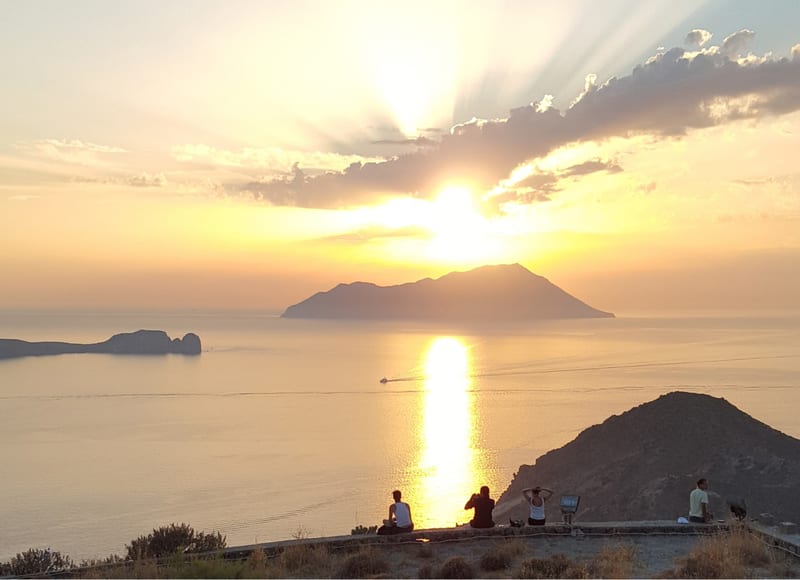
Plaka Castle (Venetian Castle of Milos)
Plaka Castle, often referred to as the “Venetian Castle of Milos,” is the last remaining artefact on the Greek Island of Milos, which bears testament to the ancient times of Venetian rule. Make the short climb to the top of the mountain from the small town of Plaka below, and embrace the spectacular 360-degree views of the entire island, stretching as far as the eye can see. There is no better way to experience the entirety of Milos than here, and a visit is certainly a must-do for anyone traveling to the island.
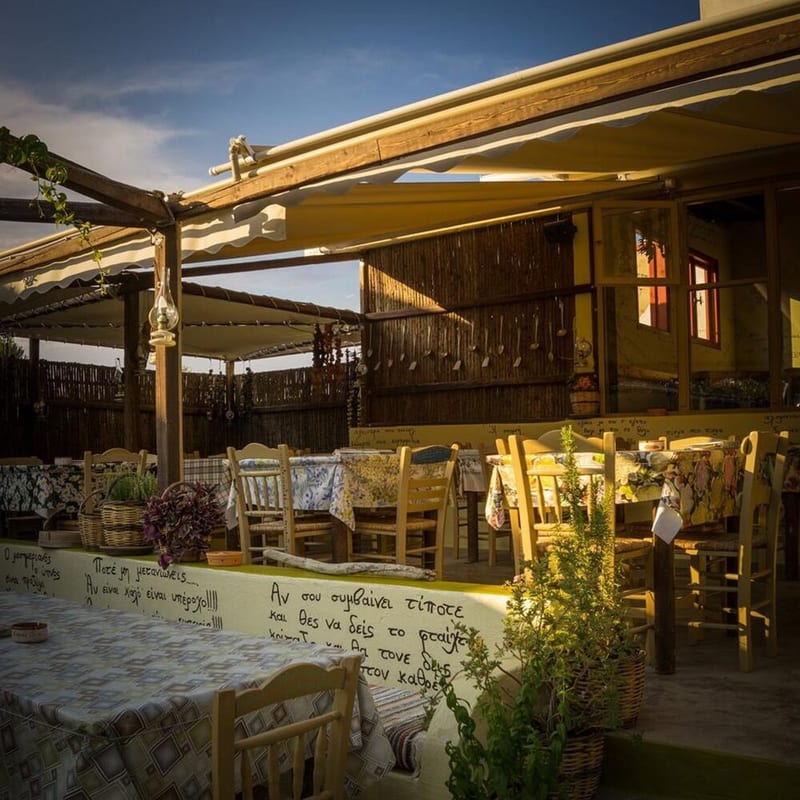
O Hamos Tavern
A garden courtyard buried in bougainvillea, clay plates with the restaurant's name fired into them, and kleftiko lamb that falls apart before you touch it. O Hamos is the kind of place that makes you wonder why restaurants anywhere else try so hard. The kitchen uses milk from the owners' own goats, cheese from their farm, and whatever the sea delivered that morning. The cheese pies are legendary; the fried artichokes appear only in season and disappear fast. Handwritten menu, no pretense, cash preferred. Just outside Adamas, a short walk from the port – arrive early or book ahead, because everyone on the island knows this place.
MilosDay 3
Kleftiko & Polyaigos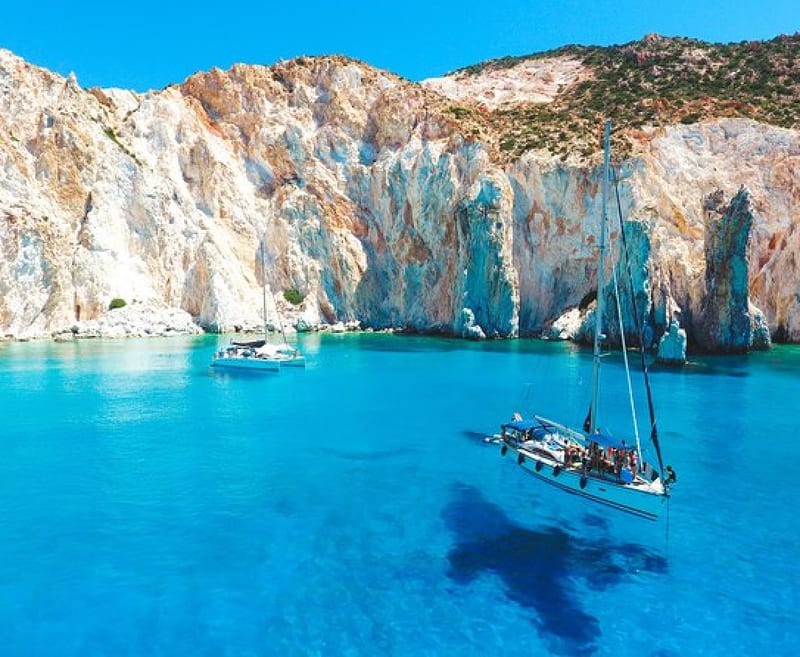
Daily Cruise to Kleftiko - Polyaigos
The Kleftiko boat day is the trip's highlight if the wind allows – a full day on a small boat along Milos's south coast, anchoring at sea caves and arches the pirates used as hideouts. Book early in the trip so you have a buffer day if the captain cancels for weather. Wear swim gear under your clothes; the swims at the caves are non-negotiable.
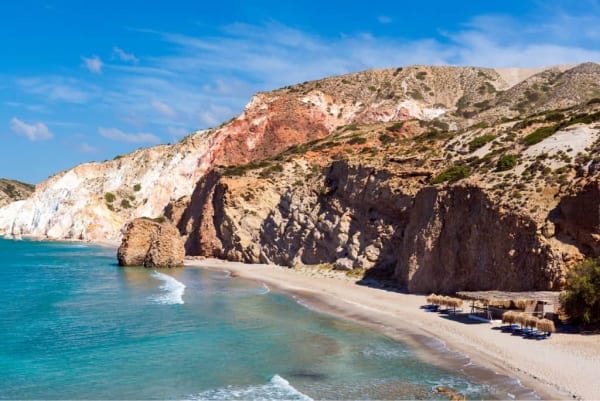
Fyriplaka Beach
Firiplaka with its towering volcanic cliffs, snow-gray fine sand, white pebbles and shallow turquoise waters is situated between the beaches of Provatas and Tsigrado. The extensive beach has umbrellas, sunbeds and a bar hut. There is also a cave under a huge rock in the water near the shore carved out of a volcano a long time ago. Access to the beach is possible by your own vehicle, taxi, bus or even by boat which goes around the island, starting from the port of Adamas. While most of the road is asphalt, the last part of it is a gravel paved driveway.
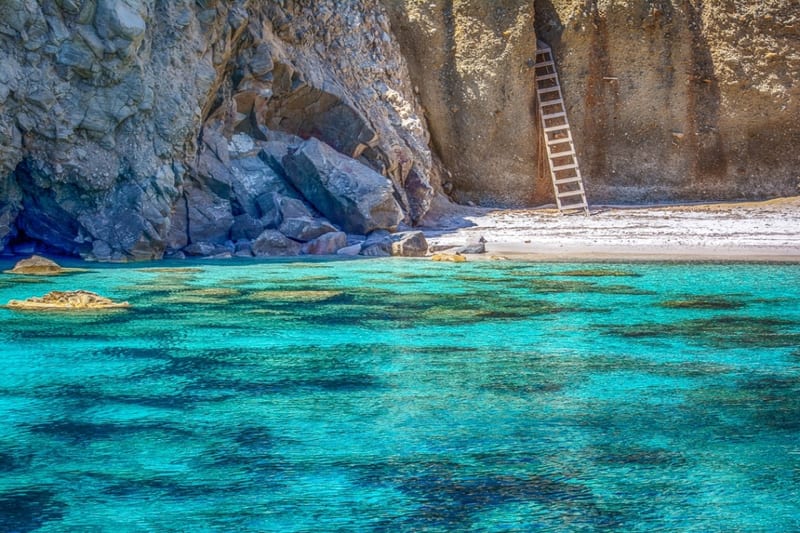
Tsigrado Beach
Follow the amazing paddling trail to Tsigrado. Visit the famous beach of Tsigrado the easiest way possible! Get a kayak or stand-up-paddle (SUP) from Fyriplaka beach and reach Tsigrado through the water. Have fun paddling and discoverevery hidden place!Do you want to visit Tsigrado without worrying about the tiring and sometimes dangerous climbing that is otherwise required? You can rent a kayak or stand-up-paddle (SUP)from our kiosk at Fyriplaka beach. Paddle along the shore for approx.1km (0.62 miles) and reach Tsigrado beach within 15 minutes. Not only is this the easiest and safest way to reach Tsigrado, but also during your paddling route you will come across many points of interest. You will have the chance to visitwonderful places that are accessible only through the water, swim in the unique clear-blue waters and explore hidden caves!
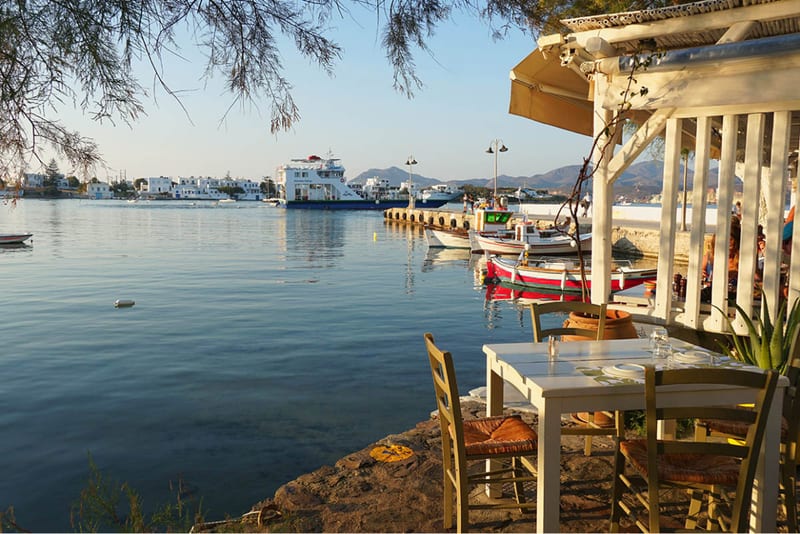
Yialos Restaurant
Tables on the sand, feet in the pebbles, the fishing boats of Pollonia bobbing a few meters away – Yialos is where seafood and setting conspire perfectly. Chef Achilleas Kamateris trained across Europe but cooks Aegean: raw fish preparations, grilled catch of the day, and creative plates that stay rooted in Cycladic simplicity. The sunset from the beachfront tables is an event in itself. Twenty years in, still the best restaurant in Pollonia and arguably the best seafood on the island. Northeast tip of Milos, about 10km from Adamas. Reservations are non-negotiable in summer.
MilosDay 4
Papafragas Beach & Alogomandra Beach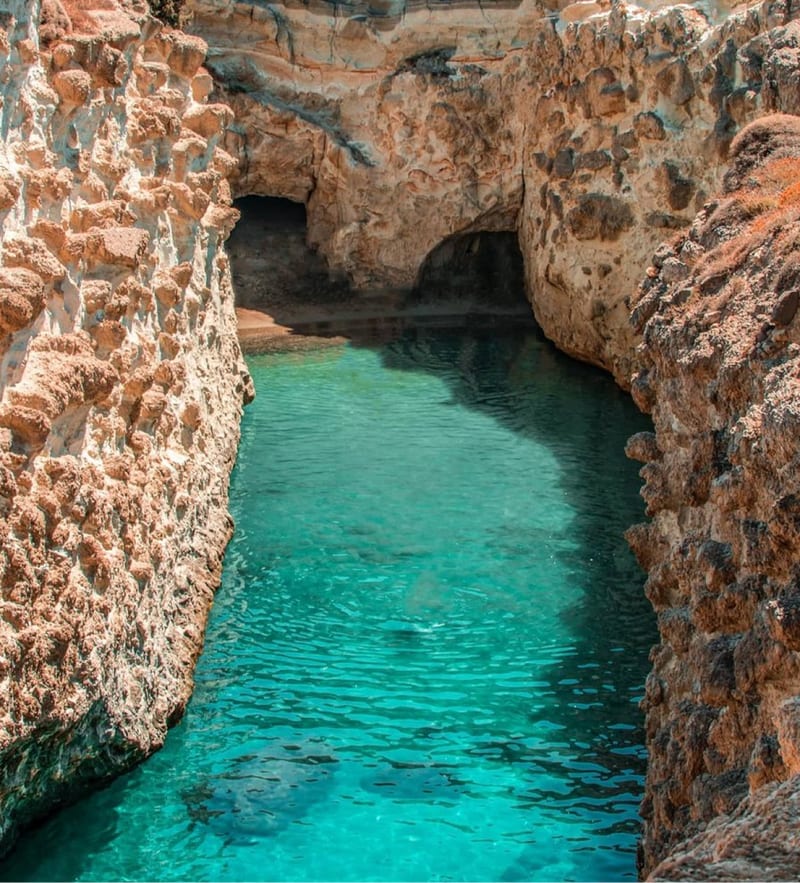
Papafragas Beach
Papafragas Beach, with its hidden sea-caves emerging through towering white cliffs, resembles a turquoise swimming pool or canal. While the narrow path that leads to the beach can be quite challenging, Papafragas is one of the most impressive beaches of Milos and should not be missed.
Alogomandra Beach
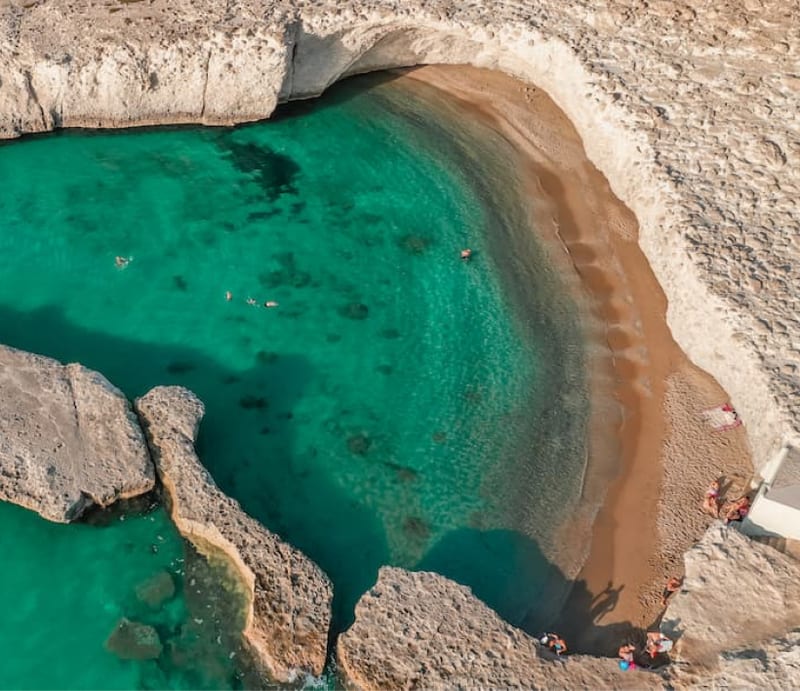
Although it is one of the least known beaches on the island of Milos, it is certainly worth visiting. It is another of the gems on the north coast of Milos, though this one rarely gets the same crowds as other beaches in the area. This lovely beach is divided into two parts: the main and the inlet. The main one is a large beach of soft white sand, shallow, clear and inviting water, ideal for children and non-swimmers. A few meters away to the east, there is a small cove partially shaded by a cave with limited space to lay down but with very clear and inviting waters as well. This part is really small and a few people are enough to make it full. It is also the most attractive to look at and nice for swimming, cliff jumping and snorkeling.
Akri Bar
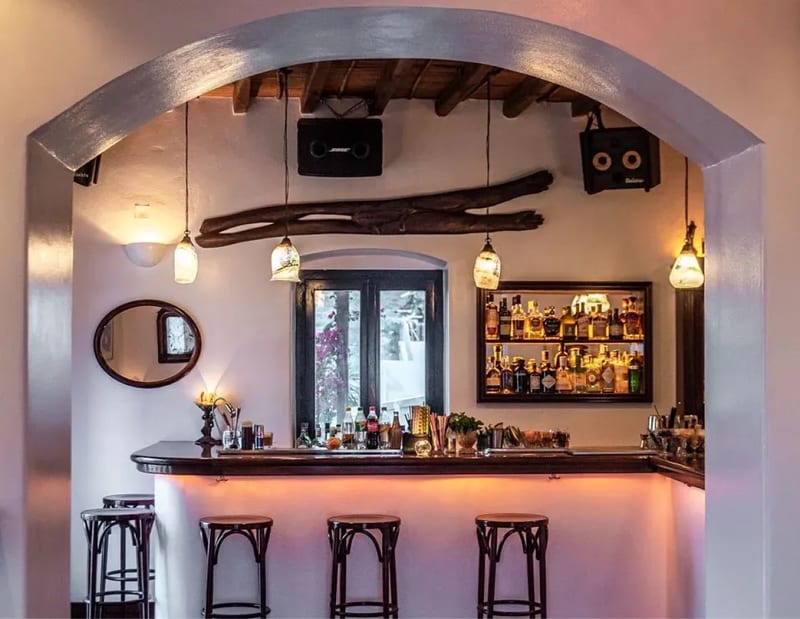
Perched above Adamas harbor with terraces stepping down toward the sea – the kind of bar where you come for one sunset drink and leave three hours later. Mixologist Tassos Lalas builds cocktails around Greek herbs and spirits: the house AKRI uses mastiha, the Lollipop is dangerously easy to drink. Multiple outdoor levels mean you can always find a quiet corner or a social one. The view spans the harbor, the coastline, and the open Aegean. Opens at 7 PM; the best seats fill quickly around golden hour. Works equally well as a pre-dinner aperitivo or a full evening.
Syros
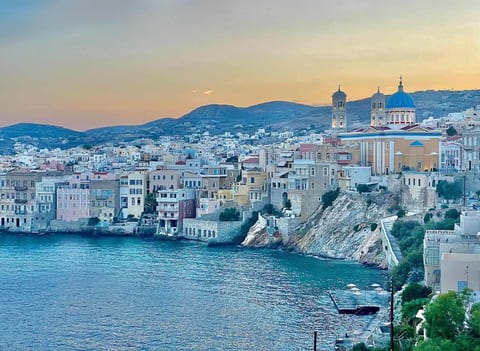
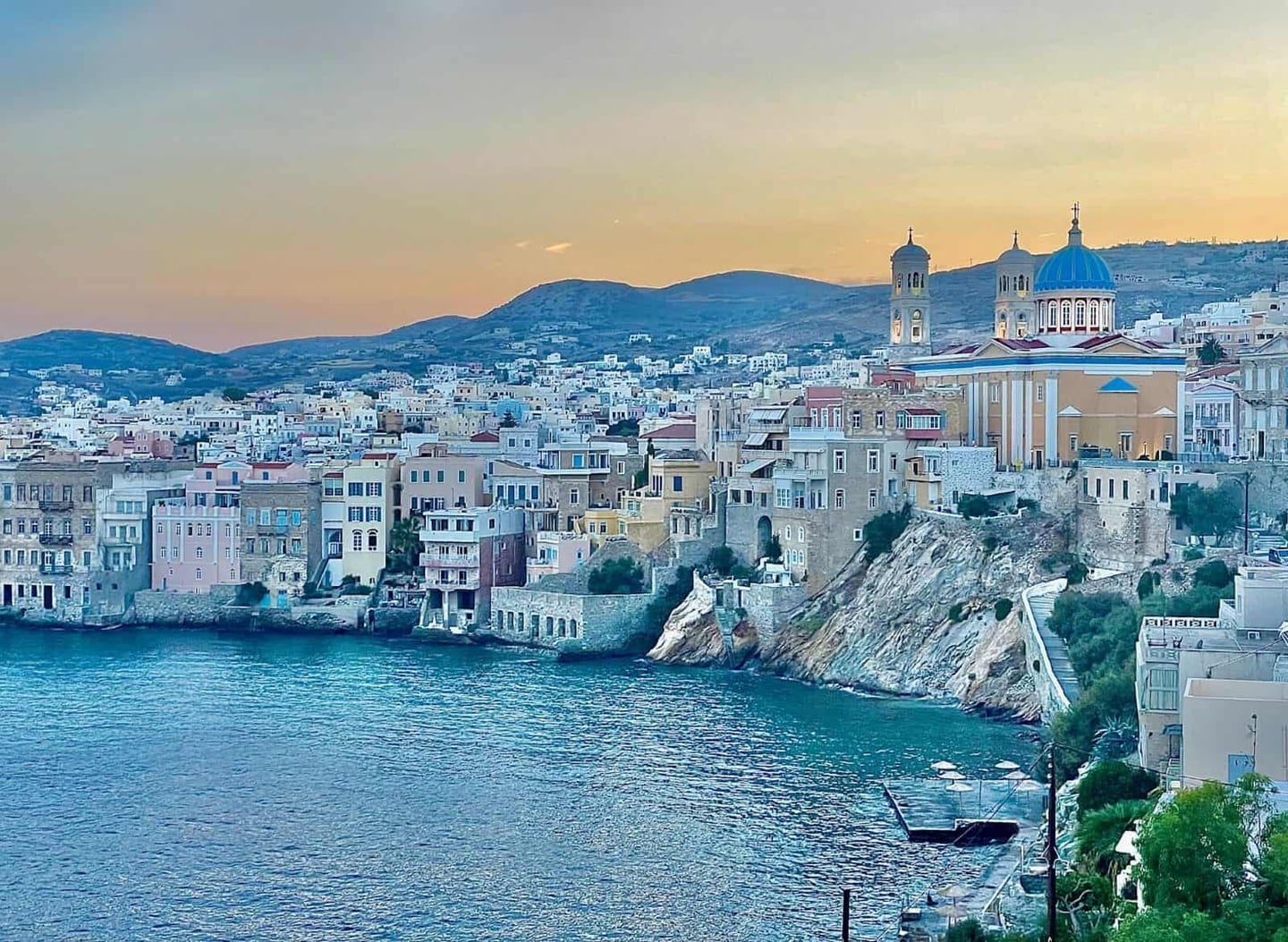
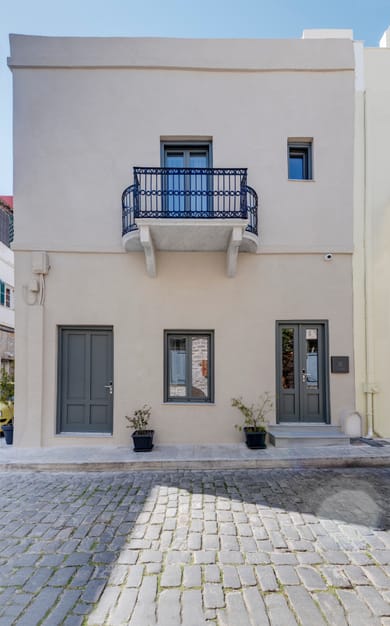
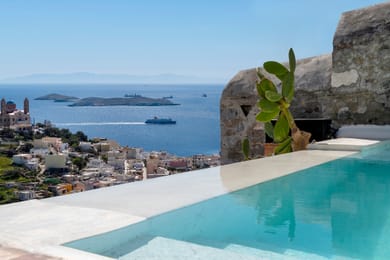
Days 8–10 of 14 · 3 nightsSyros is quite different to the other islands in the Cyclades. As the administrative capital of the island group, it has a substantial year-round population, an elegant capital filled with colourful Neoclassical mansions, and a fascinating mix of Orthodox and Catholic heritage. We recommend staying in Ermoupoli, one of the most beautiful towns in Greece and somewhere that feels more like a small European city than a typical Cycladic Chora.
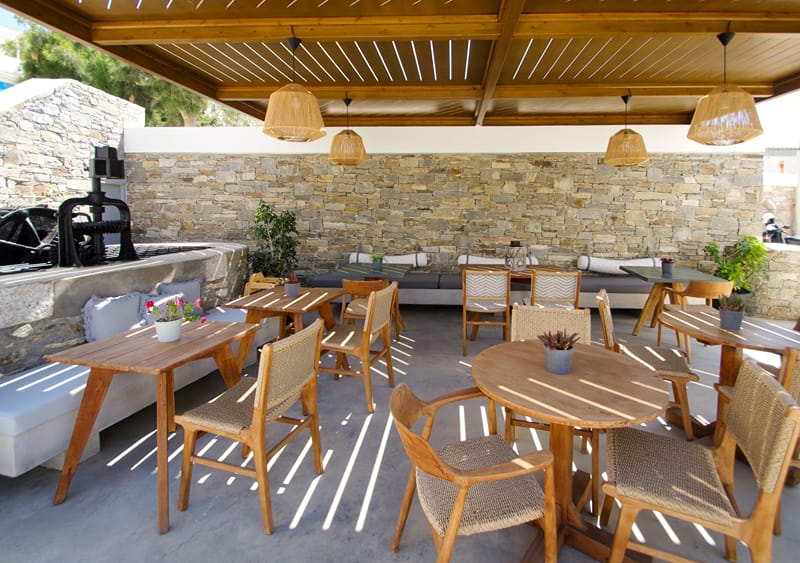
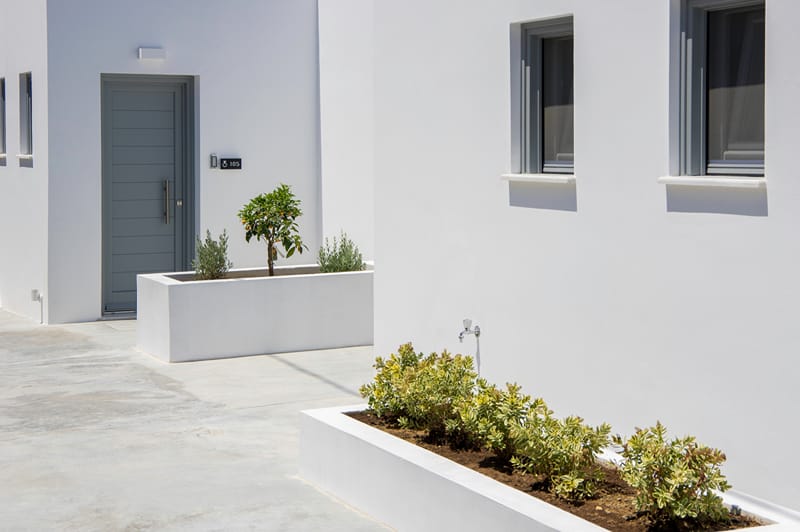
Oro Suites Syros
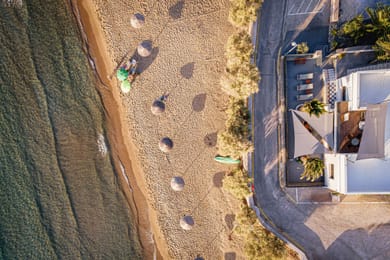
Garden suites facing the beach at Kini, Syros's sunset village.
9.8 Alternative places to stay
SyrosDay 1
Ermoupoli & a swim at Asteria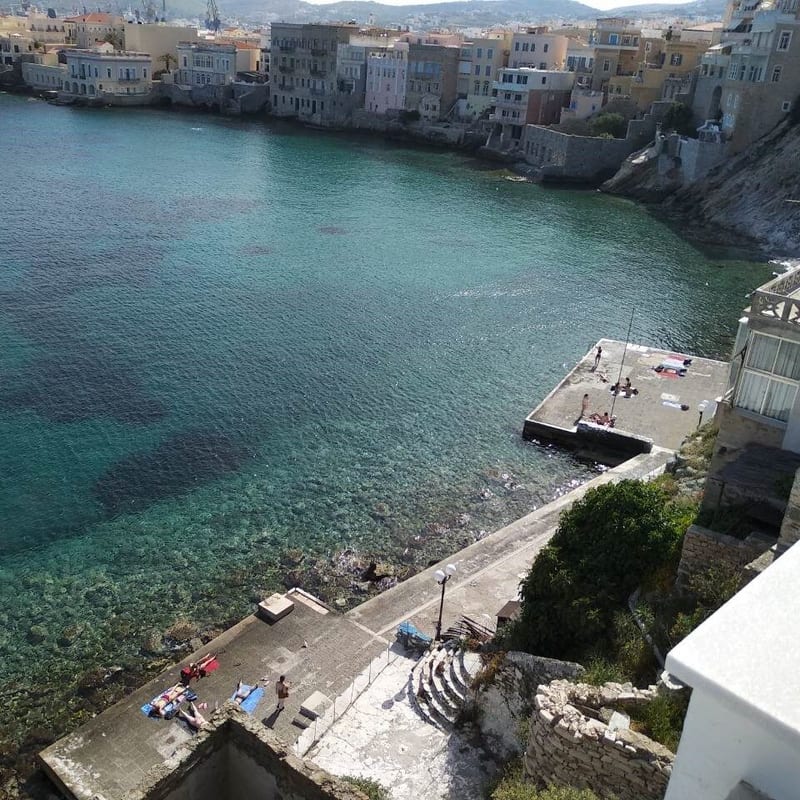
Asteria Beach
Right in Ermoupolis in the upmarket Vaporia area, this is a more 'italian style' beach with a large concrete platform and ladders that enable you to dive into the crystal clear bay, which has a healthy marine eco-system too, great for snorkelling! It's the swim that opens our Syros days – ten minutes from the harbourfront, with the blue dome of Agios Nikolaos above and the mansions of Vaporia at your back.
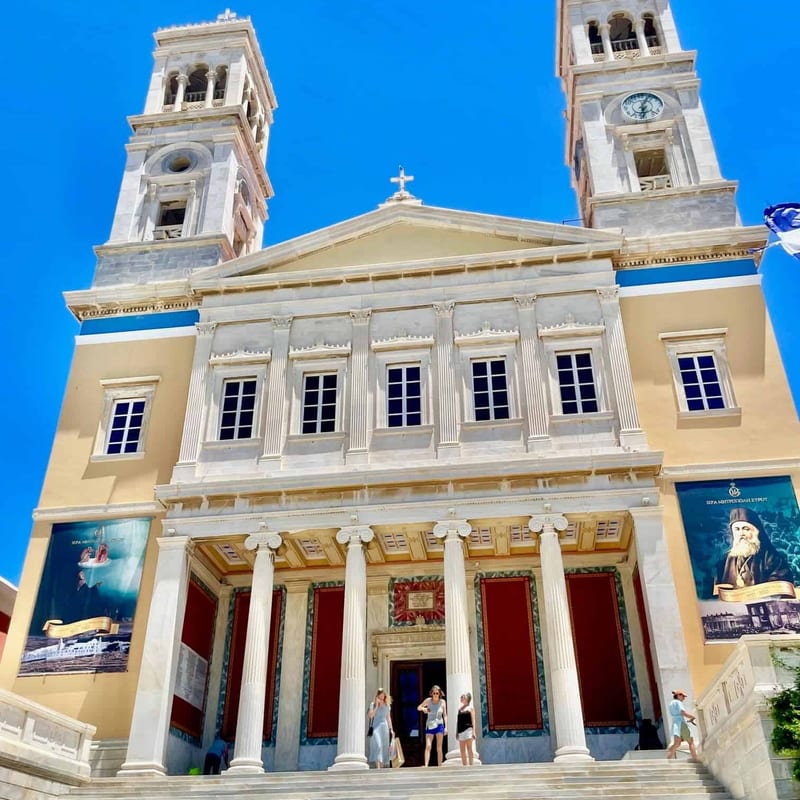
Church of Agios Nikolaos
Built in the 19th century, the church of Agios Nikolaos is one of Ermoupoli's defining landmarks – its blue dome and yellow twin bell towers stand over the Vaporia quarter and are visible from across the city. Step inside for the marble iconostasis and ornate neo-Gothic interior, then walk down to the rocks below where the captains' mansions drop straight to the sea.
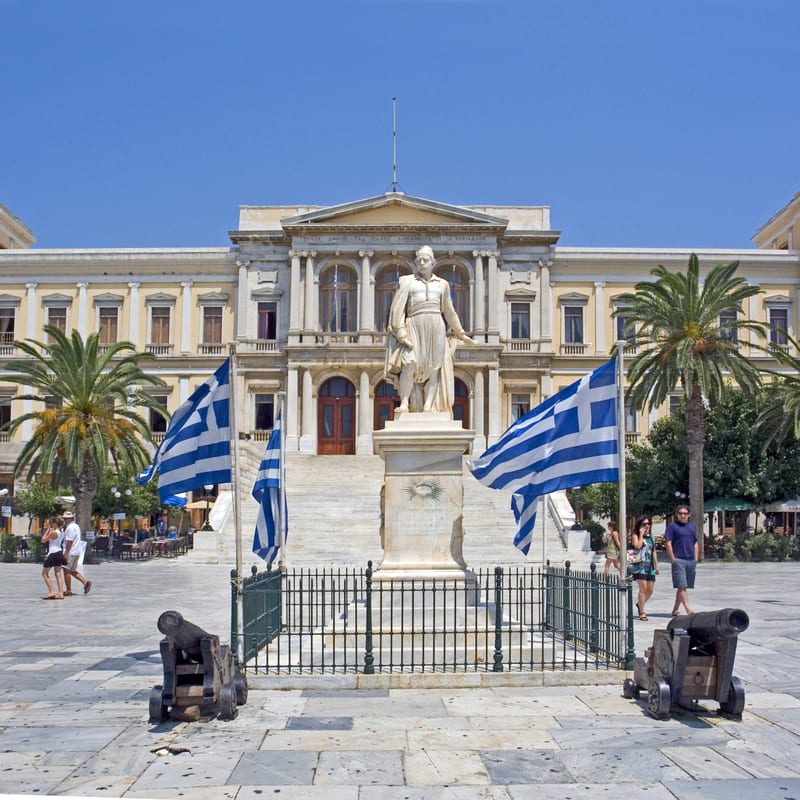
Town Hall (Miaouli Square)
Ermoupolis Town Hall dates back to 1898 and was built in the Neoclassical style. There's an interesting mix of styles dominating the architecture, with a strong Bavarian and Italian flair influence. This enormous building also makes heavy use of marble. Its cocktail of different architectural styles, and its elegant design, have led many to dub the building the most beautiful town hall in Greece. Local families gather every night at Miaouli Square, where kids can enjoy the open space and run around to their heart's content – take a table under the palms and watch the town drift past.
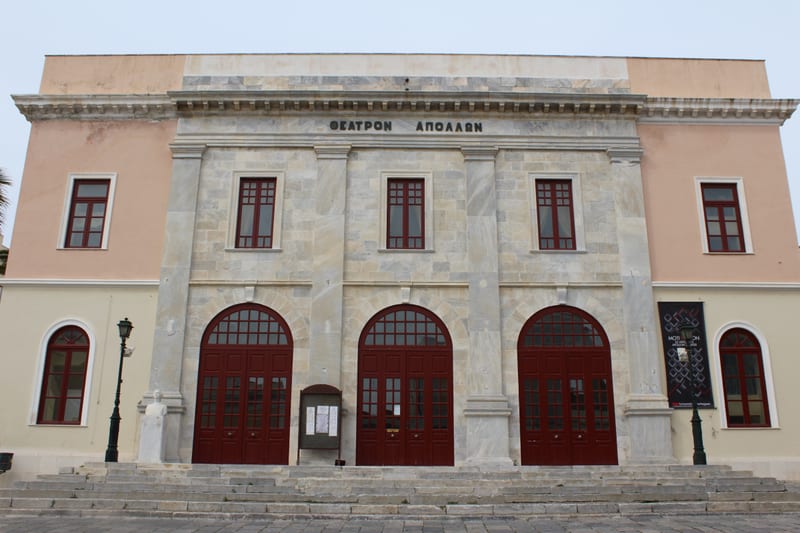
Apollon Theatre
The Apollon Theatre is a miniature La Scala – a 19th-century opera house whose architect was so taken with Milan that he recreated its tiers of red-plush boxes and painted ceiling in the heart of Syros. A €2 ticket buys a look at one of the most beautiful small theatres in Greece; time it with a summer performance and you can hear it as it was meant to be heard.
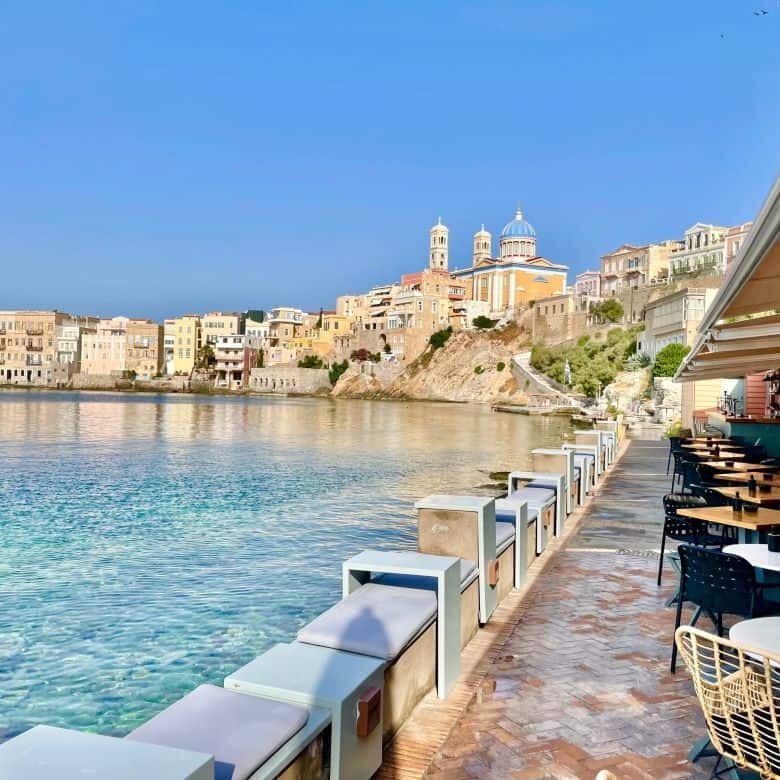
Ciel Beachbar & Restaurant
Asteria is also home to Ciel beachbar & restaurant – one of the best of its kind in the country in our opinion and very sophisticated. This is where you really will wonder at times if you are in Greece or some other fabulous part of Europe! Ciel Beach Bar is one of the most popular beach bars in the Cyclades for good reason, with its amazing views of the colourful architecture lining the waterfront. Swim off the platform first, then stay on for a sunset drink – it's how we finish our first day in Ermoupoli.
SyrosDay 2
Posidonia, Galissas & the Kini sunset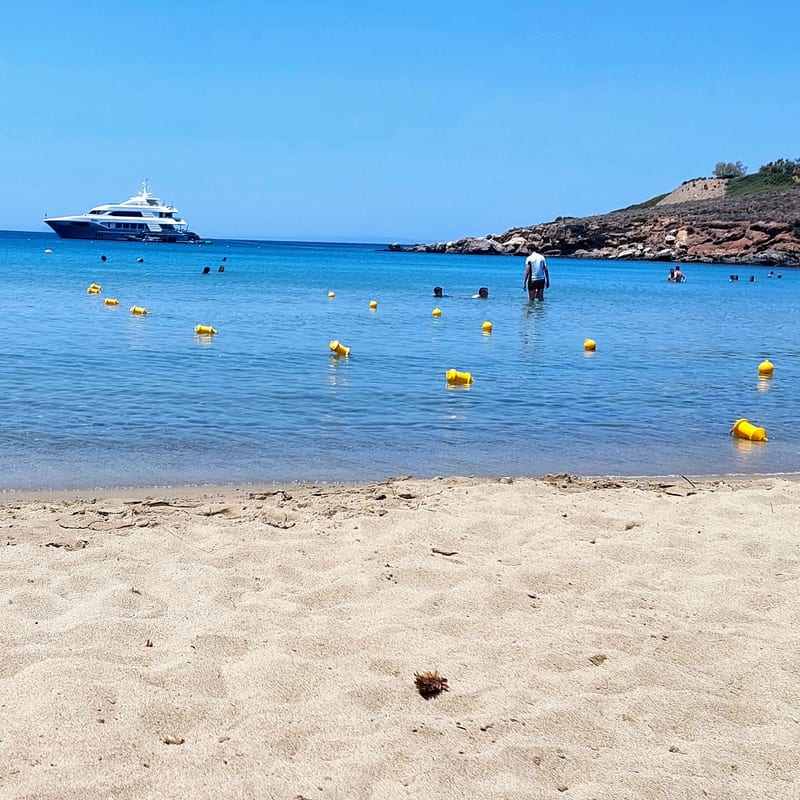
Agathopes Beach
Sand lilies, tamarisk shade, and water shallow enough to wade far out before it reaches your waist. Agathopes lies a short walk below Posidonia on the island's southwest shoulder: fine golden sand, a clean sandy seabed with no rocks or urchins to negotiate, and two low islets – Schinonisi and Strongylo – parked offshore to give the horizon something to do. Protected sand lilies grow on the dunes behind the beach, and the tamarisks throw enough shade to sit out the worst of the afternoon. One stretch is organized, with sunbeds, umbrellas and a couple of tavernas within barefoot range; the rest is left plain. The shallows and the shelter make this the easiest swim on the coast for families, and the late light, when the sun goes down past Schinonisi, is worth staying for. Fourteen kilometers from Ermoupoli, and close enough to Posidonia to combine the mansions and the swim in one morning.
Posidonia
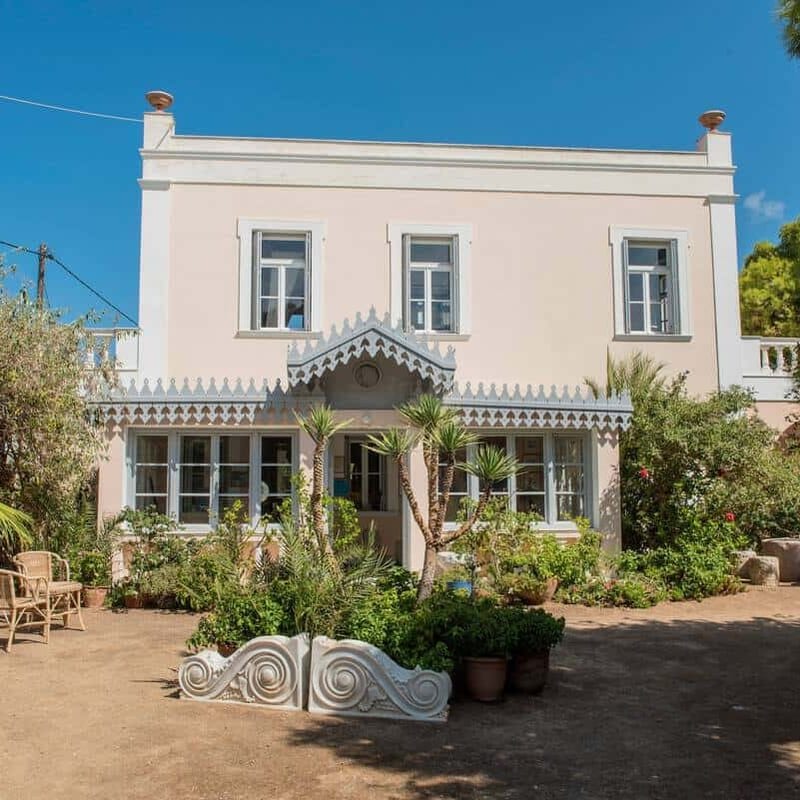
Poseidonia is a quiet area on the west coast where many stunning neo-classical mansions are located. These mansions were once holiday homes for wealthy shipping families, and the area has a rich and interesting history. It's where we base our cultural retreat each June, in a 19th-century villa among the orchards and olive groves, and it's why this elegant village opens our west-coast day. The beach is an easy 10-minute stroll, and there are seven tavernas within walking distance; in fact, one is right next door. Give the lanes an hour before you go down to the water – the villas, the gardens and the gates are the whole point of the place.
Finikas
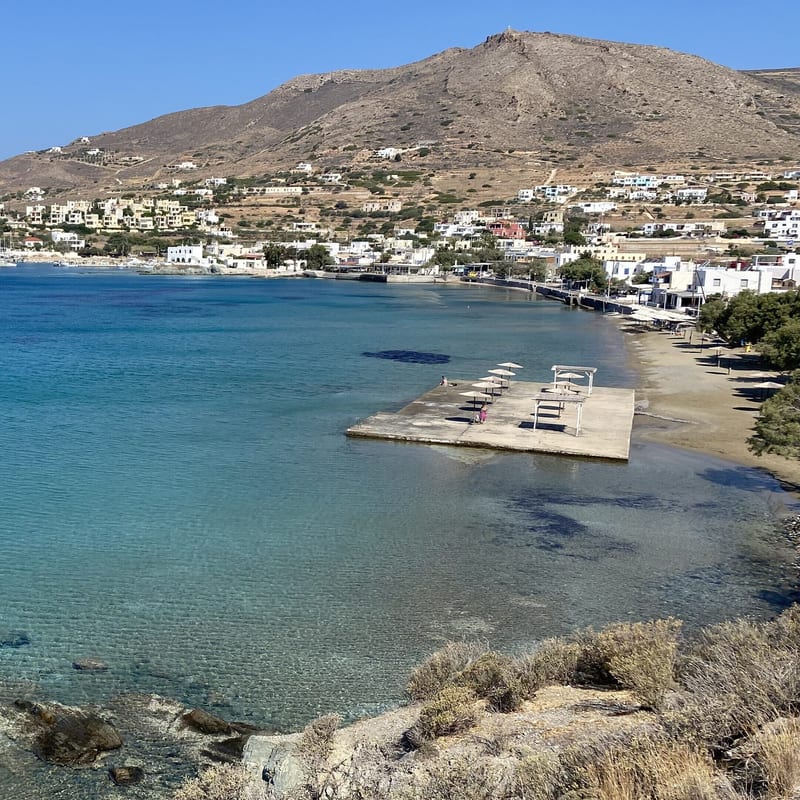
Finikas Beach is the second-largest beach on Syros. You'll find it on the southwest coast of the island, situated in a small, sheltered bay, which means the beach is protected from the northern summer winds – the Meltemi. Around the area, there are hotel options and a wide array of seaside eateries to choose from. Meltemi and To Kyma in Finikas are not to be missed and Baobab is a great bar to visit there too. We pick up the coast here after Posidonia and Agathopes, and carry on north to Galissas and Kini.
Galissas Beach
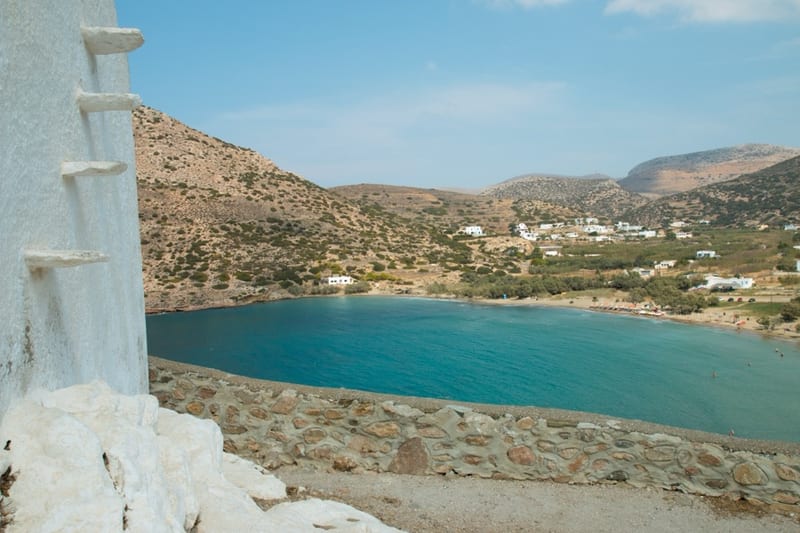
Galissas is one of the most popular of Syros' tourist resorts and has one of the best and biggest beaches on the island. It's located five kilometres from Ermoupolis and is on the western side of the island so the sunsets are wonderful. We come through on the west-coast run between Finikas and Kini – swim first, then lunch, then push on while the light is still high.
Anassa Cycladic Village
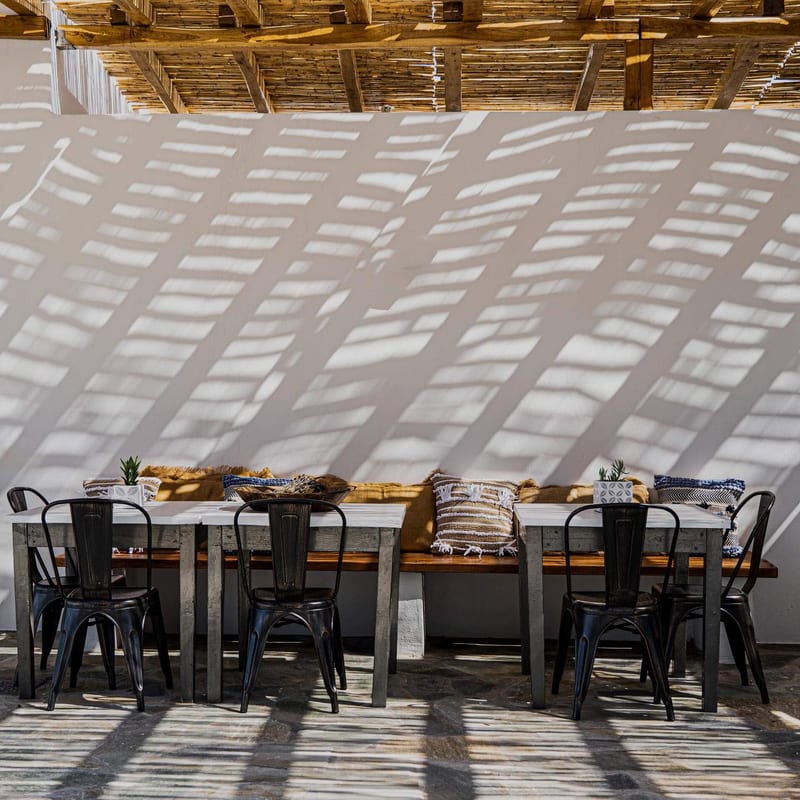
The restaurants at Anassa Cycladic Village and Benois Hotel are both outstanding. We eat out on the west coast in the middle of a beach day – that side of the island keeps the light longest, and lunch here beats driving back into Ermoupoli hungry.
Kini Beach
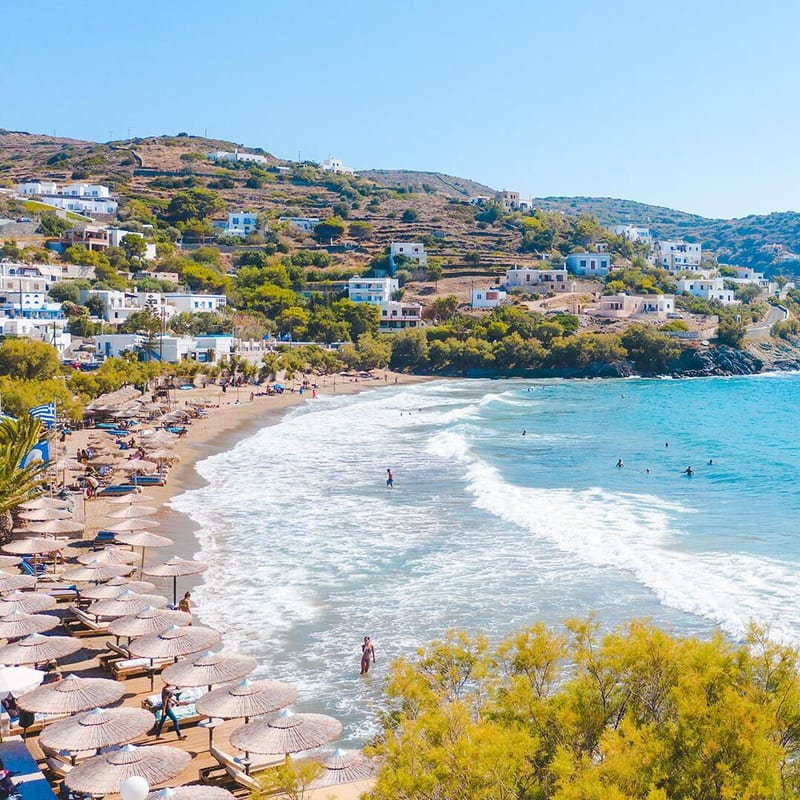
About nine kilometres from Ermoupolis is Kini Beach. It's easily reached by bus from the capital and is perfect for those who enjoy late afternoons at the beach as there are a number of seafood restaurants and homely tavernas to spend time in. The bonus is that Kini Beach is also a beautiful sunset spot – which is why it closes our west-coast day. Swim, shower off, and find a table by the water.
SyrosDay 3
Ano Syros & the Cathedral of Saint George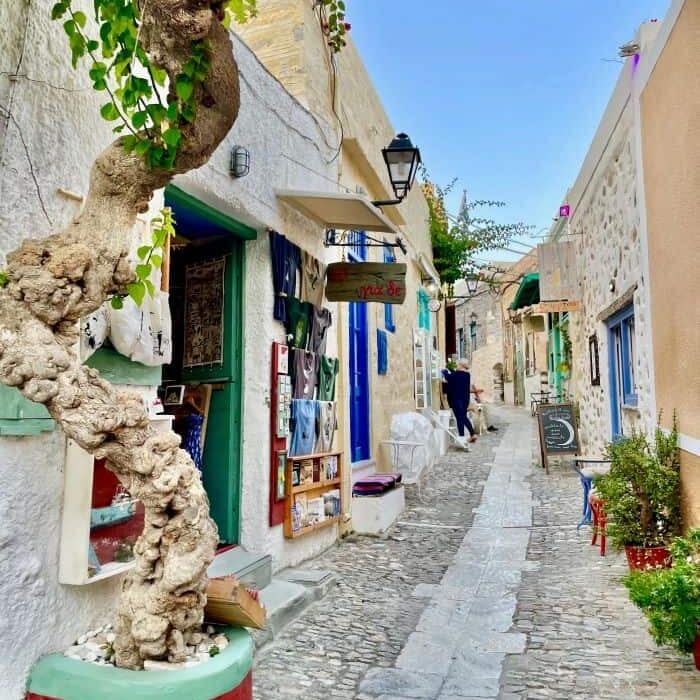
Ano Syros
Ano Syros is the medieval upper town the Venetians founded around 1200 – a maze of stepped white alleys, bougainvillea and tiny squares climbing to the Catholic cathedral of San Giorgio at the summit. It's a steep but short walk (or a free bus) up from the Town Hall, and the reward is the best view over Ermoupoli's amphitheatre of mansions, especially near sunset.
Cathedral of Saint George
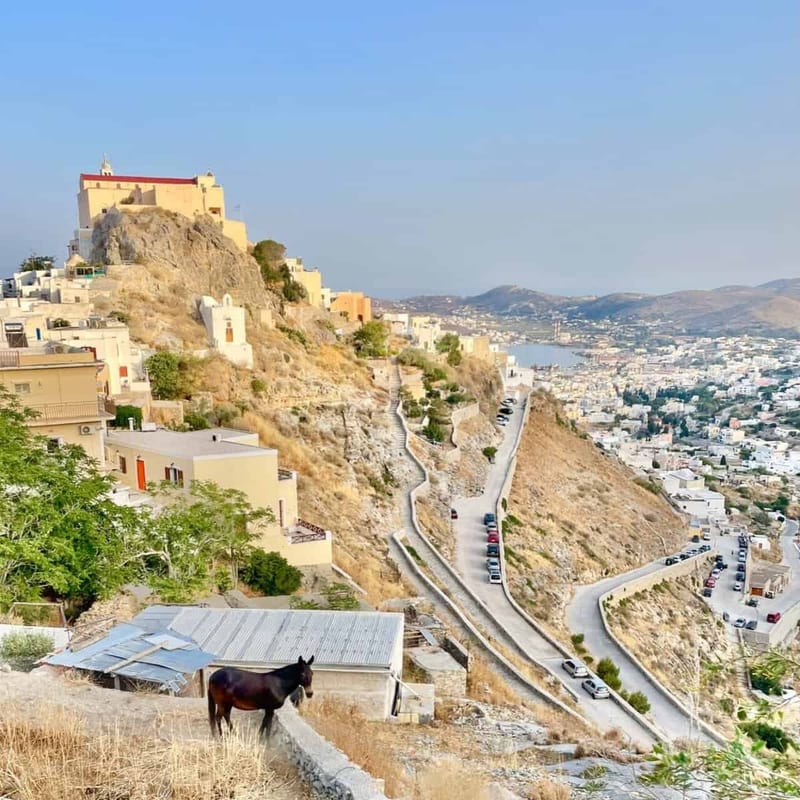
Wander through its narrow lanes and stairways to the Catholic Cathedral of Saint George at the top, stopping at viewpoints, little shops and tavernas along the way. This cathedral stands as a symbol of the historic Roman Catholic community in Syros, which is one of the largest in the Cyclades. The cathedral sits on a hill and is notable for its distinct architectural style, which blends local and Western elements. Its position provides panoramic views of the city and the Aegean Sea. It is a testament to the strong Catholic presence on the island – and the reason Ermoupoli arrives with a cathedral on each of its two hills rather than one.
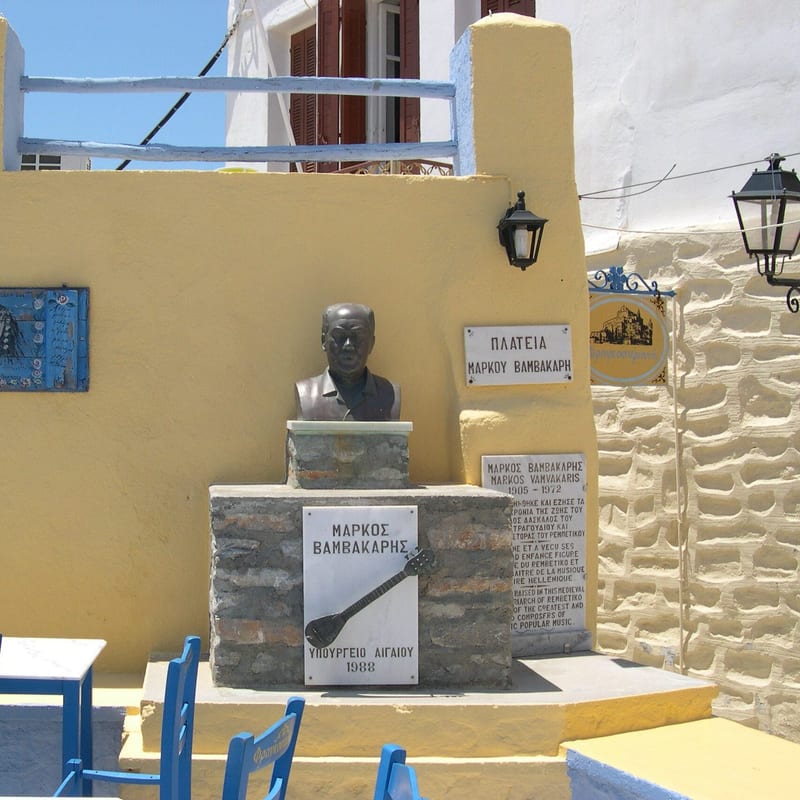
Markos Vamvakaris Museum
Born in 1905 in Ano Syros, Vamvakaris was a leading proponent of rebetiko – a type of music that developed out of poor, urban areas across Greece. He is known not only in Greece but across the world. The museum – dedicated to the famous rebetiko musician born in Ano Syros, offering a glimpse into the life and work of this influential figure – is small, and it's a fixed stop on our Ano Syros day. Give it half an hour on the way down from the cathedral, then find the square named after him for the view.
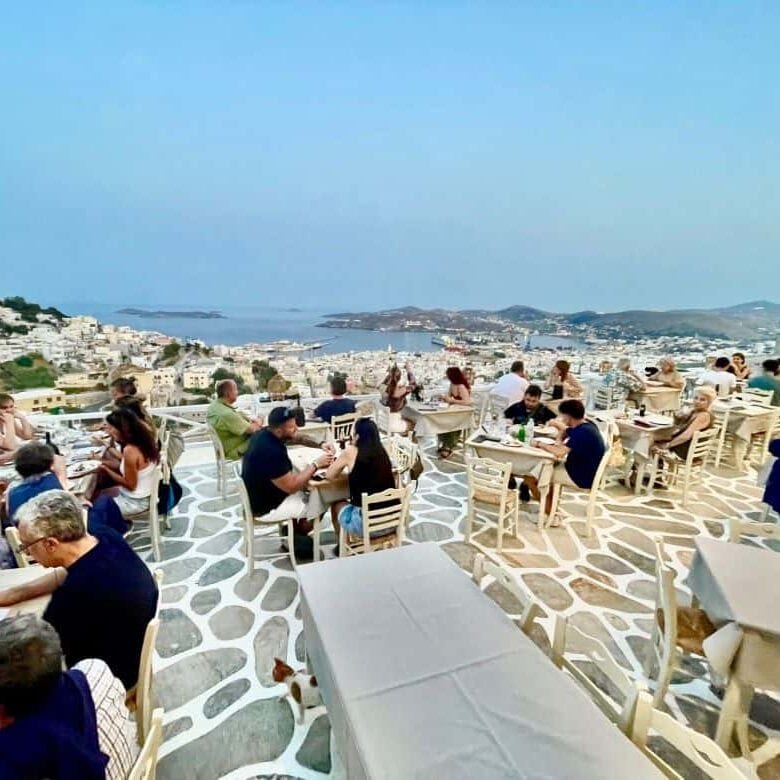
Lilis
We have had several good meals there, and the views are absolutely stunning. They also stay open longer and into the off-season. It's our answer to the Ano Syros evening: dinner overlooking Ermoupoli and the Aegean, after a day spent wandering the lanes and stairways. There are several cute bars, some very small. Most are located along the same narrow alleyway as Lilis – so once you've eaten, the rest of the night is a few steps in either direction.
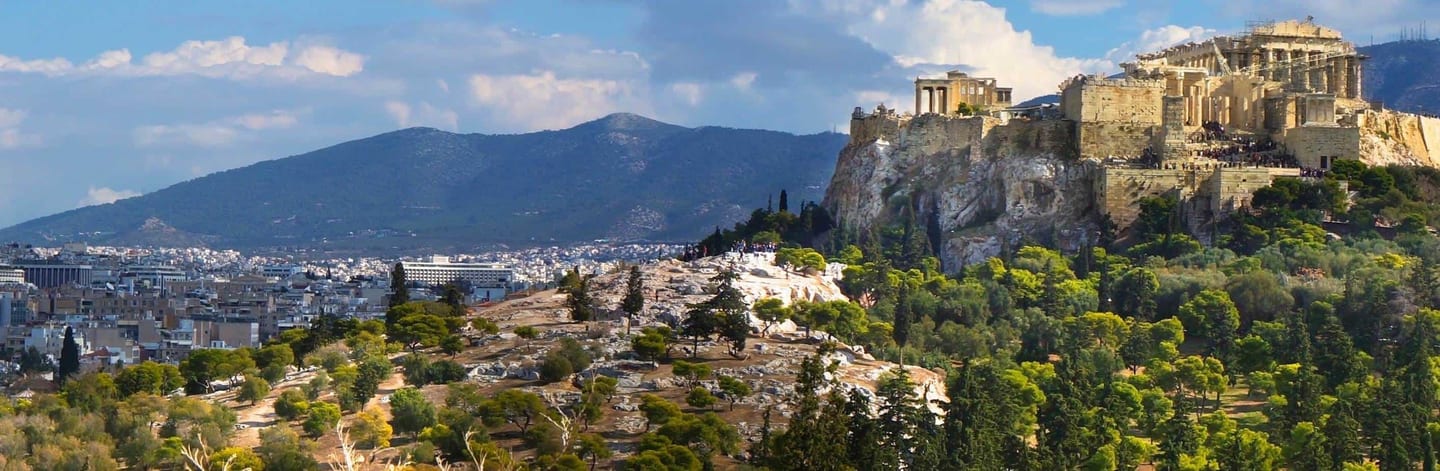
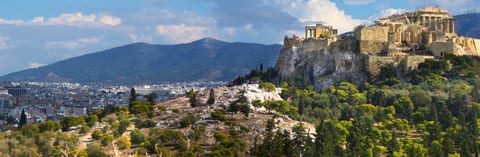
Athens
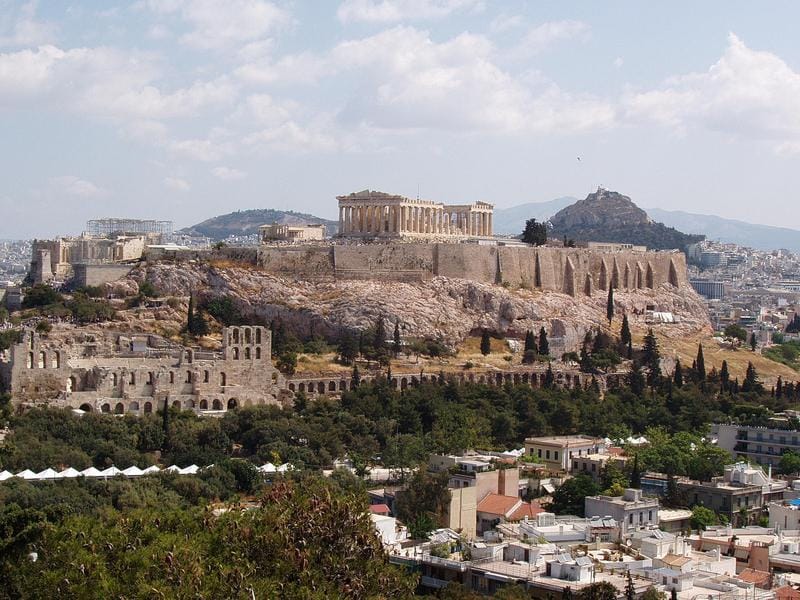
Days 11–14 of 14 · 4 nightsAthens, of course, is the capital of Greece and home to some of the most iconic and important historical sites and monuments in the world. It is a big, pale, sprawling metropolis which offers a lot for visitors and is worth a 3-day visit as a minimum, but more if you can manage it.
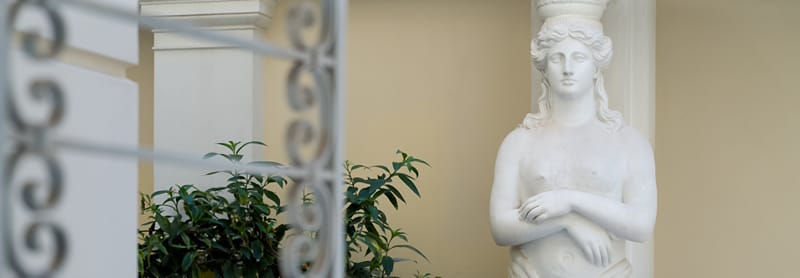
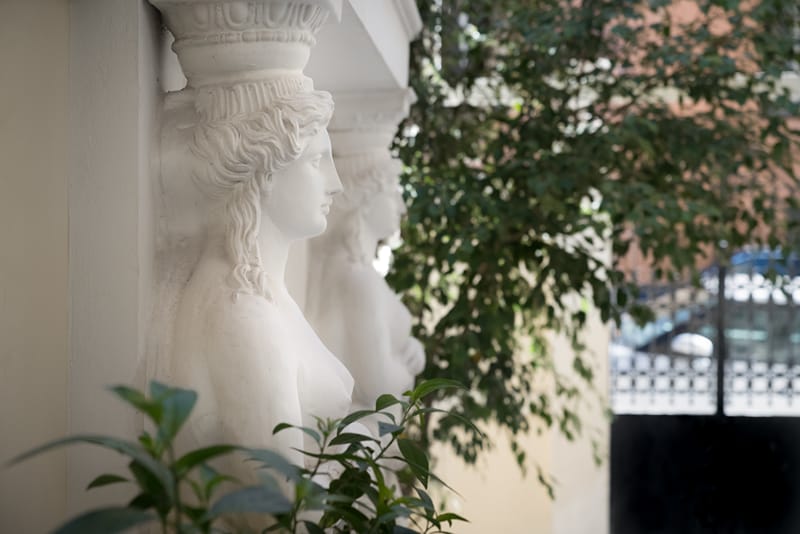
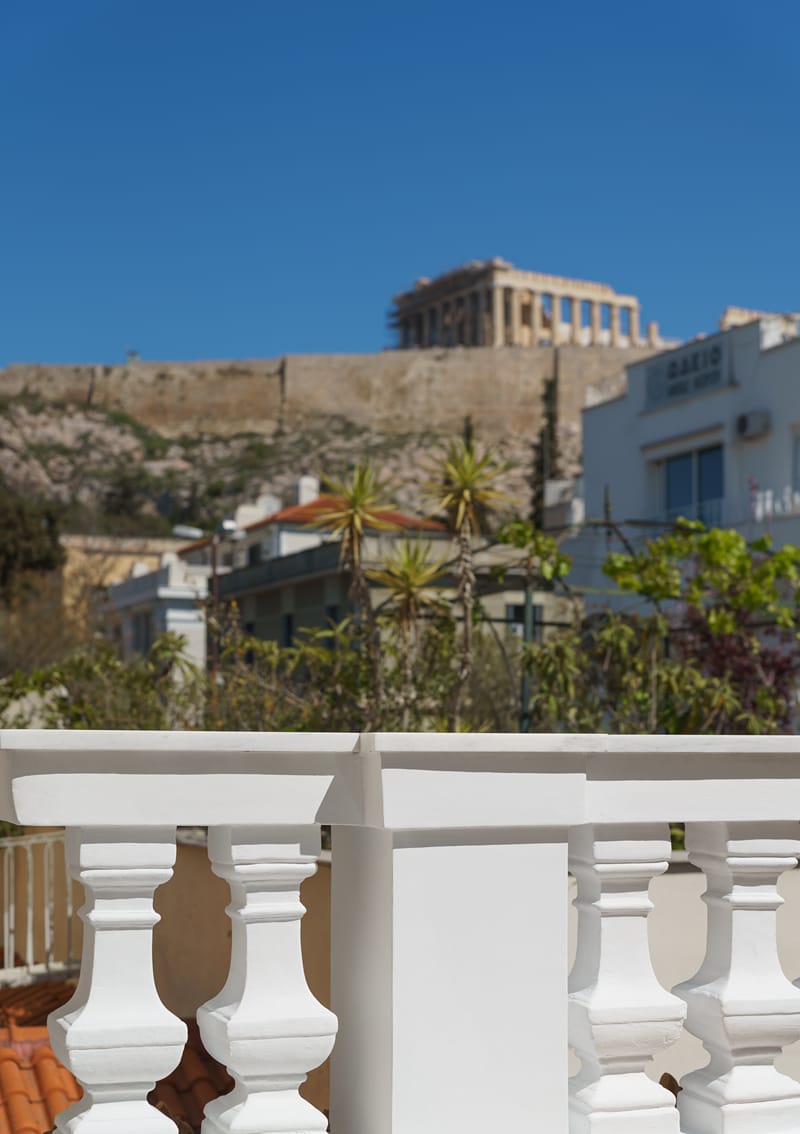
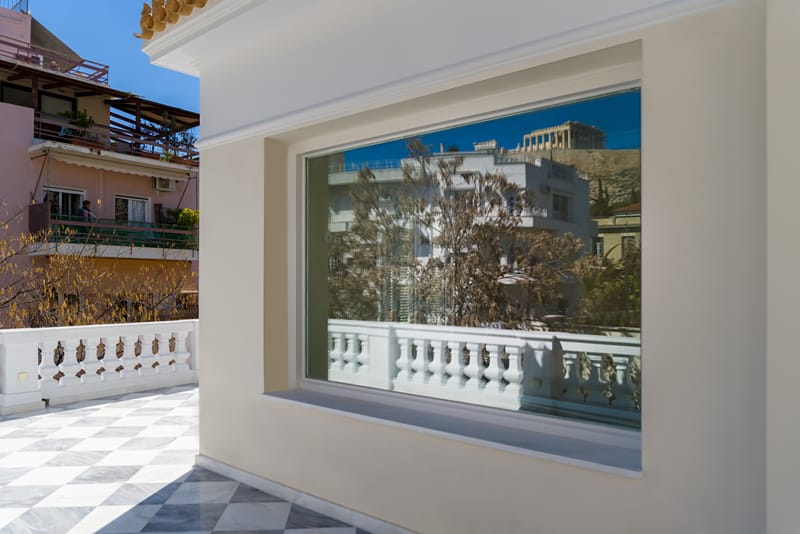
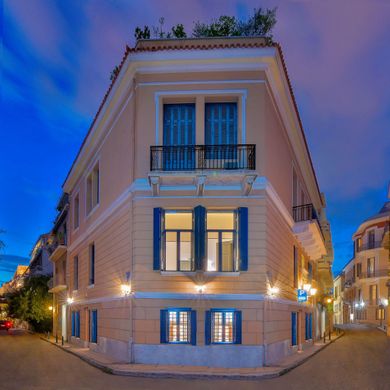
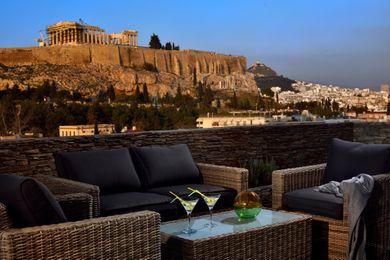
Noble Suites
A 1901 neoclassical house under the Acropolis – four suites of marble and old wood.
9.7 Alternative places to stay
AthensDay 1
The food tour & the Acropolis
The Ultimate Food Tour
Acropolis – guided
Acropolis Museum
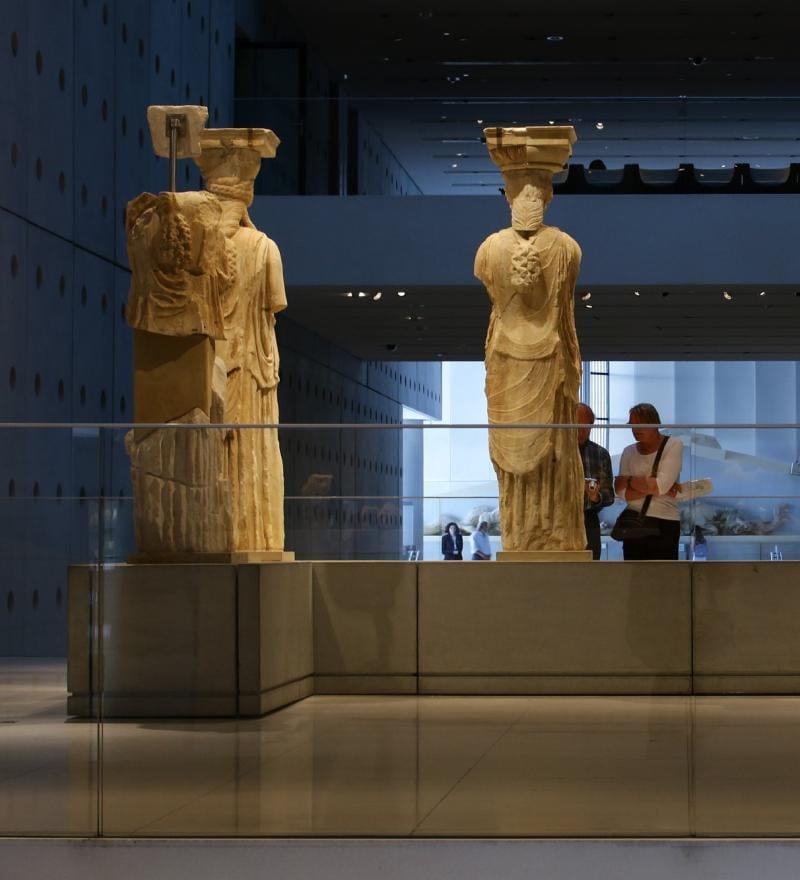
It is one of the most important contemporary works of architecture in Athens. Its construction, designed by architects B. Tschumi and Mih. Fotiadis was completed in 2007. Standing only 300m away from the Acropolis, its total area covers 21,000 sq.m, while it offers a display area of 14,000 sq.m. It is made of steel, glass and concrete; it uses natural light efficiently so that its 4,000 exhibits would show off. The last level (The Parthenon room) has the dimensions and the direction of the Parthenon and it has been rotated by 23 degrees in relation to the rest of the building so that the visitor would have an immediate view of the monument. The surrounding area, visible from the glass floor of the ground level, functions as an openair museum-excavation. The main entrance is on Dionyssiou Areopagitou Street. In addition, the imposing Weiller building stands in the vicinity. Having been built by German architect W. Von Weiller, it combines Byzantine style masonry and neoclassical decorative patterns. Initially it was used as a military hospital and later as police unit headquarters, whereas since 1987 it houses the Acropolis Research Centre
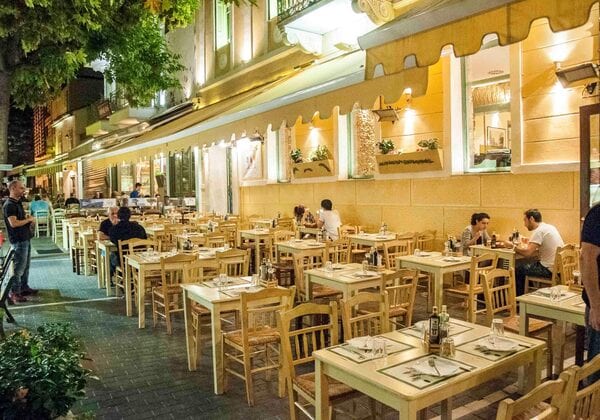
Lithos Taverna
Tucked into a Psirri side street, Lithos does my favourite Moussaka in Athens – layered the way your grandmother would approve, sitting in front of you within minutes of ordering. The room is stone-walled and unfussy, the wine comes in carafes, and the kitchen turns out the Greek classics with just enough finesse to make the regulars regulars.
AthensDay 2
The Ancient Agora, Plaka & Monastiraki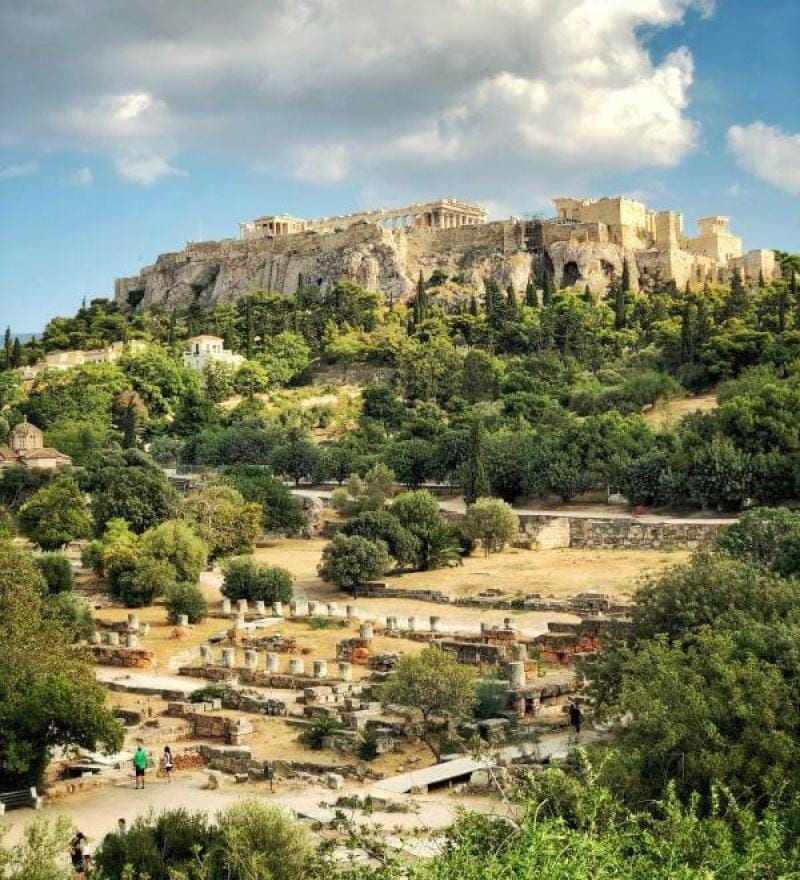
Ancient Agora
The Ancient Agora – the civic heart of classical Athens, walking distance from the Acropolis. The Stoa of Attalos houses a small archaeological museum; the Temple of Hephaestus on the far side is the best-preserved Greek temple anywhere. Combine the visit with the Acropolis on the same day; the joint ticket covers both.
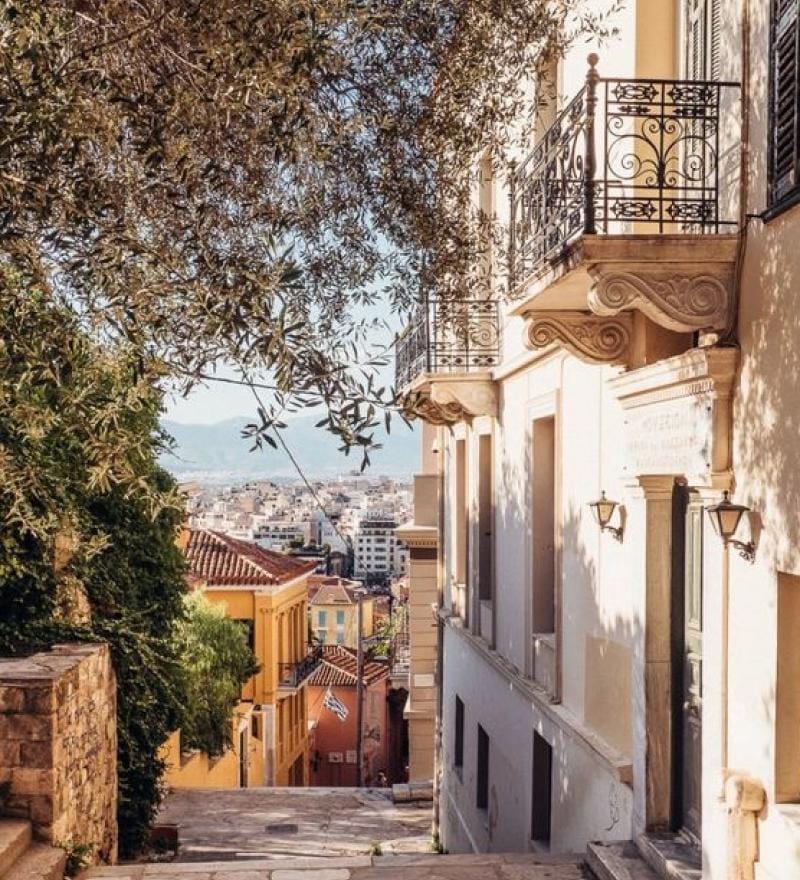
Plaka
Plaka, also known as the "neighbourhood of the gods," is the oldest neighbourhood of Athens. Walking on its paved narrow streets you get the feeling that you are travelling back in time. The origin of the name of the neighbourhood is unknown, although theories abound. According to popular belief, Plaka was named after a slab of stone that was found near the church of Ayios Georgios Alexandrias, in the vicinity of the theatre of Dionysos. The beautiful neoclassical style colour of the houses, the architecture, the well-kept gardens, and the beauty and atmosphere of the neighbourhood are enchanting. In Plaka the air you breathe is different; it is lighter, cleaner, and fragrant, like a gift of the gods. When you visit Plaka you should bring a map, because you might get lost in the labyrinth of narrow streets and alleys. In Adrianou Street, the central street of the neighbourhood, as in other streets in the area, you will find shops selling traditional products, souvenirs, Greek folk art and handicrafts, etc.
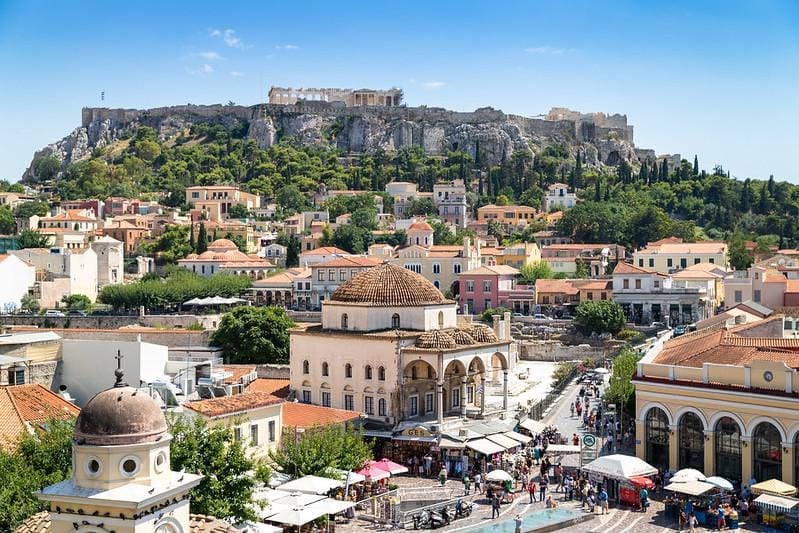
Monastiraki
A distinctive old Athens area, with narrow, irregularly criss-crossing streets, and small buildings, characteristic of Ottoman and to some extent Byzantine urban planning. On the outdoor stands of street sellers, or the small shops on the central roads you can find anything, such as shoes, clothes, old and new furniture, old books and magazines, souvenirs, jewellery, hats, bronze objects, new and used records and CDs and traditional Greek instruments (bouzouki, touberleki). Shopping or walking in Monastiraki is an unforgettable experience. You will be stunned by the variety and quality of things you can buy in the market
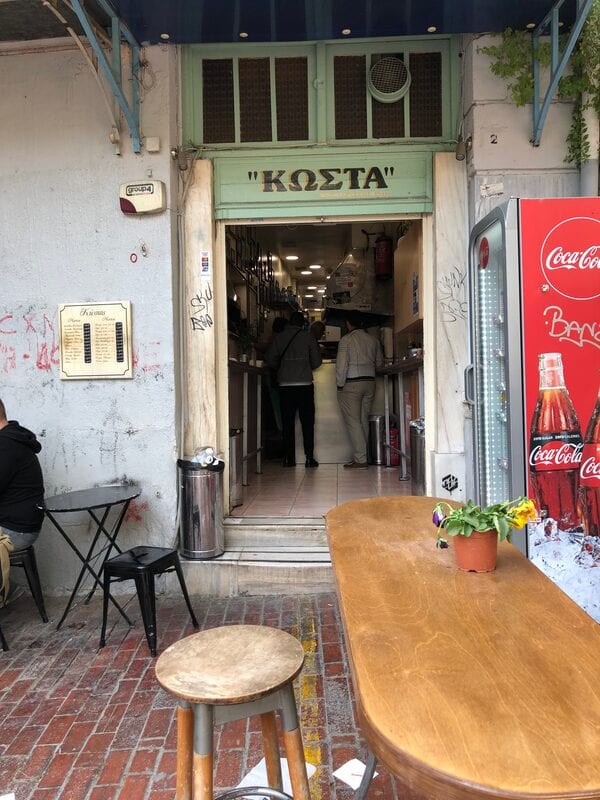
Kostas
Amazing gyros – a tiny grill on Agia Irini Square that has been doing pork souvlaki the same way for decades. A handful of stools, a queue that moves fast, and the smell of charcoal two streets away. Grab one (or two) in the pita, open the wax paper on the square, and you've understood why this is the Athens food pilgrimage.
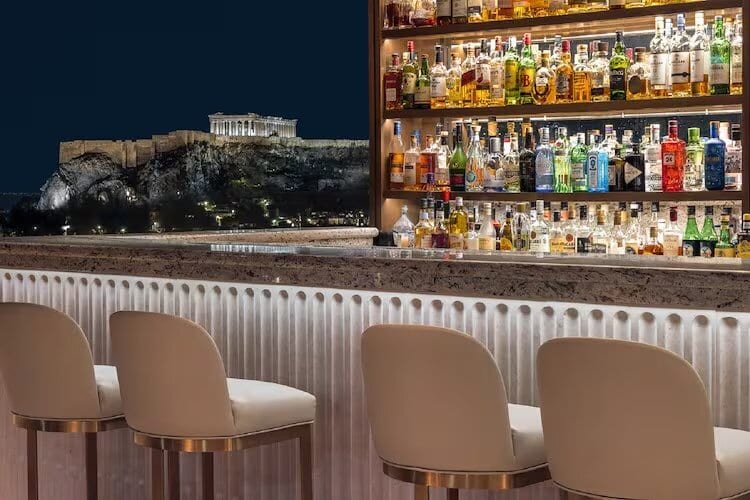
Grande Bretagne Roof Bar
The rooftop bar of the GB Roof Garden restaurant, crowning the Hotel Grande Bretagne on Syntagma Square. Take a stool at the marble counter or a terrace table at golden hour – the Acropolis floodlit across the rooftops, a list of some fifty cocktails, and the calmest view in the city centre. Open daily 13:00–02:00; smart casual, and book ahead in season.
AthensDay 3
A day cruise to Hydra, Poros & Aegina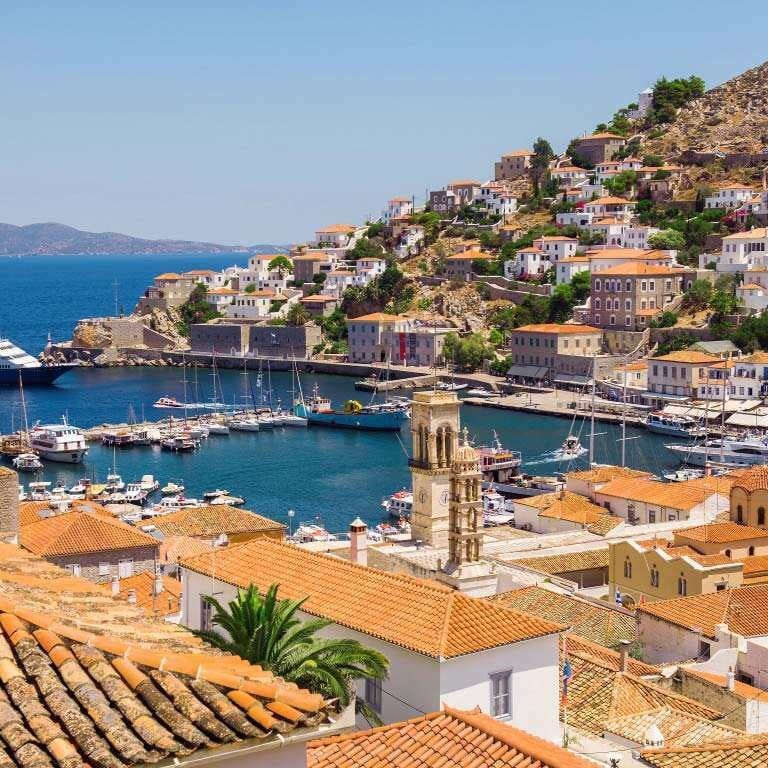
Saronic Islands Day Cruise
The day is a choice – Delphi by coach or the islands by boat. You can also catch the ferries out to the Saronic islands, which are really lovely. We especially like Hydra, which has no cars or scooters and was home to the acclaimed musician Leonard Cohen and many famous playwrights, the original 'bohemians' for over 20 years. There is a well priced 1 day cruise that takes in Aegina, Poros, Hydra and Spetses as well. Take the boat.
AthensDay 4
Ermou, Syntagma & the National Garden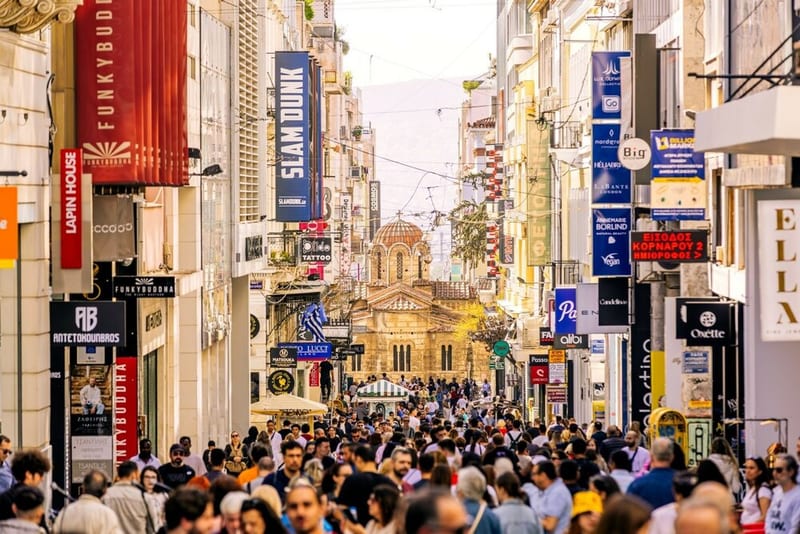
Ermou Street
Athens' great shopping mile – the marble-paved pedestrian street running from Syntagma Square down toward Monastiraki. High-street flagships and old family shops stand side by side, and halfway down the tiny Byzantine church of Kapnikarea sits marooned mid-stream while the crowd parts around it. Best saved for the end of the trip: shop last, and carry nothing around the islands.
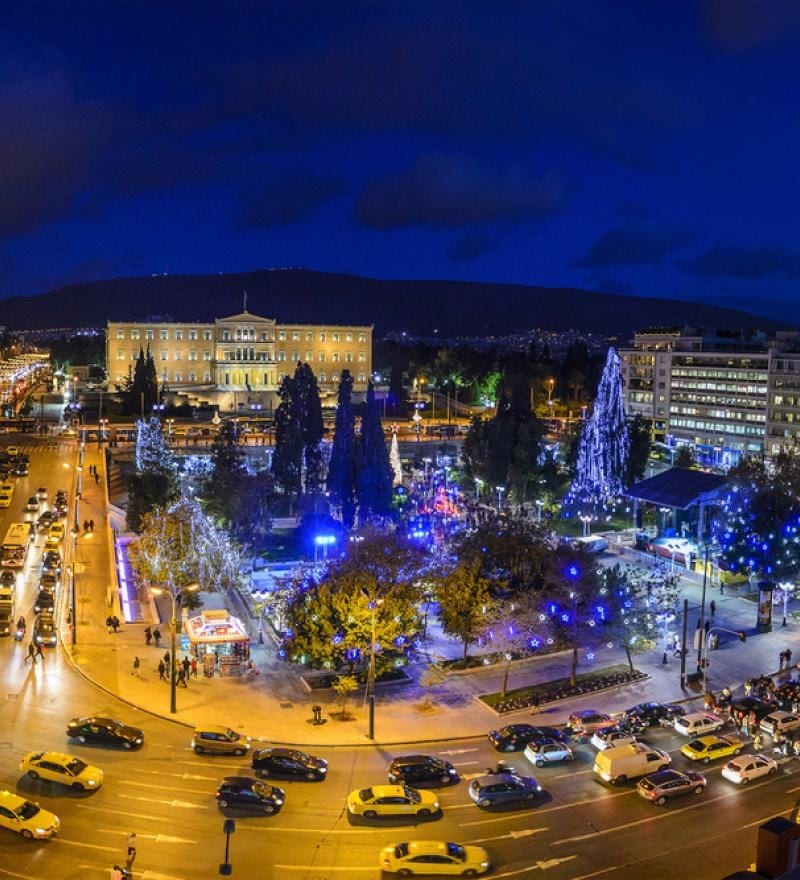
Syntagma Square
Syntagma Square is Athens' central square. The name of the square is derived from an uprising on 3 September 1843, of the people and the guard of Athens before the then Royal Palace building, (what is now the Parliament), demanding that King Otto grant a Constitution (Syntagma means Constitution). Syntagma Square and Omonia Square are the two central locations of the city. You should not be surprised when you ask directions if people refer to Syntagma square. Plaka, Acropolis, the Cathedral, the National Garden, Ermou Str, and Kolonaki, are located in the vicinity of Syntagma Square. You will find fashionable cafes and small restaurants located here. The square is busy around the clock. At the kiosks you will find miscellaneous items, ranging from aspirin to souvenirs, newspapers and foreign magazines.
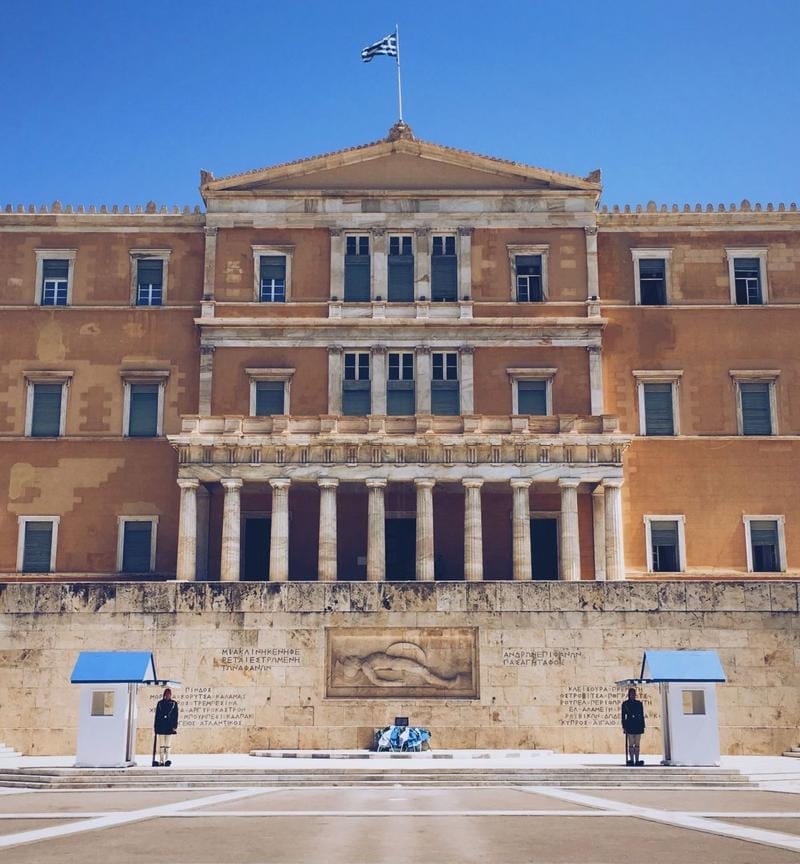
Greek Parliament
Dominating Syntagma Square, the building was the residence of the first king of Greece Otto. The building was constructed from 1836 to 1842. George A', who succeeded Otto on the throne, also resided in the palace. During his reign, two successive fires destroyed the building, making it unsuitable for use as a royal residence. In 1924 the government decided to situate Parliament in the building. Reconstruction work was completed in 1934. The interior was redesigned by architect A. Kriezis. In Parliament you will find national treasures, such as the first Greek Constitution, a collection of valuable paintings and a large library.
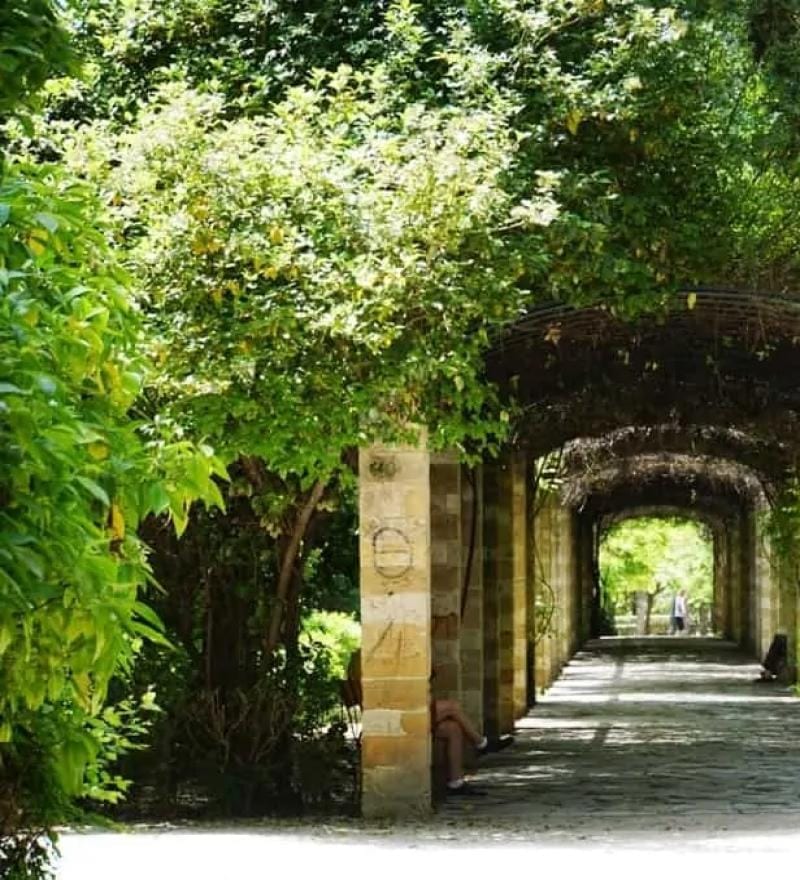
National Garden
The National Garden, open from dawn to sunset, is an oasis in the centre of the city. It has a total area of 160,000 m2. Some five hundred different kinds of plants, bushes and trees from various locations around the world are grown here (in total, it has 7,000 trees and 40,000 bushes). At the same time, it comprises an important natural life reserve in Athens as many different species of birds, hedgehogs, turtles, ducks and even bats are gathered here. The National Garden – which was formerly the palace garden - was laid out from 1838-1860. There are six entrances: at Vasilissis Sofias Avenue, Irodou Attikou Str, Vasilissis Amalias Avenue, and two entrances connecting the National Garden to the Zappeion. You will also find here a small pond, a small zoo, the Botanical Museum, a traditional café, a children's library, a playground, various monuments of antiquity, and the busts of important personalities of modern Greece (among others, politicians and authors).
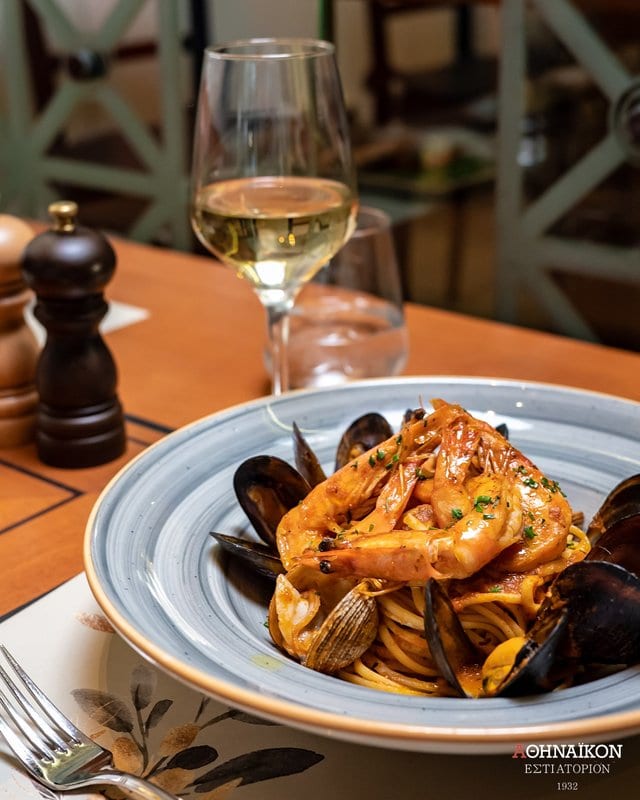
Athinaikon
An Athens institution since 1932, Athinaikon is where the city goes for proper ouzomezedes – shrimp croquettes, fried smelt, mussels saganaki – on marble tables under old photographs. It moved premises with its regulars over the decades and never lost the habit of doing simple things properly. Order a carafe of ouzo and a spread of small plates; service is brisk, portions honest, the bill kinder than the neighbourhood suggests. Between Syntagma and Monastiraki, it is the natural dinner after the Evzones' changing of the guard.
Your whole trip in one booking
With WeAreTravelers – a licensed, Athens-based travel agency.
- Zero service fees. Same price as if you organized everything on your own.
- One booking and one payment for the whole trip (instead of separate bookings for each hotel, ferry and flight).
- One local point of contact, who has your back – before you travel, and while you're here.
- Covered by the EU package travel rules. Your payments are protected by law.