 ×
×
 One Day in Athens – A Complete Itinerary
 A trip by Sandy PapasGreece Travel Secrets
One Day in Athens – A Complete Itinerary
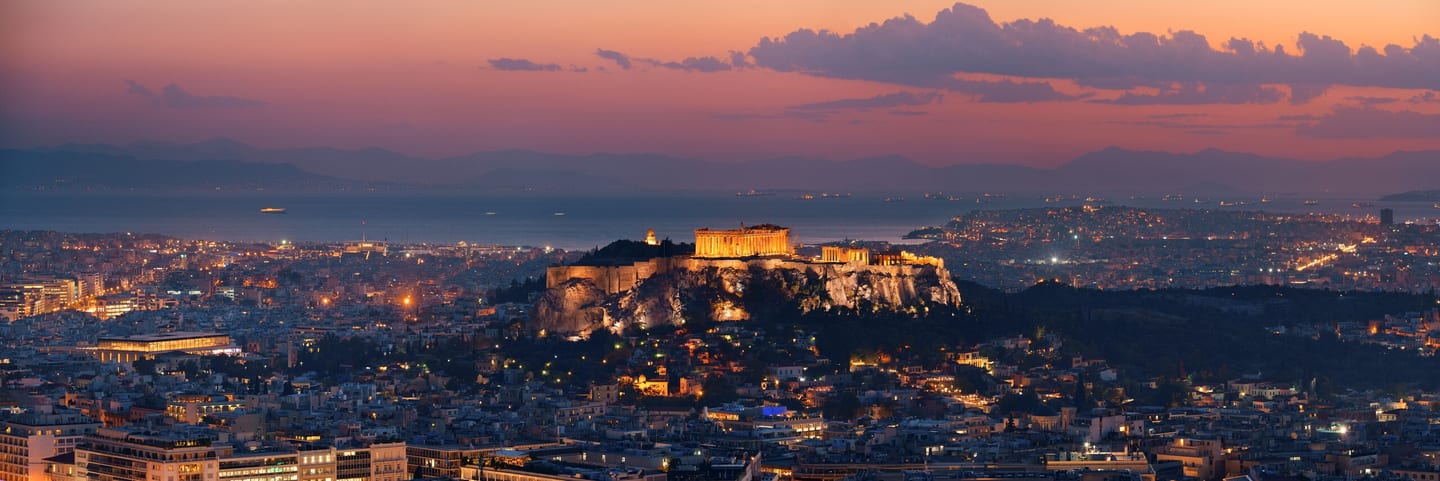
Ideally you'd give Athens three days or more – but if you're transiting or off a cruise ship, here's how to do the city in a single walk. About 5 kilometres of mostly flat terrain, from the Acropolis to the Psirri rooftop bars.
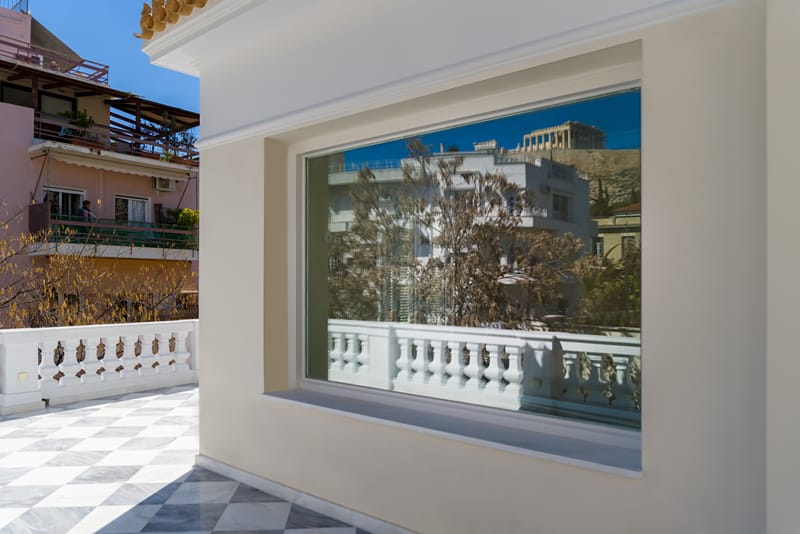
Noble Suites
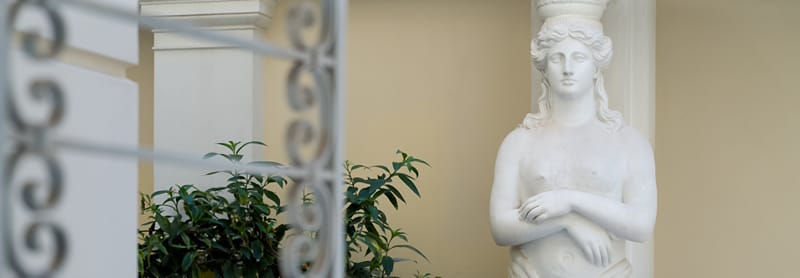
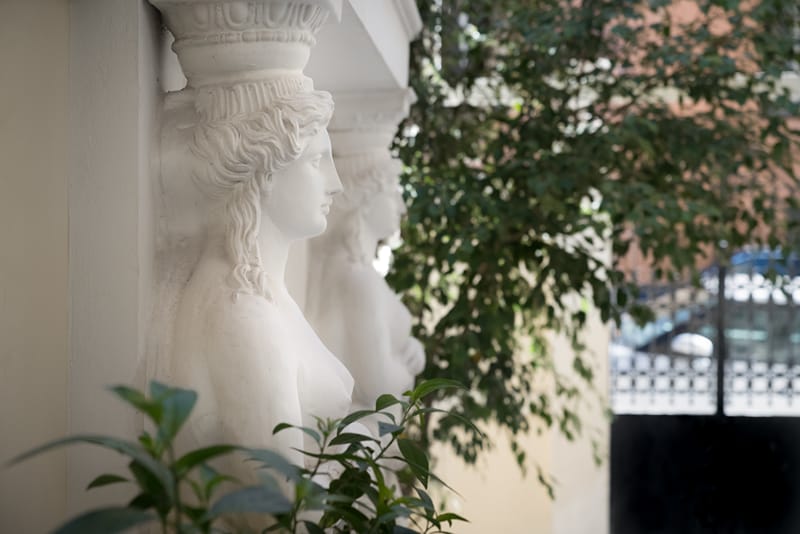
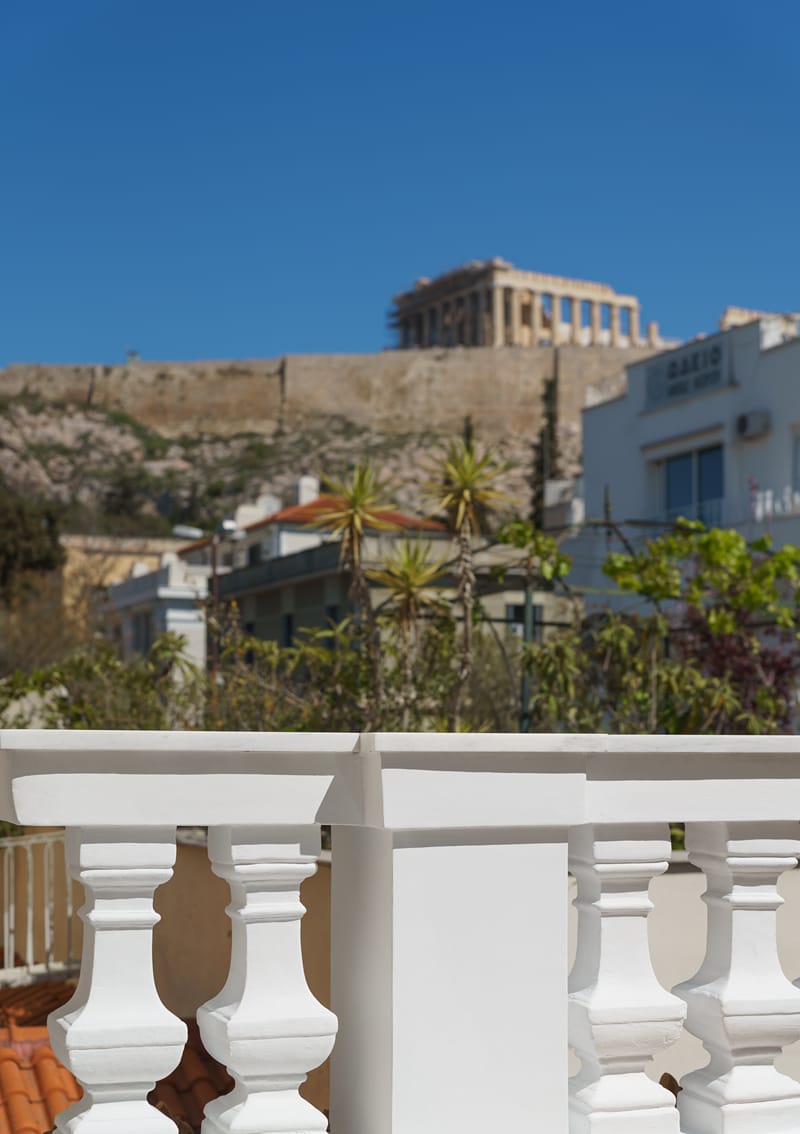
A 1901 neoclassical house under the Acropolis – four suites of marble and old wood.
 9.7
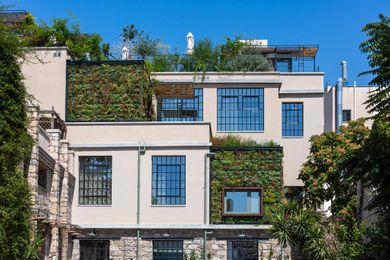
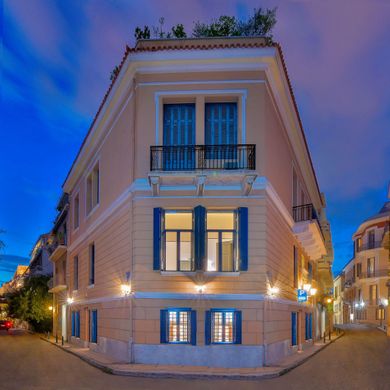
9.7 Alternative places to stay

AthensDay 1
The Acropolis & the Old Town
The Ultimate Food Tour
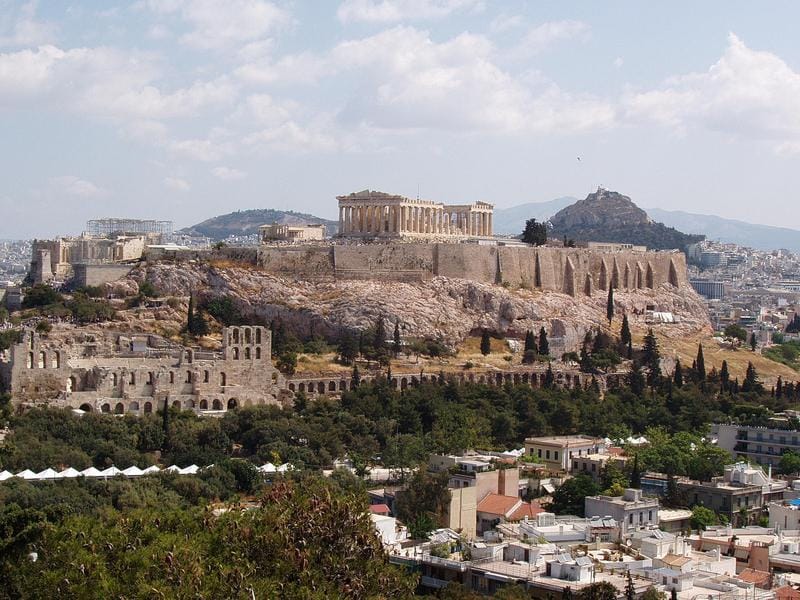
Acropolis – guided
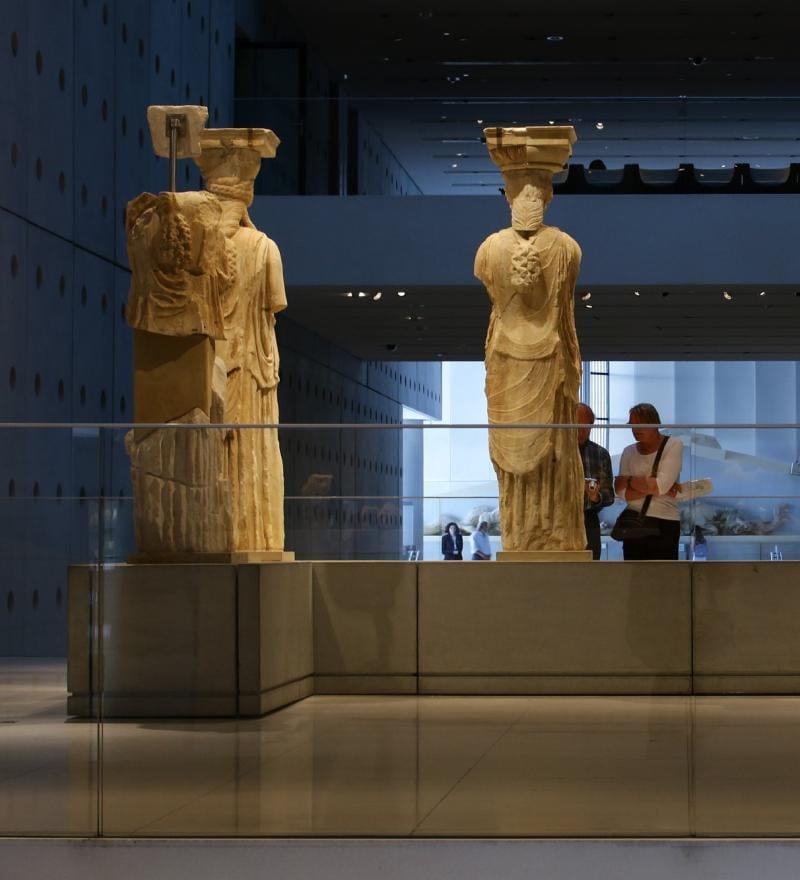
Acropolis Museum
It is one of the most important contemporary works of architecture in Athens. Its construction, designed by architects B. Tschumi and Mih. Fotiadis was completed in 2007. Standing only 300m away from the Acropolis, its total area covers 21,000 sq.m, while it offers a display area of 14,000 sq.m. It is made of steel, glass and concrete; it uses natural light efficiently so that its 4,000 exhibits would show off. The last level (The Parthenon room) has the dimensions and the direction of the Parthenon and it has been rotated by 23 degrees in relation to the rest of the building so that the visitor would have an immediate view of the monument. The surrounding area, visible from the glass floor of the ground level, functions as an openair museum-excavation. The main entrance is on Dionyssiou Areopagitou Street. In addition, the imposing Weiller building stands in the vicinity. Having been built by German architect W. Von Weiller, it combines Byzantine style masonry and neoclassical decorative patterns. Initially it was used as a military hospital and later as police unit headquarters, whereas since 1987 it houses the Acropolis Research Centre
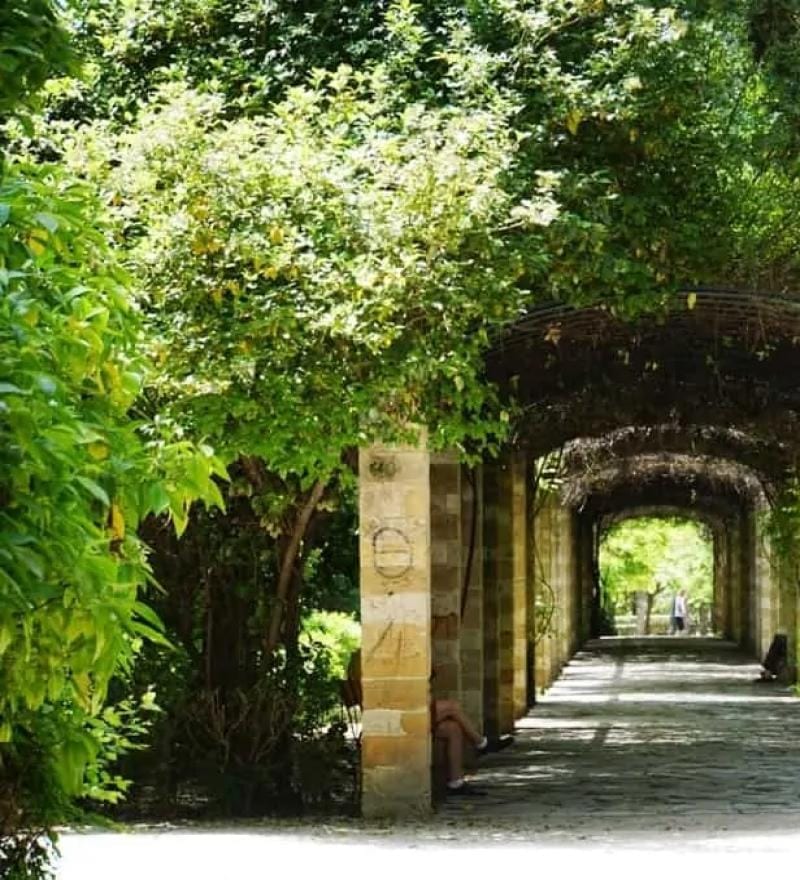
National Garden
The National Garden, open from dawn to sunset, is an oasis in the centre of the city. It has a total area of 160,000 m2. Some five hundred different kinds of plants, bushes and trees from various locations around the world are grown here (in total, it has 7,000 trees and 40,000 bushes). At the same time, it comprises an important natural life reserve in Athens as many different species of birds, hedgehogs, turtles, ducks and even bats are gathered here. The National Garden – which was formerly the palace garden - was laid out from 1838-1860. There are six entrances: at Vasilissis Sofias Avenue, Irodou Attikou Str, Vasilissis Amalias Avenue, and two entrances connecting the National Garden to the Zappeion. You will also find here a small pond, a small zoo, the Botanical Museum, a traditional café, a children's library, a playground, various monuments of antiquity, and the busts of important personalities of modern Greece (among others, politicians and authors).
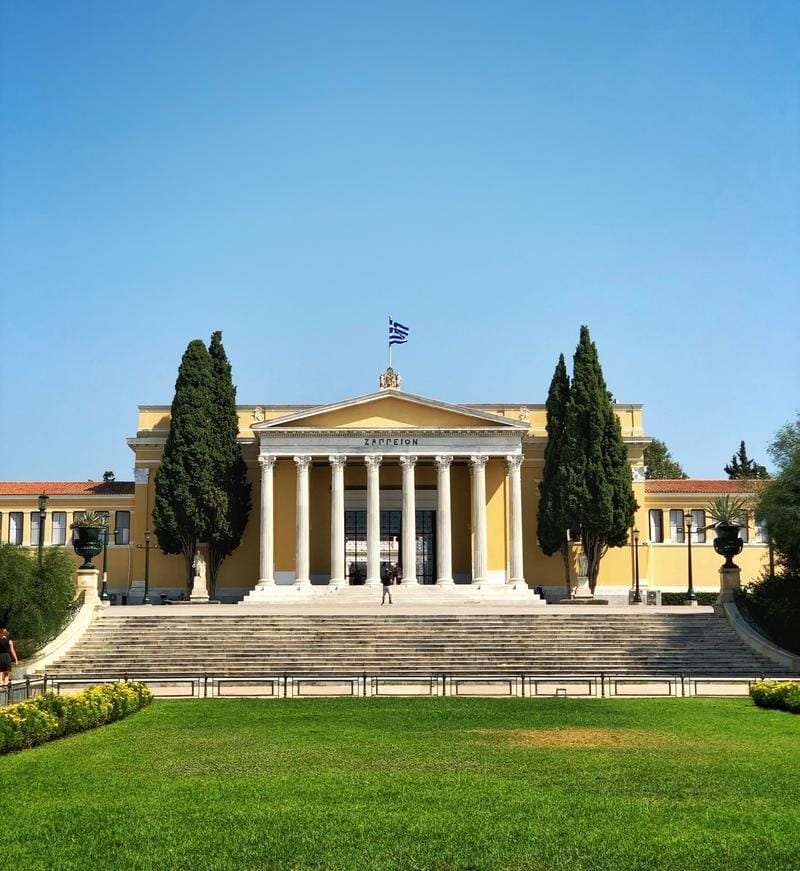
Zappeion Hall
An attractive building designed by Th. Hansen, it was constructed from 1874-1888. In the past few years some of the most significant events in the history of the country have taken place in the "Conferences and Exhibitions Mansion," such as European summits, the announcement of election results, and significant political announcements. Moreover, art exhibitions and occasionally concerts are held here. In the vicinity of the mansion are the statues of the Zappas cousins, who funded the construction of the building, and an attractive park, where Athenians go for a walk, especially on Sundays. Near Zappeion Mansion there is a very nice cafe and an open-air cinema.
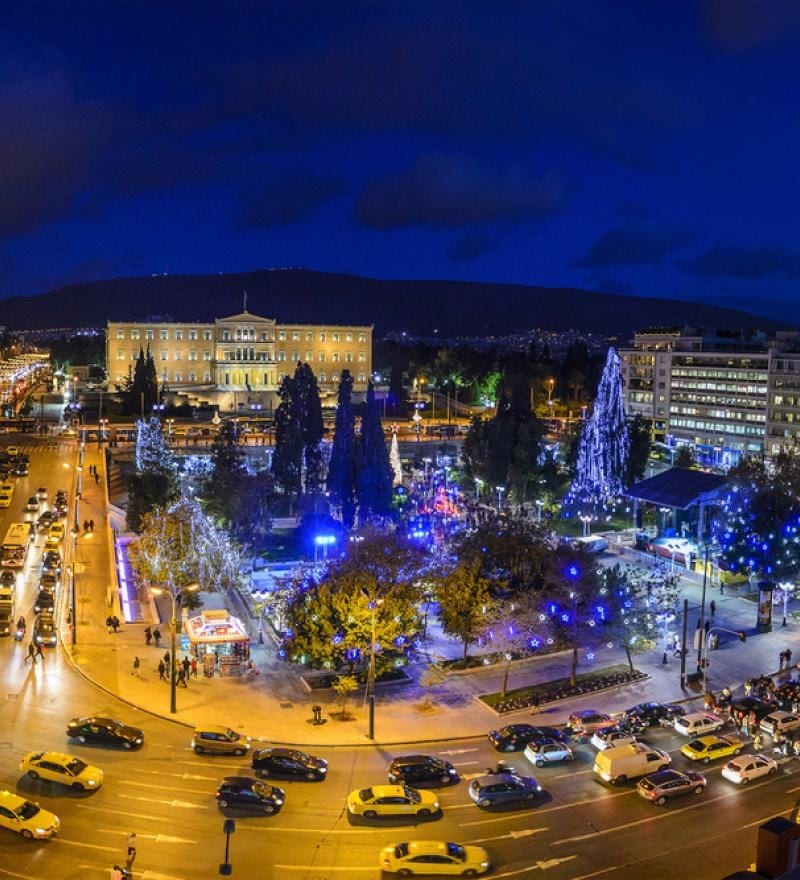
Syntagma Square
Syntagma Square is Athens' central square. The name of the square is derived from an uprising on 3 September 1843, of the people and the guard of Athens before the then Royal Palace building, (what is now the Parliament), demanding that King Otto grant a Constitution (Syntagma means Constitution). Syntagma Square and Omonia Square are the two central locations of the city. You should not be surprised when you ask directions if people refer to Syntagma square. Plaka, Acropolis, the Cathedral, the National Garden, Ermou Str, and Kolonaki, are located in the vicinity of Syntagma Square. You will find fashionable cafes and small restaurants located here. The square is busy around the clock. At the kiosks you will find miscellaneous items, ranging from aspirin to souvenirs, newspapers and foreign magazines.
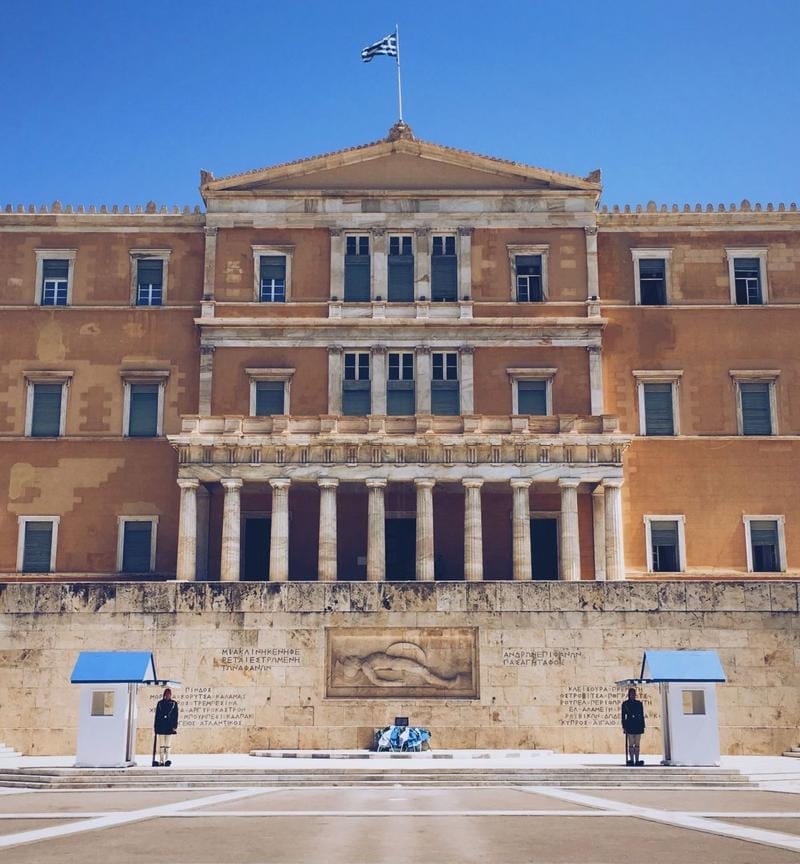
Greek Parliament
Dominating Syntagma Square, the building was the residence of the first king of Greece Otto. The building was constructed from 1836 to 1842. George A', who succeeded Otto on the throne, also resided in the palace. During his reign, two successive fires destroyed the building, making it unsuitable for use as a royal residence. In 1924 the government decided to situate Parliament in the building. Reconstruction work was completed in 1934. The interior was redesigned by architect A. Kriezis. In Parliament you will find national treasures, such as the first Greek Constitution, a collection of valuable paintings and a large library.
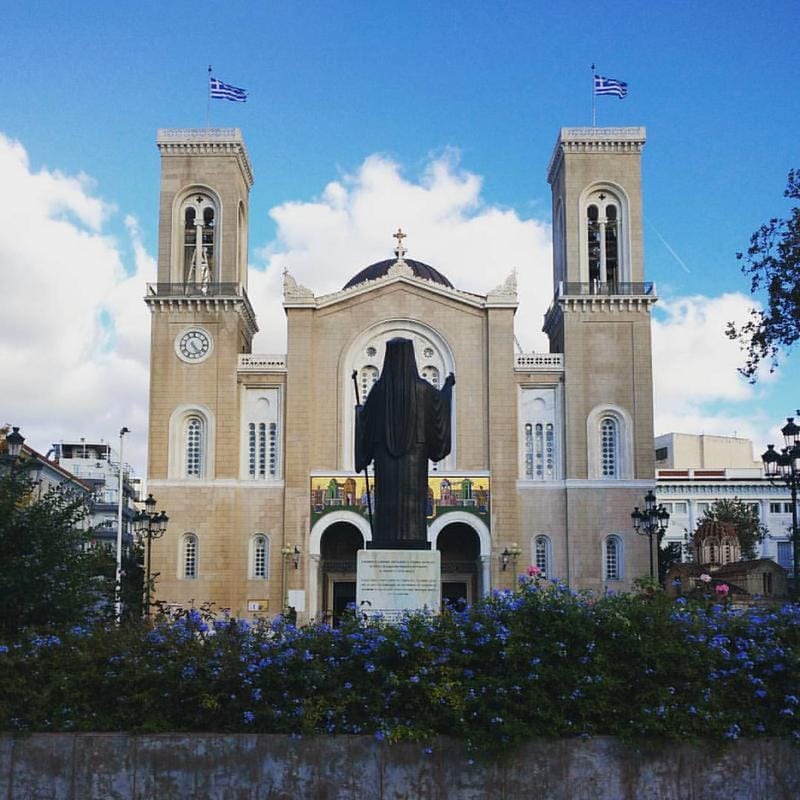
Metropolitan Church of Athens
This charming church is located near the new Cathedral. It was built in the late 12th century. It is dedicated to Gorgoepikoos Panayia (the Virgin Mary) and Ayios Eleftherios. Ancient and Byzantine bas-reliefs were used for the construction of the church. In the façade is an ancient frieze, taken from a monument of the 4th century B.C. depicting official Attic festivals. The church was the official Episcopal Seat of Athens following the expulsion of the bishops from the Parthenon by the Franks and later the Turks. From 1839 to 1842 it was used as a library. The new Metropolis nearby was built from 1842 and 1862 as the cathedral of Athens. It is a domed church built in the neobyzantine and neoclassical style.
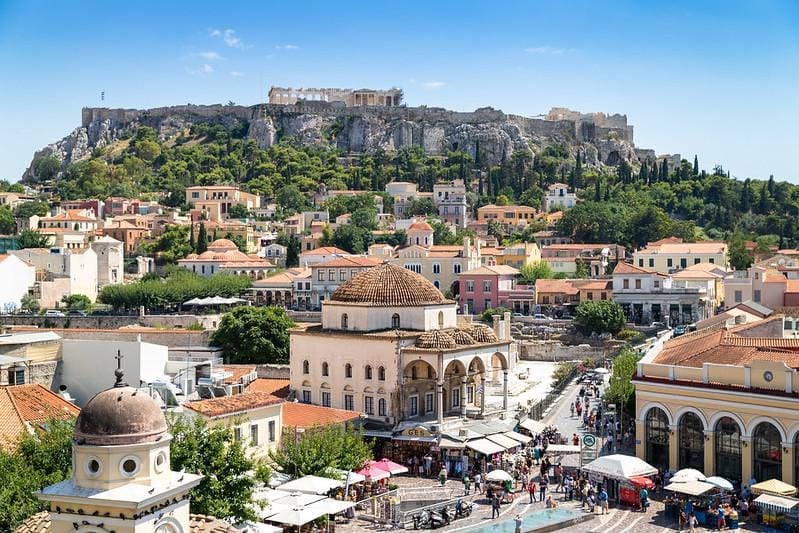
Monastiraki
A distinctive old Athens area, with narrow, irregularly criss-crossing streets, and small buildings, characteristic of Ottoman and to some extent Byzantine urban planning. On the outdoor stands of street sellers, or the small shops on the central roads you can find anything, such as shoes, clothes, old and new furniture, old books and magazines, souvenirs, jewellery, hats, bronze objects, new and used records and CDs and traditional Greek instruments (bouzouki, touberleki). Shopping or walking in Monastiraki is an unforgettable experience. You will be stunned by the variety and quality of things you can buy in the market
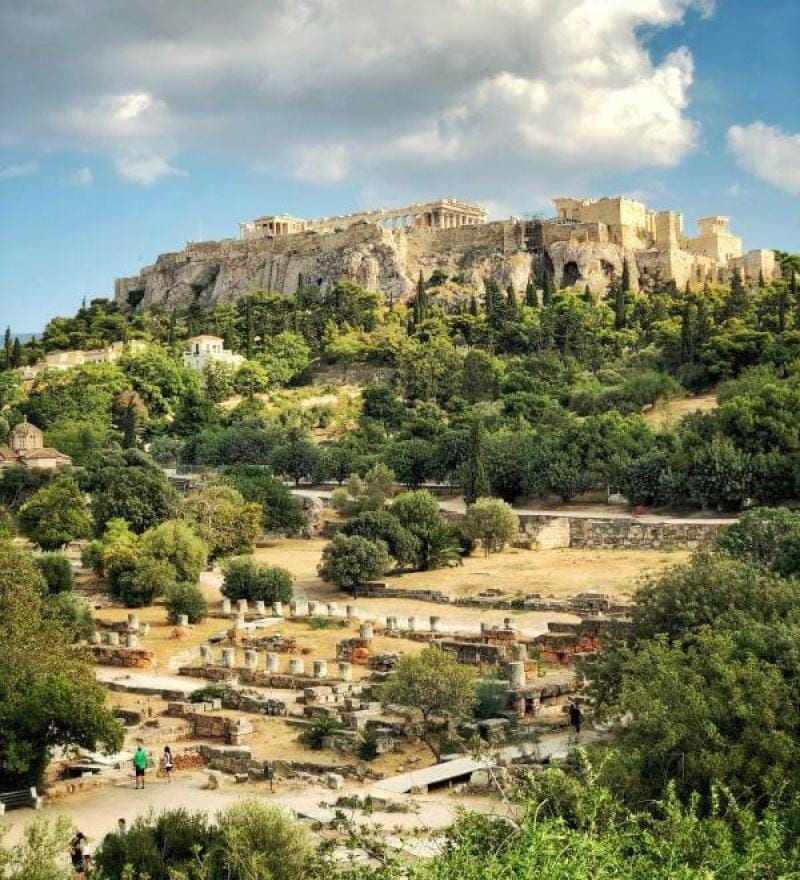
Ancient Agora
The archaeological area of the ancient Agora is located on the foothills of the Acropolis, near Thission Metro Station. In antiquity, the Agora was not solely a commercial centre. It was also an important political, cultural and religious centre. In the area of the agora were located administrative buildings, temples, public services and courts. The Athenians gathered here every day to buy and sell their goods, learn the current news, criticise the government, exchange ideas, or engage in discussion. The area was settled in the Neolithic age. The monuments located there were built in various historical periods: from the classical age to the 11th century AD. The church of Ayioi Apostoloi was built in the 11th century
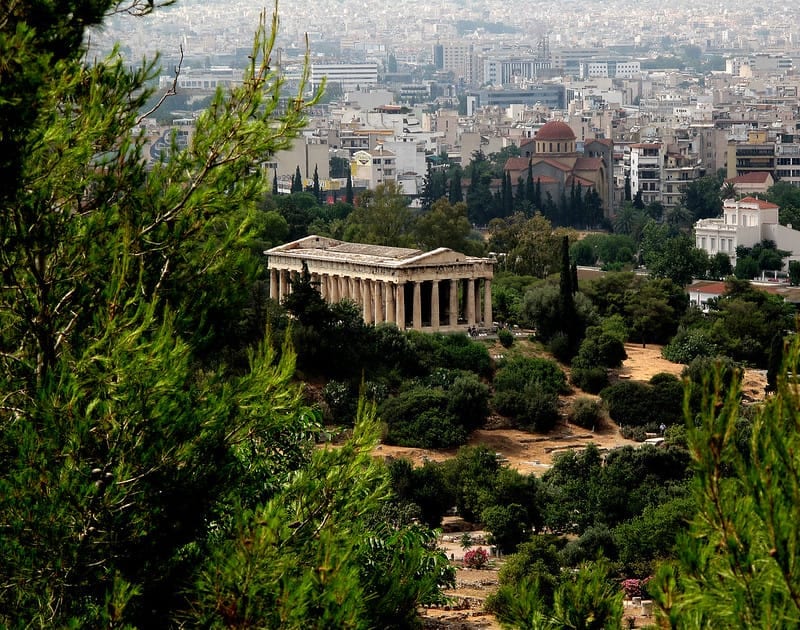
Temple of Hephaestus
Thission or Temple of Hephaestus was dedicated to Hephaestus and Athena, and not Theseus. It is located in the western perimeter of the Agora. It is the best-preserved temple of antiquity. It was built in 460-415 BC. In the temple stood the statues of Hephaestus and Athena, thought to have been sculpted by Alkamenes.
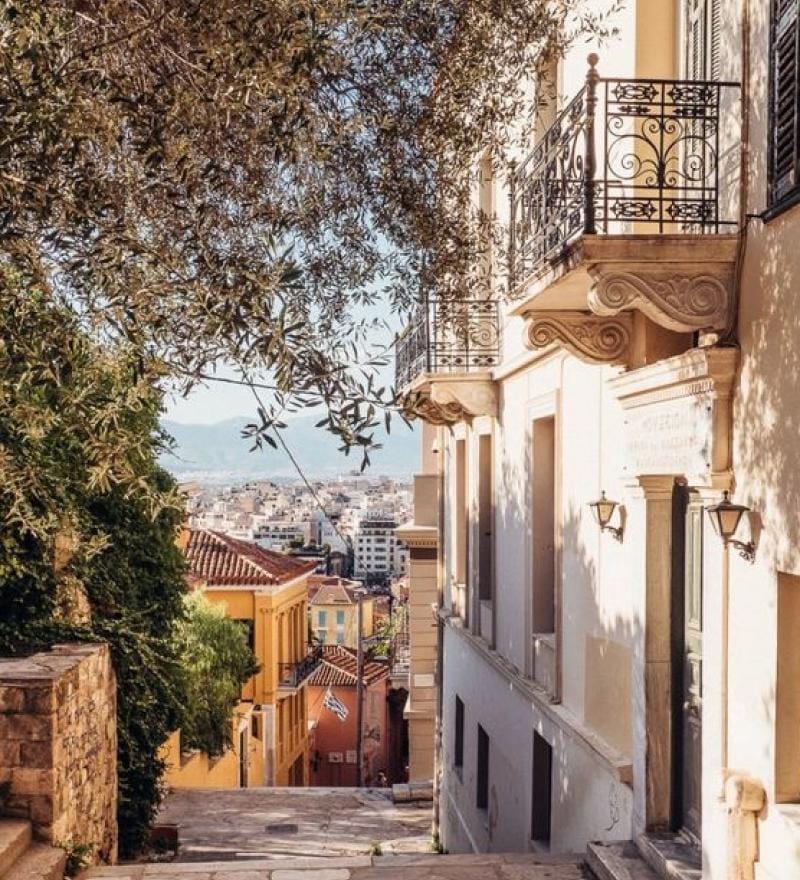
Plaka
Plaka, also known as the "neighbourhood of the gods," is the oldest neighbourhood of Athens. Walking on its paved narrow streets you get the feeling that you are travelling back in time. The origin of the name of the neighbourhood is unknown, although theories abound. According to popular belief, Plaka was named after a slab of stone that was found near the church of Ayios Georgios Alexandrias, in the vicinity of the theatre of Dionysos. The beautiful neoclassical style colour of the houses, the architecture, the well-kept gardens, and the beauty and atmosphere of the neighbourhood are enchanting. In Plaka the air you breathe is different; it is lighter, cleaner, and fragrant, like a gift of the gods. When you visit Plaka you should bring a map, because you might get lost in the labyrinth of narrow streets and alleys. In Adrianou Street, the central street of the neighbourhood, as in other streets in the area, you will find shops selling traditional products, souvenirs, Greek folk art and handicrafts, etc.
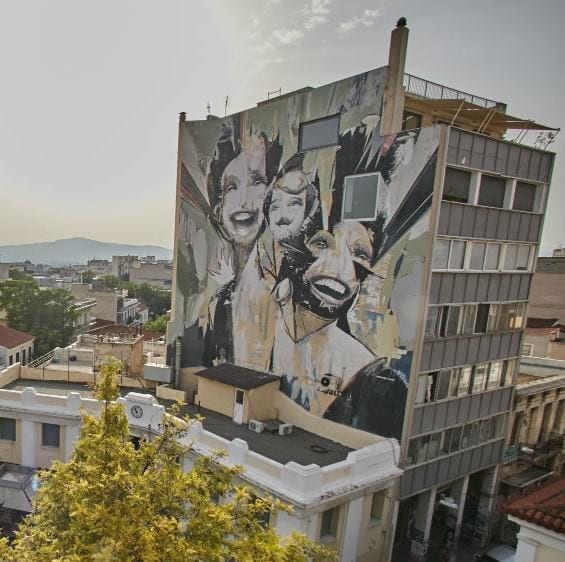
Psirri
A colourful neoclassical Athens neighbourhood, encompassed by Athinas Str, Ermou Str, and Evripidou Str. It is a busy neighbourhood, especially in the night. You will find on its narrow alleys a multitude of cafes, small bars, clubs, restaurants, ouzorestaurants, and taverns with live Greek music, theatres, galleries, art galleries, and antique shops. Following the liberation of Greece (1833), veteran freedom fighters and immigrants from the provinces settled in the neighbourhood. They opened cottage industries and workshops, which have given the neighbourhood a distinctive character. In the early 1990s, following a series of construction works, the neighbourhood became a popular nightlife and residential area. The churches in the area are also quite interesting, such as Ayioi Anargyroi, Ayios Demetrios, Ayios Gregorios (Armenian), et al. Iroon square, the central square, is a good place for you to start your walk.
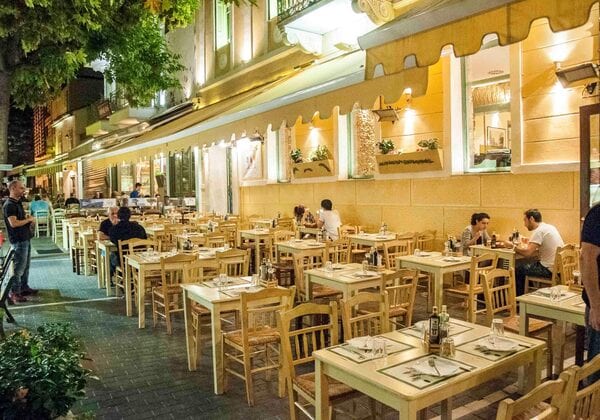
Lithos Taverna
Tucked into a Psirri side street, Lithos does my favourite Moussaka in Athens – layered the way your grandmother would approve, sitting in front of you within minutes of ordering. The room is stone-walled and unfussy, the wine comes in carafes, and the kitchen turns out the Greek classics with just enough finesse to make the regulars regulars.
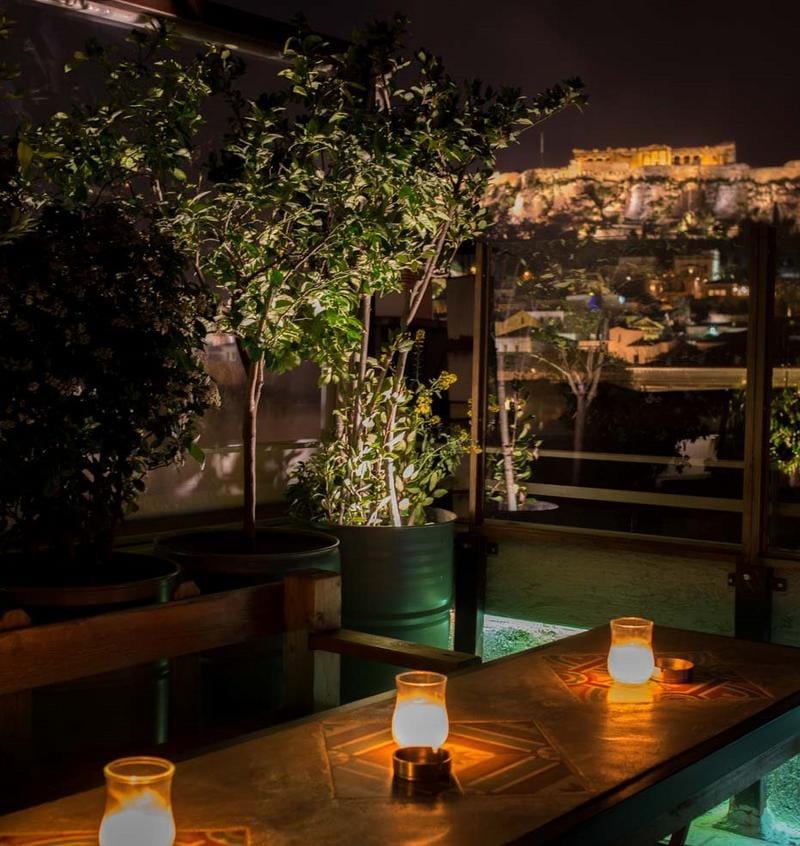
Couleur Locale
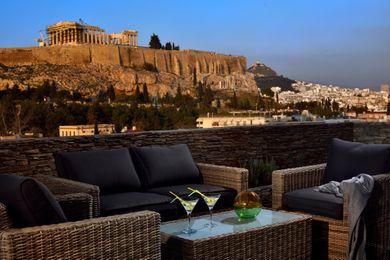
Hidden in the back streets not far from Monastiraki Square, you will find what is a very discreet entrance via a small arcade of antiques and bric-a brac shops. Using the elevator towards the 3rd floor, a large magical rooftop terrace appears, illuminated in blue and packed with a fashionable crowd, gathered over small candlelit tables. Couleur Locale's renowned cocktails together with the imposing hill of the Acropolis justify why this place is so popular among locals.
Your whole trip in one booking
With WeAreTravelers – a licensed, Athens-based travel agency.
- Zero service fees. Same price as if you organized everything on your own.
- One booking and one payment for the whole trip (instead of separate bookings for each hotel, ferry and flight).
- One local point of contact, who has your back – before you travel, and while you're here.
- Covered by the EU package travel rules. Your payments are protected by law.