 ×
×
 7 Day Itinerary Greece
 A trip by Sandy PapasGreece Travel Secrets
7 Day Itinerary Greece
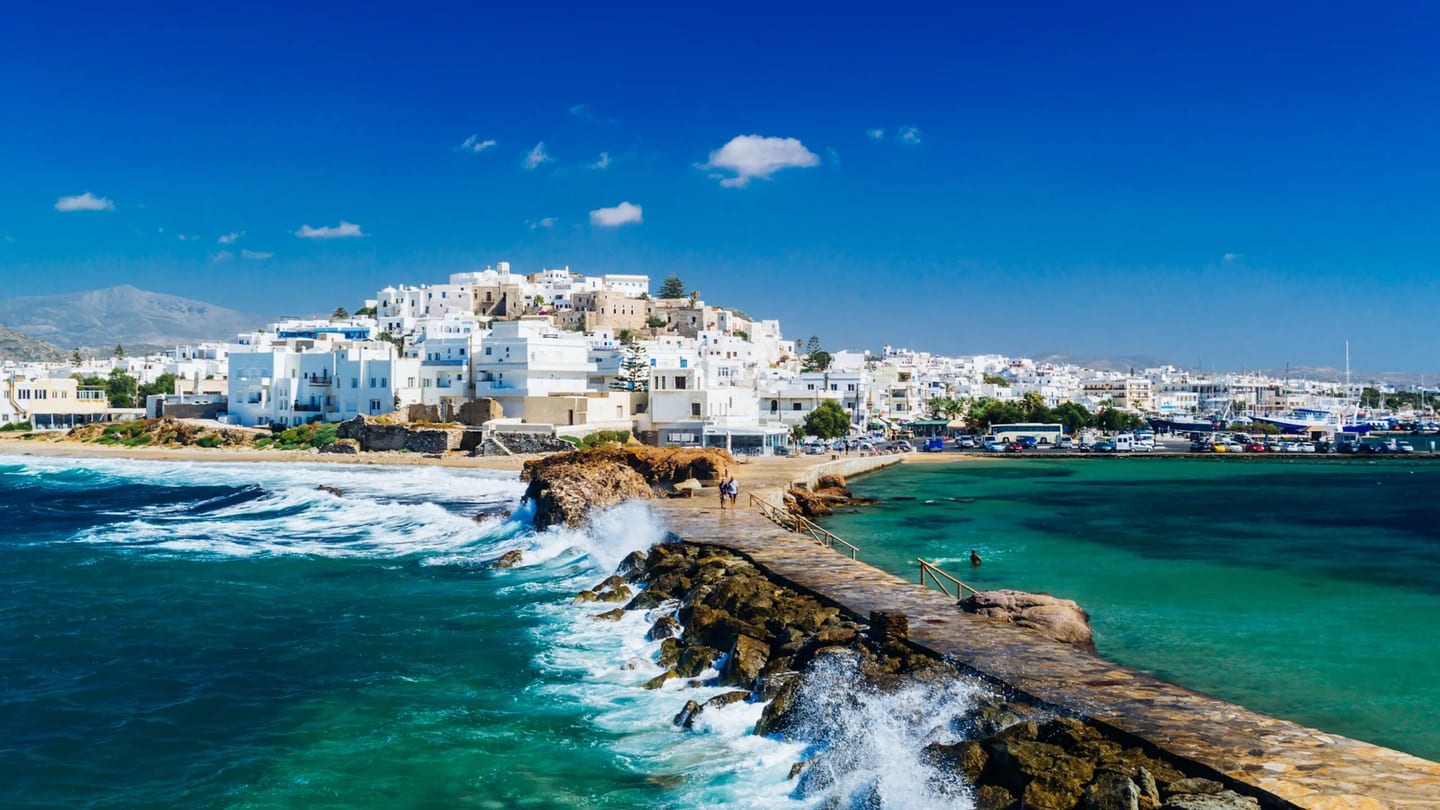
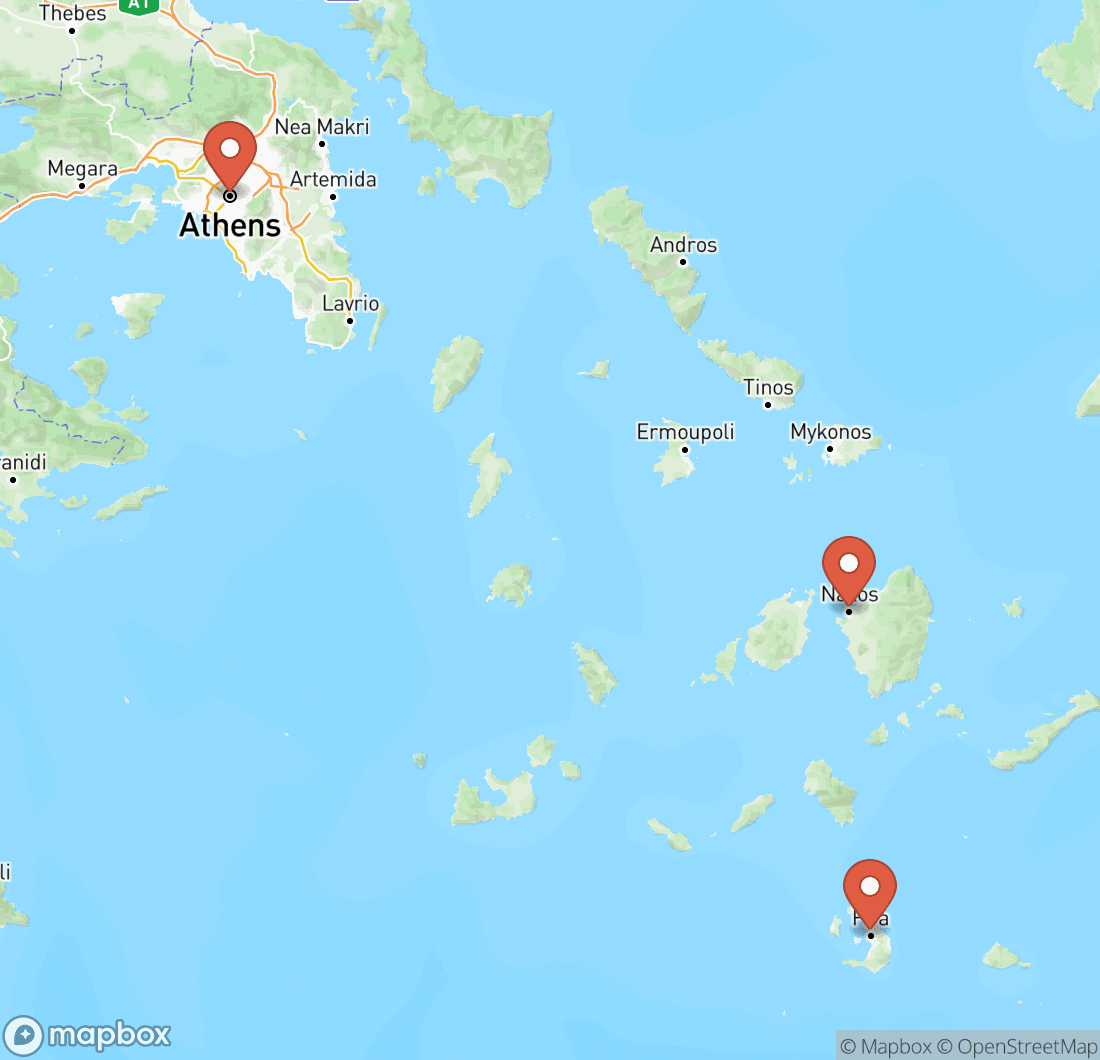
Seven days is short for Greece, but it's plenty for a real taste – the caldera at Santorini, the long beaches and mountain villages of Naxos, and the Acropolis to close. Flights into Santorini, ferry across to Naxos, ferry or flight back to Athens for the international hop home.
Santorini
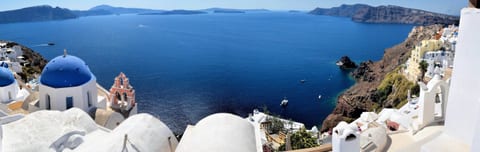
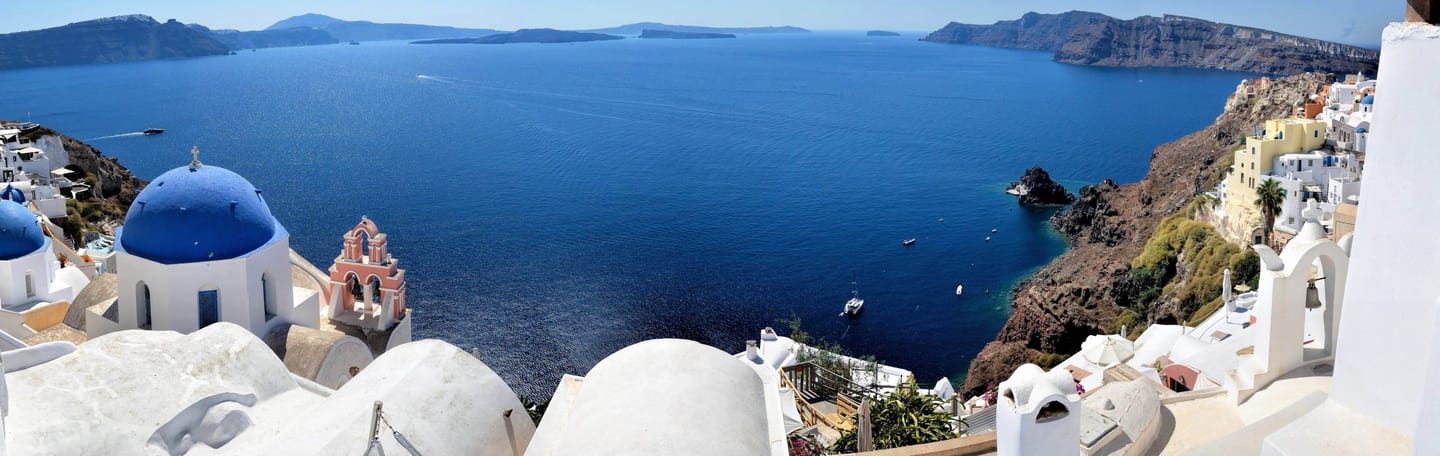
Days 1–2 of 7 · 2 nightsTwo nights in Santorini is enough for the postcards – Oia's caldera, the Fira-to-Oia hike, the wineries of the south, Akrotiri's buried Minoan city, and the famous red and black volcanic beaches. Fly straight in to save half a day on either side of the trip.
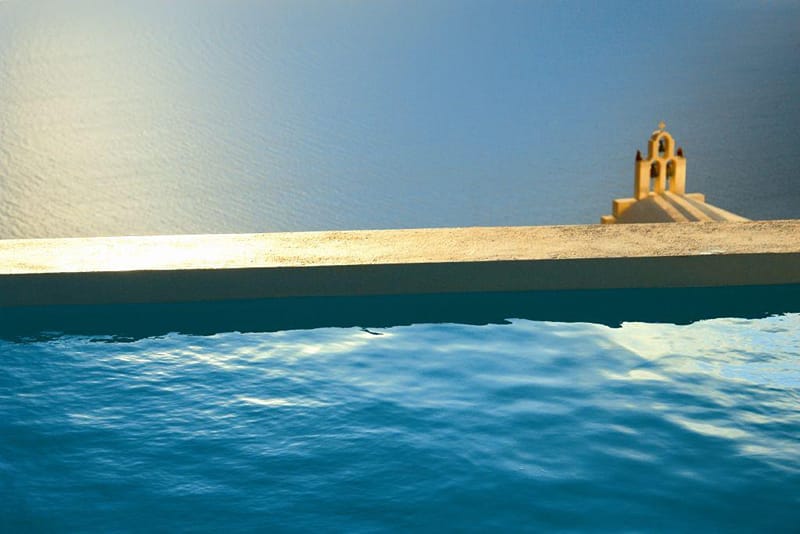
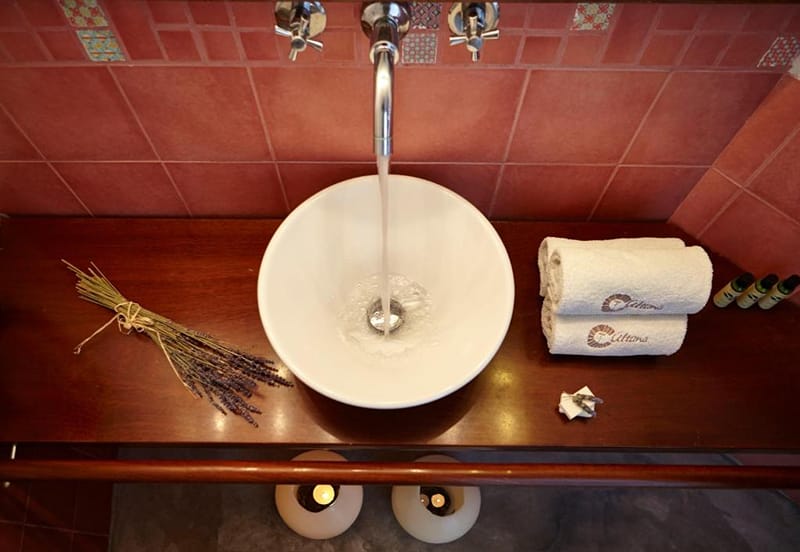
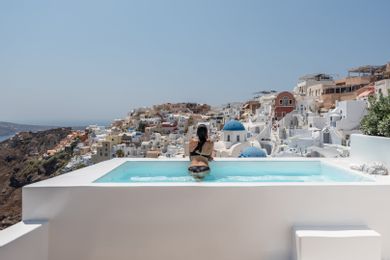
Altana Heritage Suites Santorini
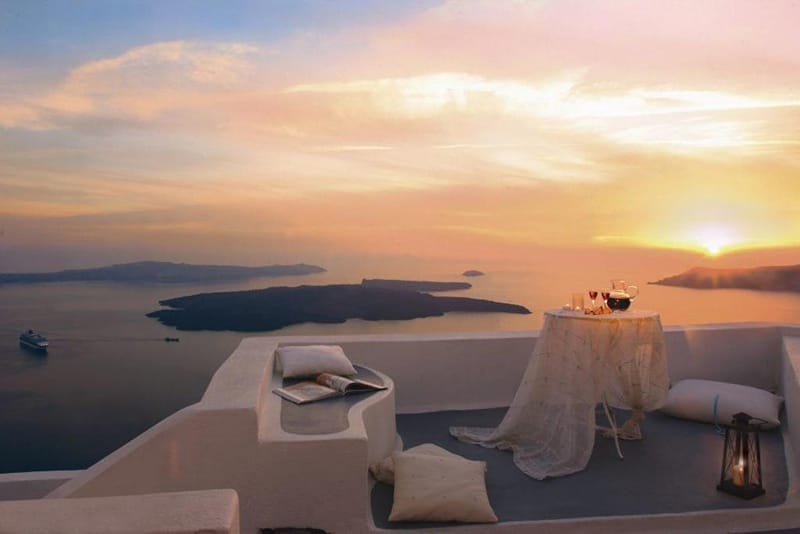
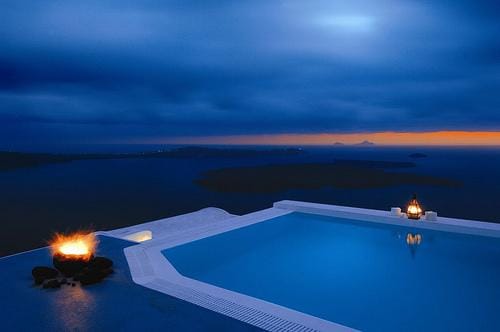
Cave suites and apartments on the Imerovigli caldera edge – a sunset terrace, a small pool, Skaros Rock a short walk away.
 9.9
9.9 Alternative places to stay
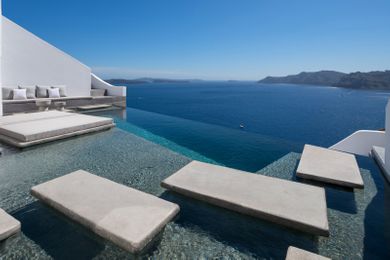

SantoriniDay 1
The Caldera Walk, Oia & Ammoudi Bay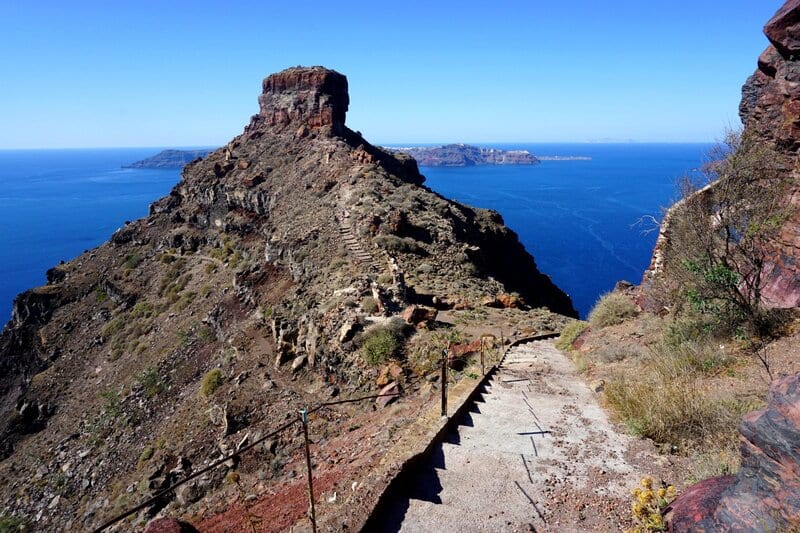
The Caldera Walk
The famous Fira-to-Oia caldera walk – roughly 9 km along the cliff rim, three to four hours at a steady pace. Best done in reverse (Oia to Fira) in the late afternoon, so the sun is over your shoulder and you arrive in Fira with time for a cold beer at dusk.
Oia
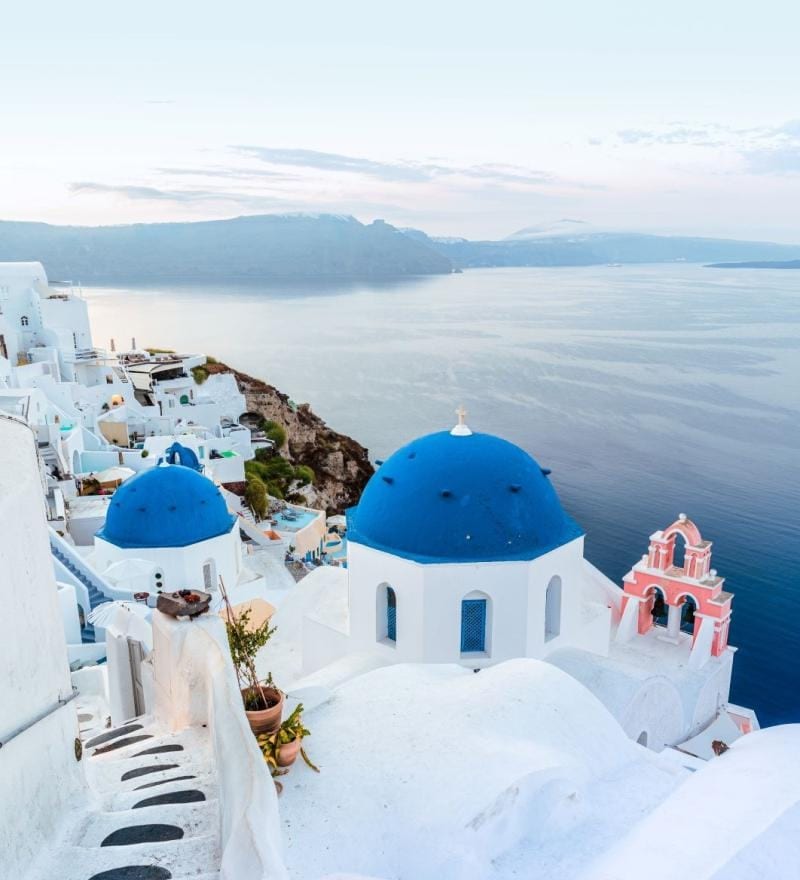
The white-and-blue village at the northern tip of Santorini, perched on the caldera rim – where the cruise crowds head for the sunset, and where you should head an hour earlier to walk the back streets while the light is best. The path down to Ammoudi Bay (300 steps) closes the loop for a fish dinner by the water.
Ammoudi Bay
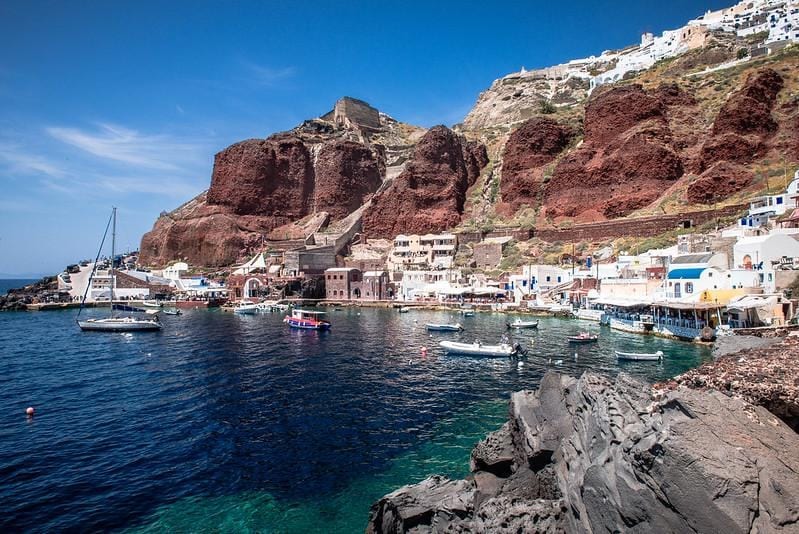
At the bottom of the scenic village of Oia, lies the charming, small port of Ammoudi. It is a beautiful, tiny cove with crystalline waters and fishing boats lying in the sea. Here there are no beaches, sand, sunbeds and umbrellas but you can have a distinctive experience by swimming from the dock. Nevertheless, it is preferable that you follow the path, past the taverns, that ends up in an awesome diving area with crystal clear waters.
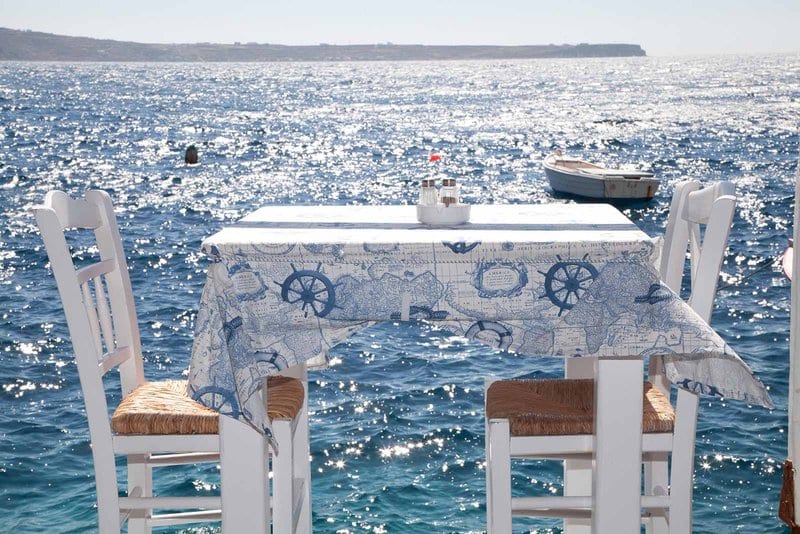
Dimitris Ammoudi Taverna
Dinner in Ammoudi Bay is a Santorini ritual, and Dimitris is the taverna that does it best. Opened in 1989 by Dimitris and Joy, it sits right where the red cliff meets the water – tables close enough to the sea that the catch of the day arrives by boat a few metres away. The fish comes from the same local fishermen the kitchen has worked with for decades, grilled simply with lemon, good bread and cold Assyrtiko. Come for the golden hour, stay until the caldera lights fade.
SantoriniDay 2
Wine country & the Caldera Cruise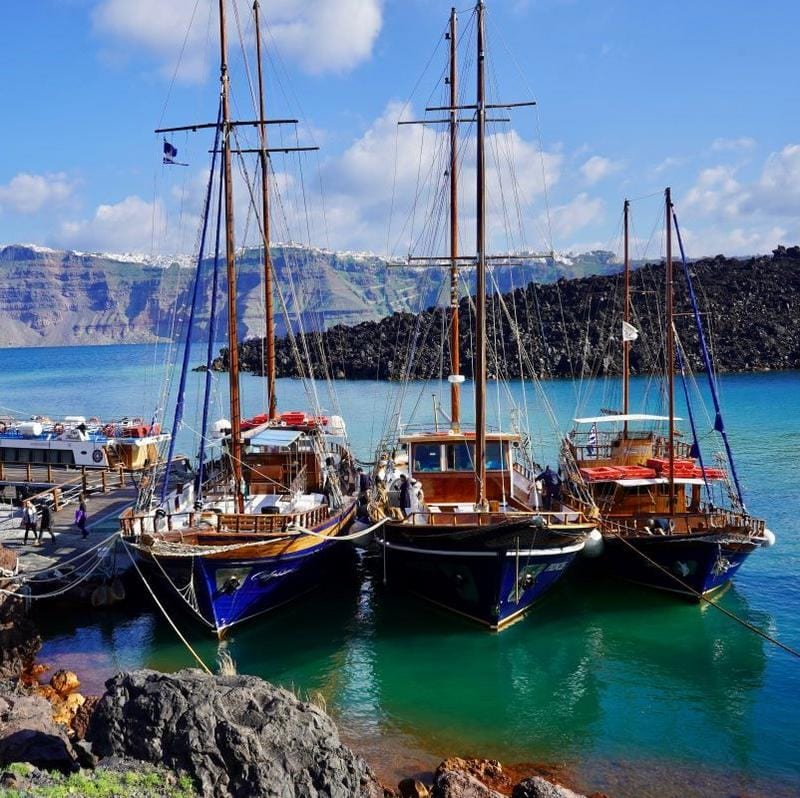
Santorini Caldera Cruise
A classic – Red Beach, White Beach, Hot Springs in Palia Kameni, Nea Kameni, swimming, snorkeling, volcanic bath (optional) and a greek meal with beer and wine included on this cruise on a modern catamaran yacht. Capture stunning panoramas of picturesque Santorini and its volcanic lagoon. Transfer from and to your hotel / vacation rental, as well as snorkeling equipment, also included. We will provide full details, and proceed to reservations if you wish, following your booking.
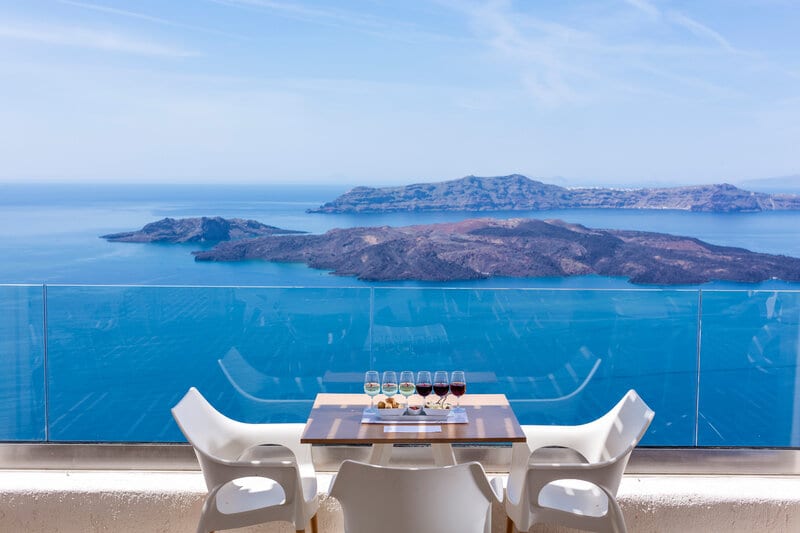
Wine Tasting Tour
Volcanic soil, sea spray, and 3,500 years of winemaking – Santorini's vineyards produce whites unlike anywhere else. A half-day tour visits two or three estates, sampling Assyrtiko (crisp, mineral, electric), Nykteri (barrel-aged and honeyed), and Vinsanto (sun-dried grapes turned liquid amber). The vines grow pruned into low baskets – kouloura – to shield grapes from the Aegean wind. Santo Wines and Venetsanos have caldera-view terraces; Domaine Sigalas is the serious oenophile's pick. Most tours include local cheese and olive pairings. Book a sunset session if available – the caldera turns gold through a wine glass.
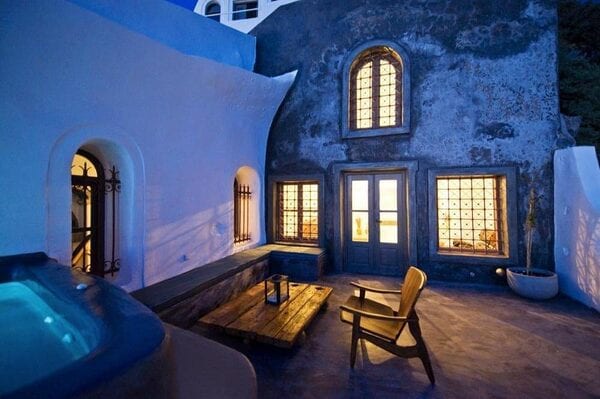
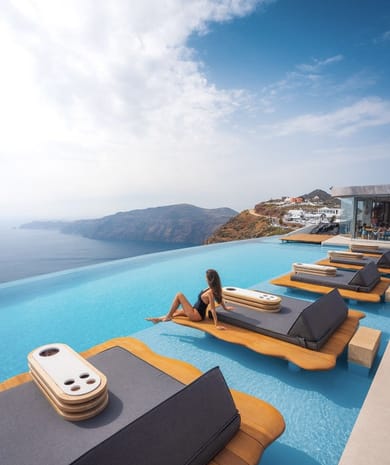
Le Moustache Pool Lounge
Caldera-edge cocktail bar and pool lounge – daybeds by the infinity pool, a DJ that starts slow and builds into sunset, a cocktail menu that takes Santorini's volcanic produce seriously. For that one evening you don't want to cook dinner with the rest of the island, just order another round and watch the colour change.
Naxos
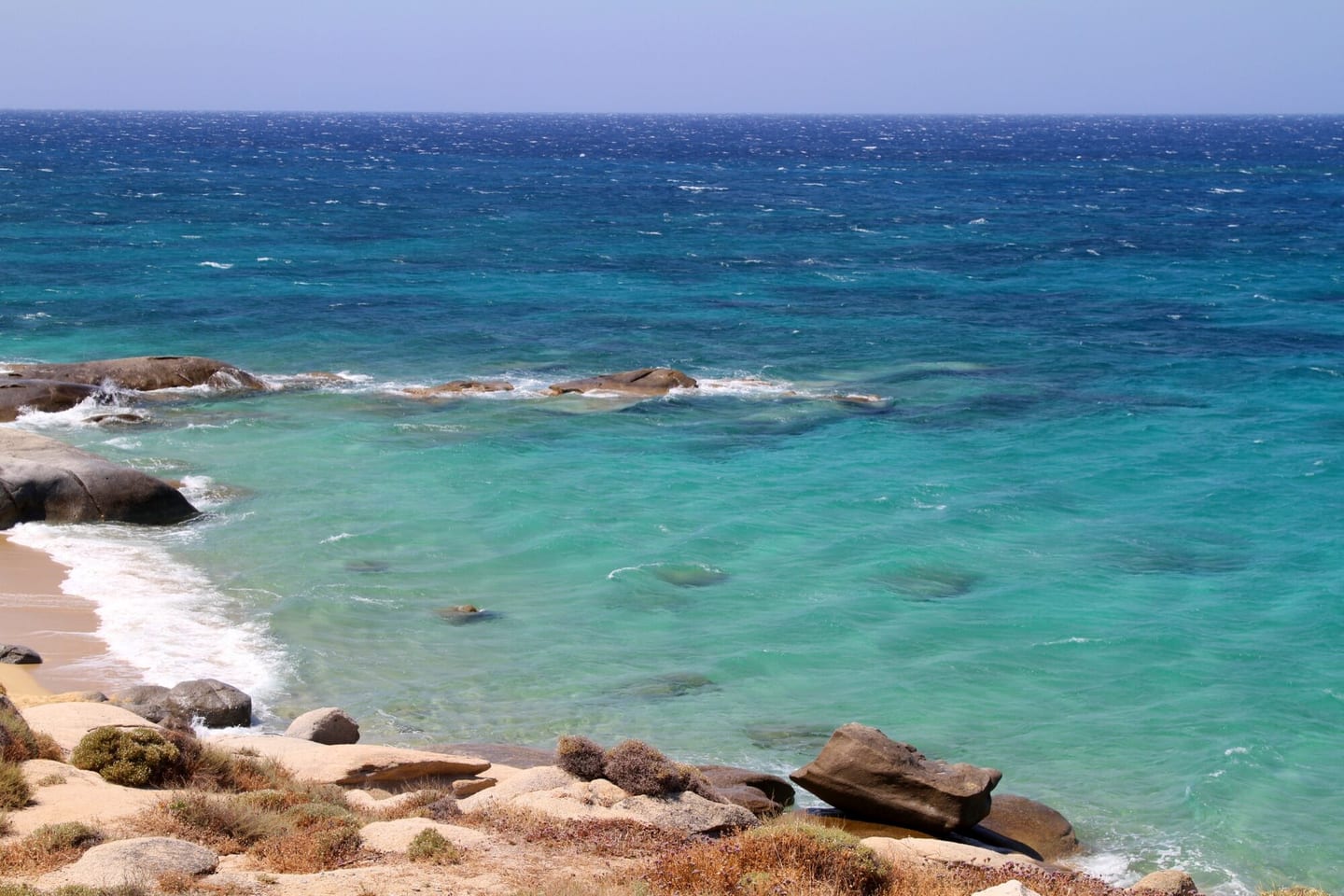
Days 3–5 of 7 · 3 nightsNaxos is the surprise – bigger than expected, with mountain villages an hour from sandy western beaches, a hilltop Venetian Kastro at the heart of Chora, and the marble doorway of an ancient temple at the harbour entrance. Three nights here is the trip's anchor.

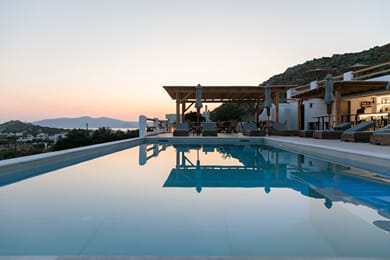
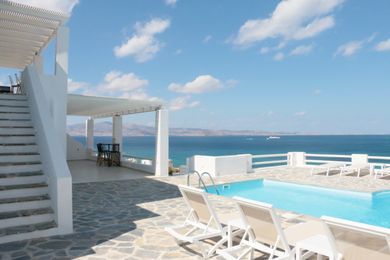
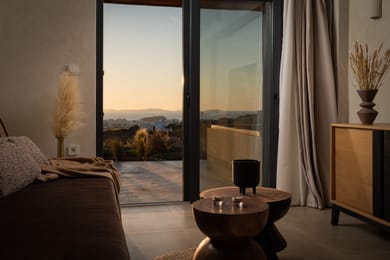
Villa Flora Naxos
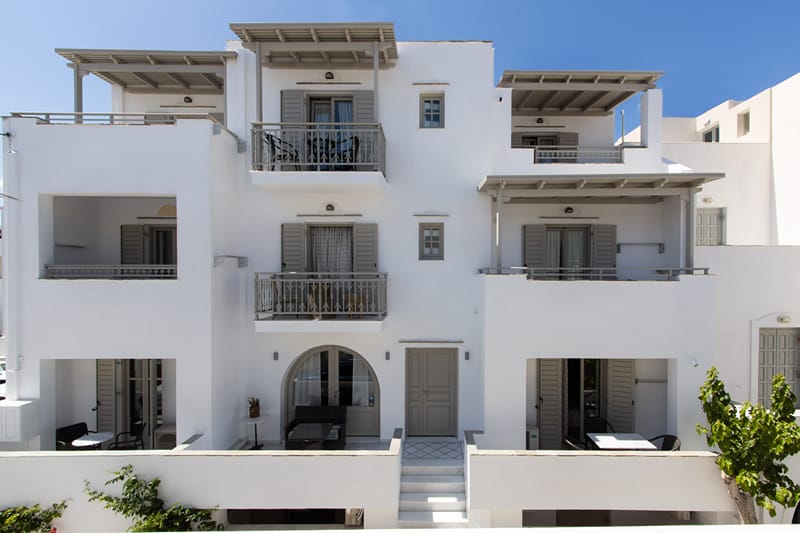
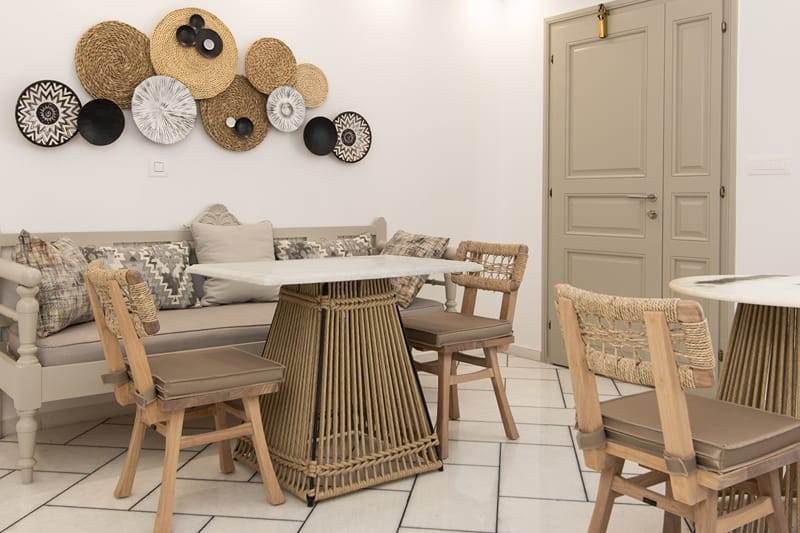
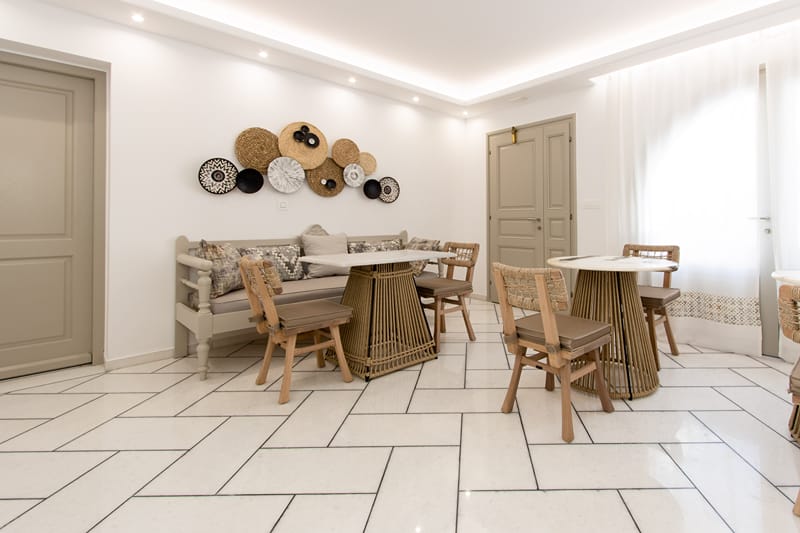
A simple, well-kept hotel a short walk from Agios Georgios beach and the Chora lanes – breakfast on the terrace, the Portara ten minutes away.
9.1 Alternative places to stay
NaxosDay 1
The Portara & Naxos Town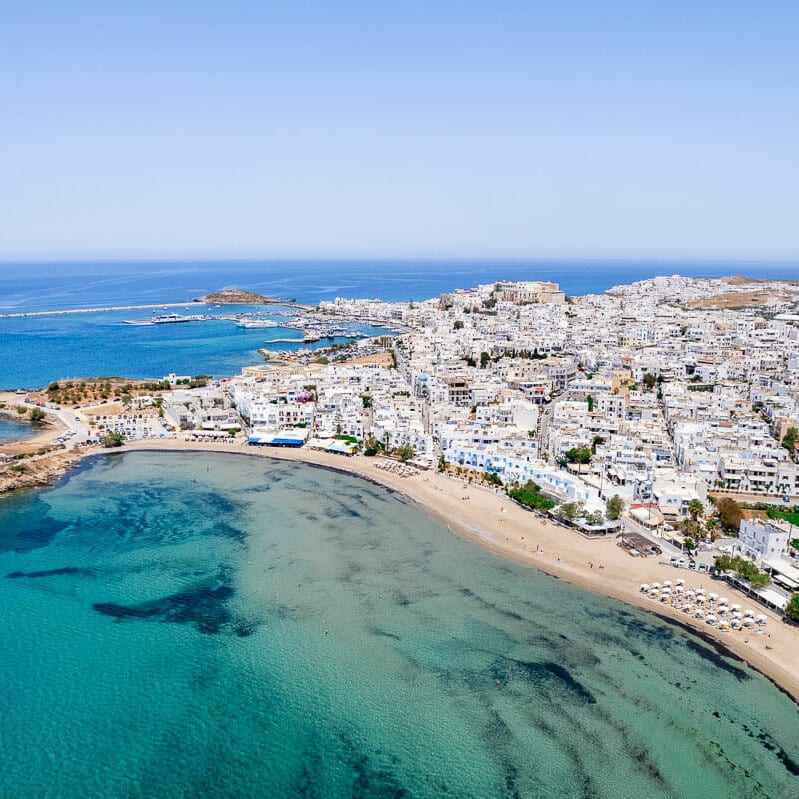
Agios Georgios Beach
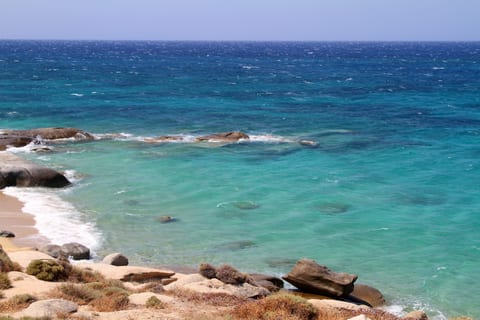
Chora's own beach – a shallow sandy crescent curving south from the old town, water so calm it feels like a lagoon. You can walk to it from the port in ten minutes, drop your bag at a beach bar, and be swimming before lunch. Families love the gentle shelf; the south end is where the windsurfers go out. The rocky islet with the whitewashed church is the photo.
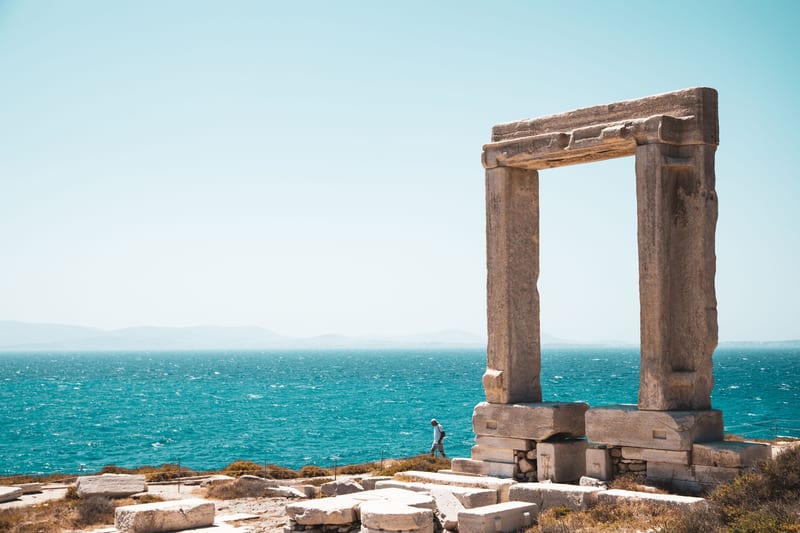
Portara (Temple of Apollo)
The Portara – a single marble doorway 6 metres tall, on a tiny islet just off Naxos's harbour, all that remains of an unfinished 6th-century BCE temple to Apollo. Walk out across the causeway at sunset; the doorway frames the sun setting over the Aegean. Five minutes from the ferry terminal – first stop on arrival.
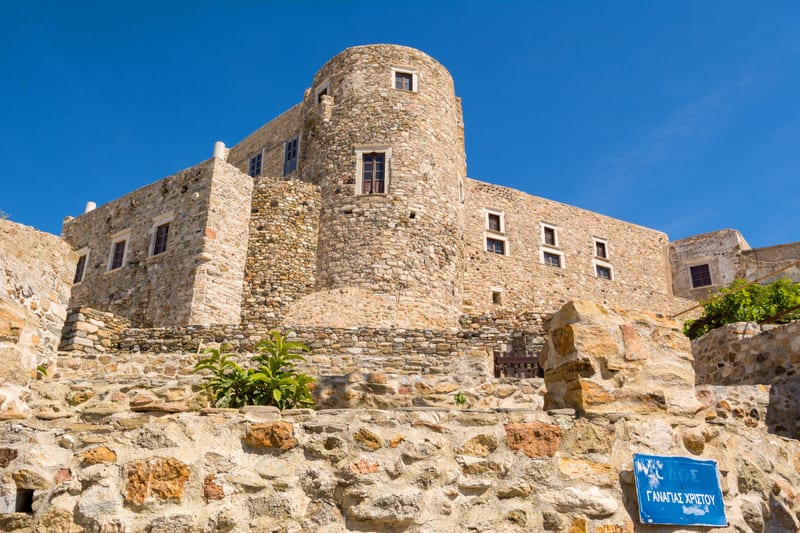
Castle of Naxos
The only Venetian castle in Greece continuously inhabited since 1207 – eight centuries of life behind fortress walls.
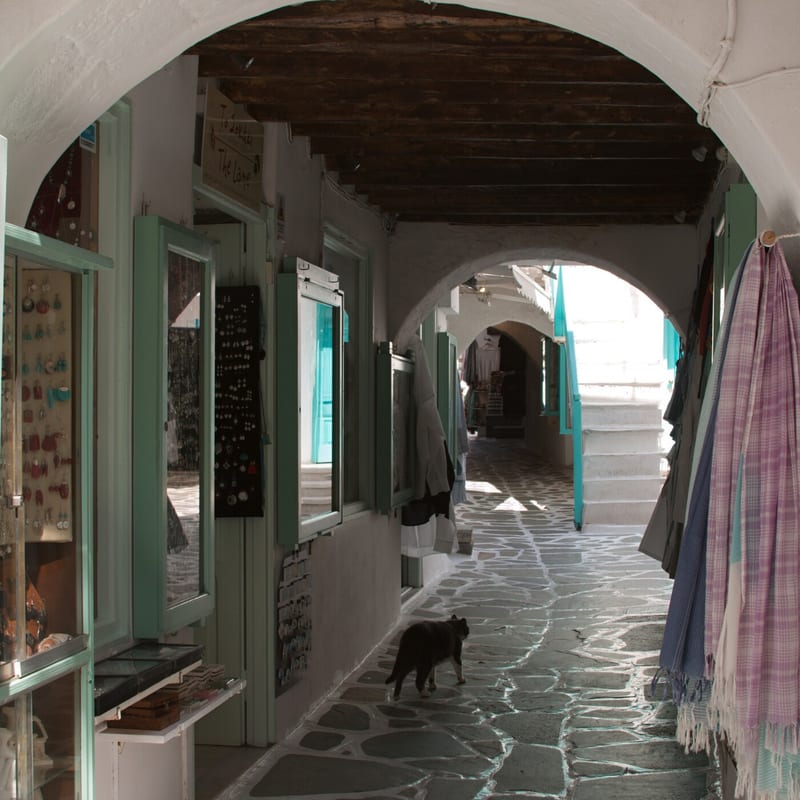
Bourgos & The Old Market
The Greek quarter below the castle walls – historical churches, artisan shops, and courtyards that invite you to linger.
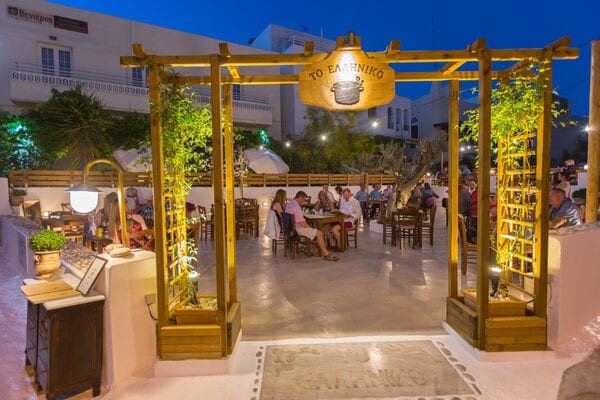
To Elliniko
Worth queuing for a table. A lively Greek taverna near St. George beach whose garden terrace fills up the moment dinner service opens – the grill runs non-stop and the portions are generous in that old-school Naxian way. Souvlaki, slow-cooked lamb, fresh salads, simple Naxos-produce plates done well and priced fairly. Come early or book ahead in July–August.
NaxosDay 2
Apeiranthos & the Cave of Za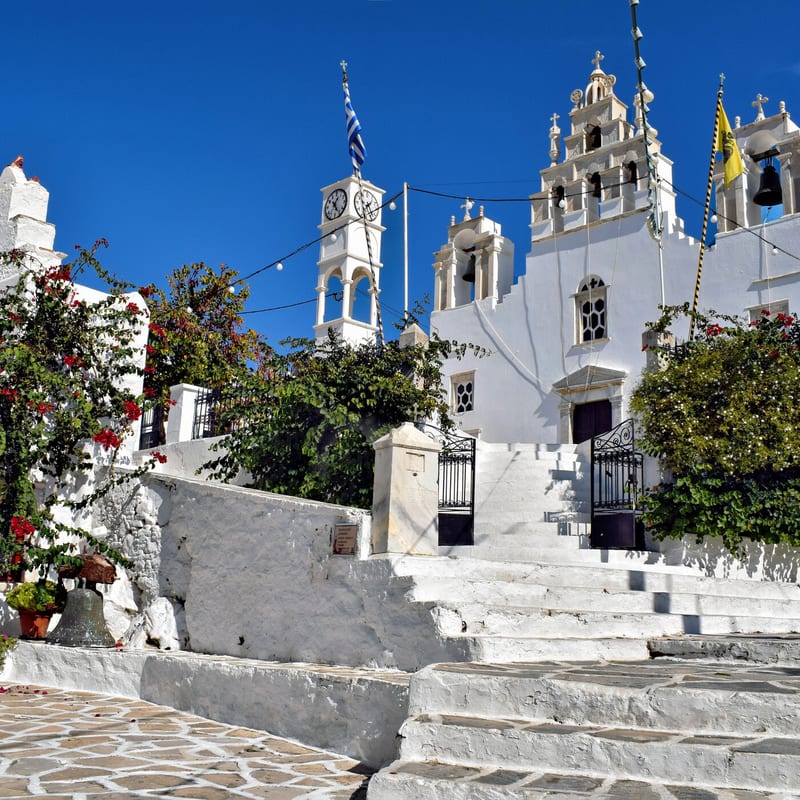
Filoti
The largest of Naxos's mountain villages, terraced on the slopes of Mt. Zas. A pause here is an institution: a coffee at Platano on the square, under the shady plane trees, while the village goes about its day. From Filoti you can set off up the mountain to the Cave of Zeus, or simply wander the stepped lanes and the big neoclassical Panagia Filotitissa church.
Apeiranthos
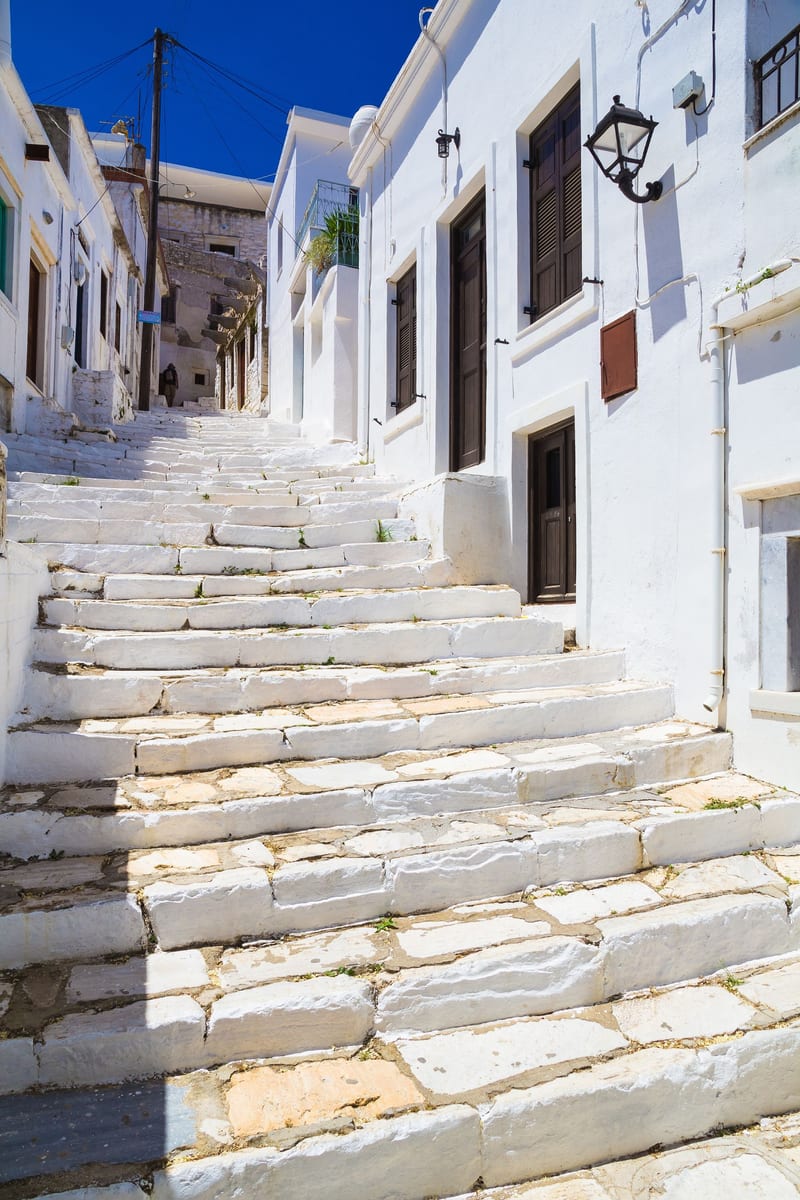
A working mountain village at the eastern end of Naxos, with marble-paved streets and stone arcades. It's the kind of place you visit for a long lunch, with the village kafenia in shaded courtyards and emery (the volcanic abrasive Naxos mined for centuries) still on display in the small museum.
Halki & Vallindra Distillery
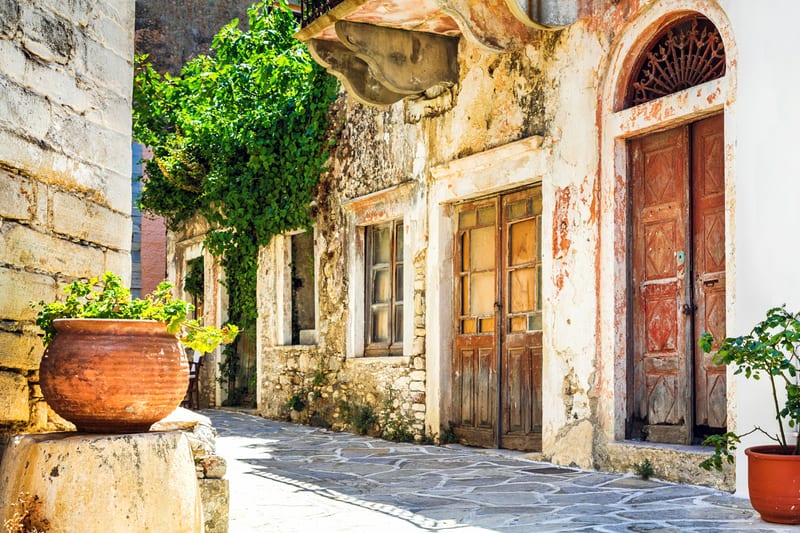
Halki was the capital of Naxos until the 19th century – neoclassical mansions, marble fountains, and the Vallindra distillery still making Kitron (Naxos's citron liqueur). Stop at the distillery for the tasting; the green Kitron is unique to Naxos and worth a bottle to bring home.
Cave of Za
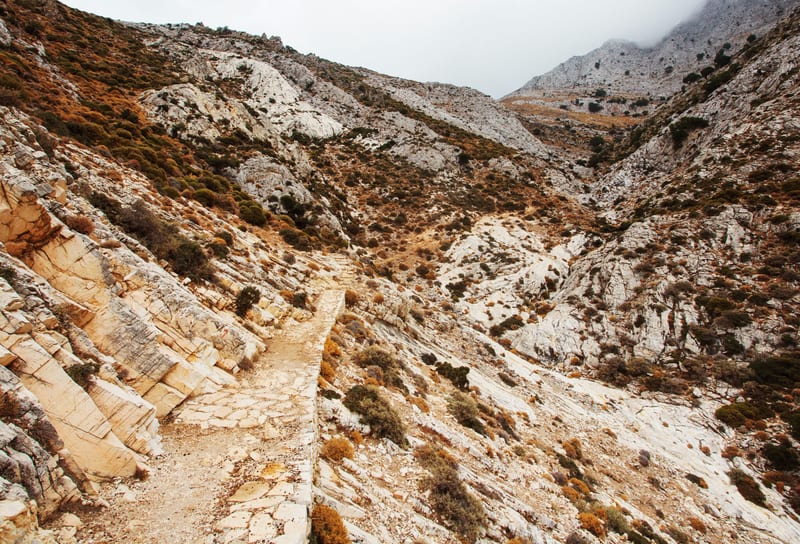
The mountain cave where, so the myth goes, Zeus himself was raised. The trail up Mt Zas starts near Filoti and climbs through old terraces to the cave mouth – and, for the committed, on to the summit: at 1,004 m the highest point in the Cyclades, with views over half the Aegean. Go very early, before the sun heats up, and bring water and good shoes.
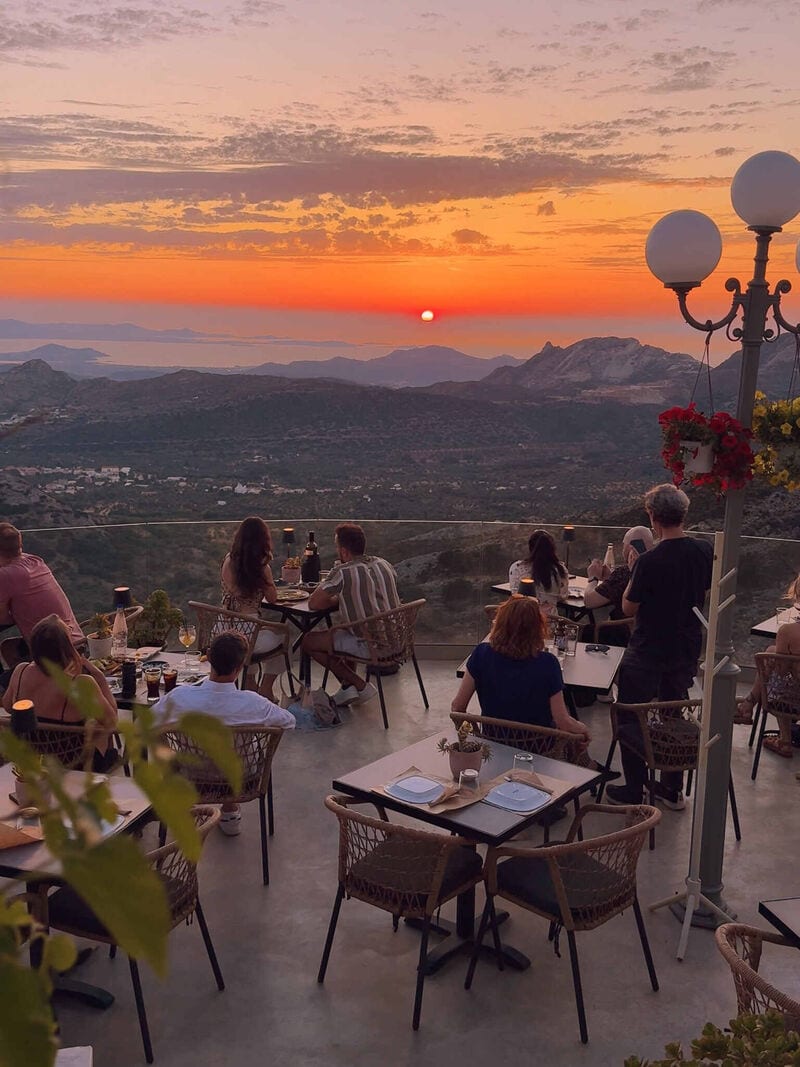
Rotonda
High in the hills just before Apeiranthos, Rotonda is a large restaurant and bar with sweeping views over the valley and out to sea – the kind of view that stops conversation when you walk in. Come for a long lunch after the mountain villages, or for a late dinner that turns slowly into drinks as the lights of the island come on below.
NaxosDay 3
Mikri Vigla & Aliko beaches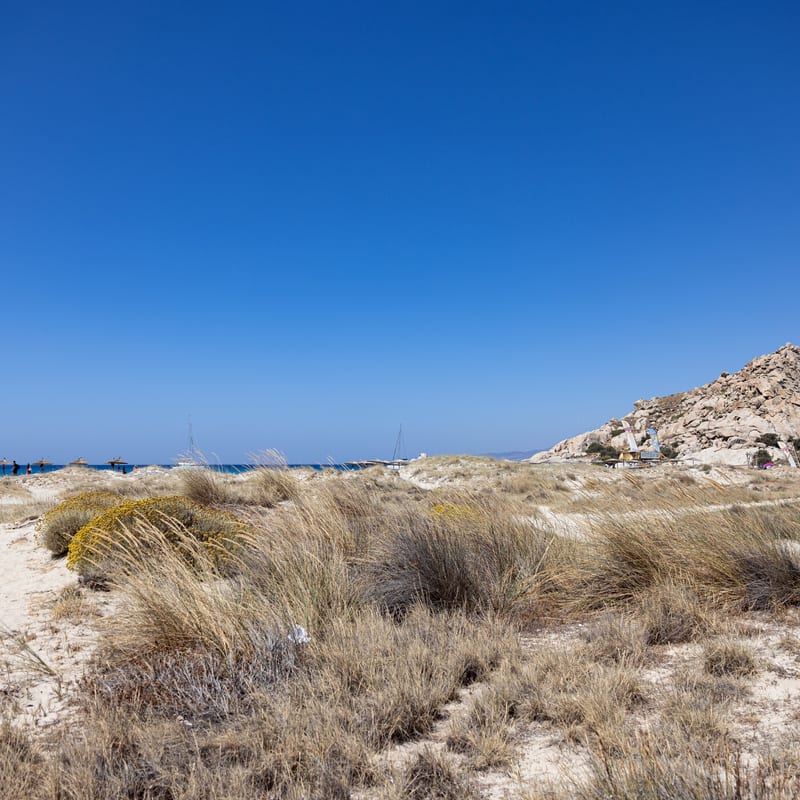
Mikri Vigla Beach
A long curving stretch of golden sand on Naxos's south-west coast, split in two by a granite headland. The north side (Parthenos) is the undisputed windsurfing and kitesurfing spot of the Cyclades; the south side (Sahara) is calmer, with shallow turquoise water that wades out forever. Simple tavernas sit on the dunes, and the whole place feels a world away from Chora.
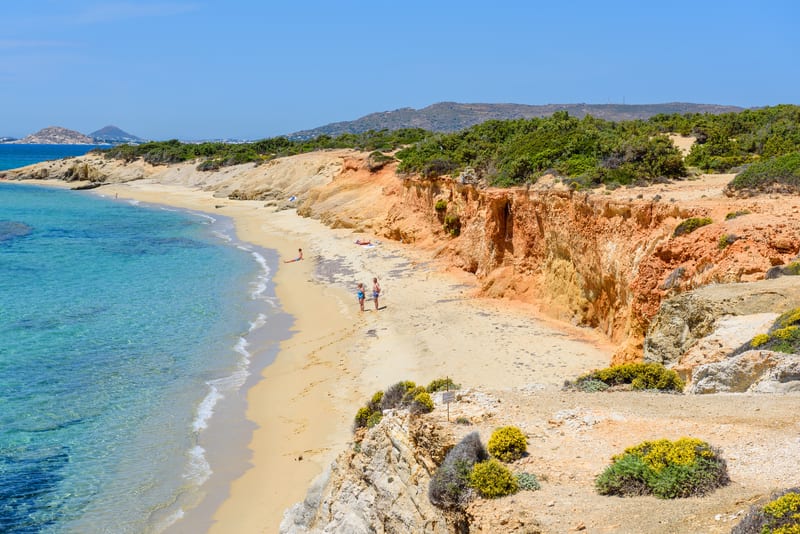
Aliko Beach
A cedar-forested peninsula hiding secret coves and wild beaches – Naxos at its most untamed and beautiful.
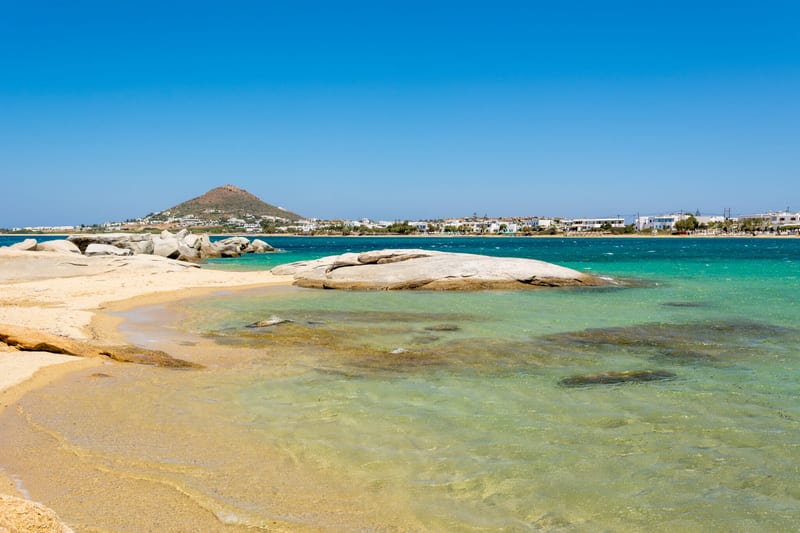
Agia Anna Beach
A seamless continuation of golden coastline – tavernas lining the shore, gentle waves, and a village that lives for summer.
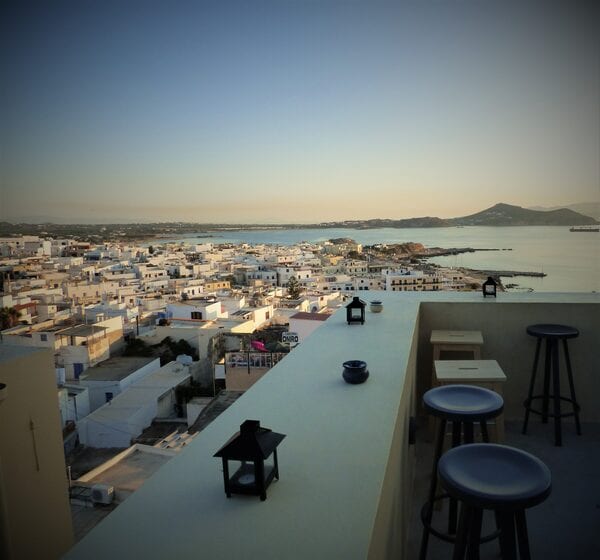
Avaton 1739
A beautifully restored Venetian-era townhouse in the heart of Chora, now a split-personality spot for the best hours of the day: golden-hour drinks on the upper terrace with the bougainvillea and the sea below, then down to the inner courtyard for a candlelit dinner. The wine list leans Cycladic, and the kitchen is refined without being fussy.
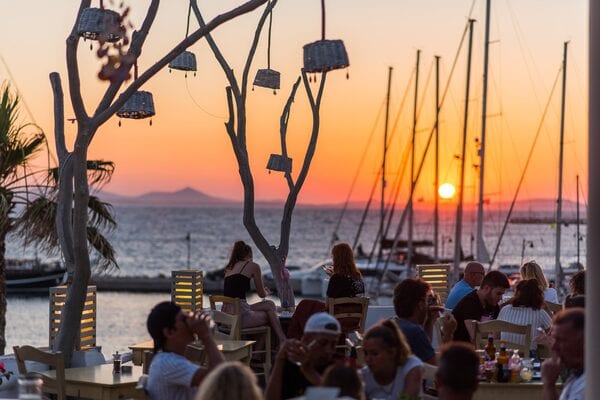
Flamingo Bar
For some great live music, plate smashing and dancing, Flamingo is the place to be. A late-night Chora institution that runs on house band energy, bouzouki and pitchers of house wine. Not a cocktail-and-cool-crowd bar – a plates-on-the-floor, everyone-on-their-feet kind of night. Come after dinner and let it build.
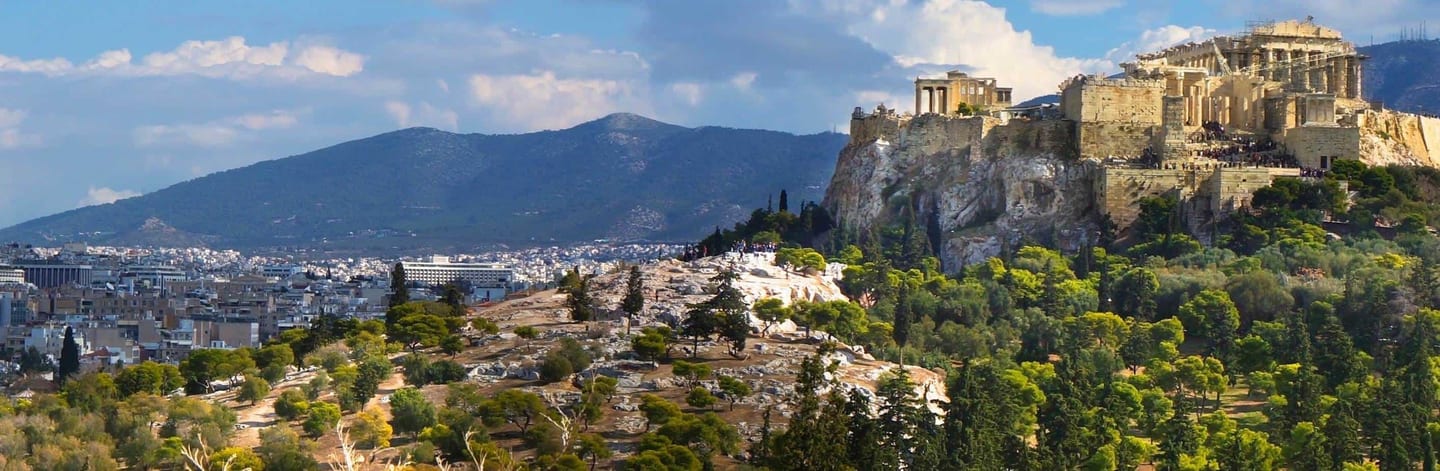
Athens
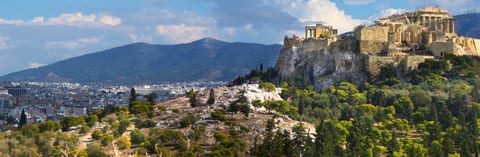
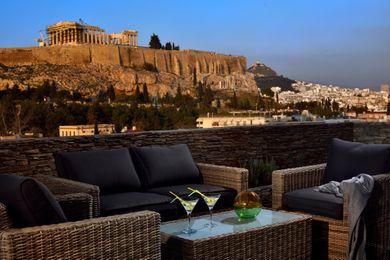
Days 6–7 of 7 · 2 nightsAthens to close – Acropolis and Acropolis Museum read together as one of the great archaeological pairings in Europe; Plaka and Monastiraki for the markets and tavernas; a rooftop bar to send the trip off. Two nights is the tasting-menu version.
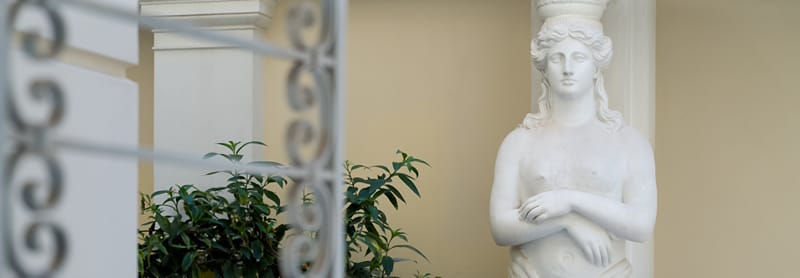
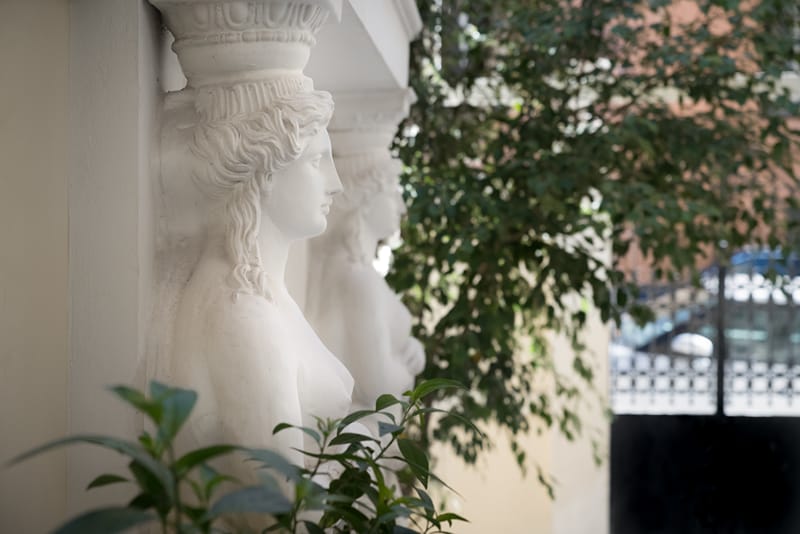
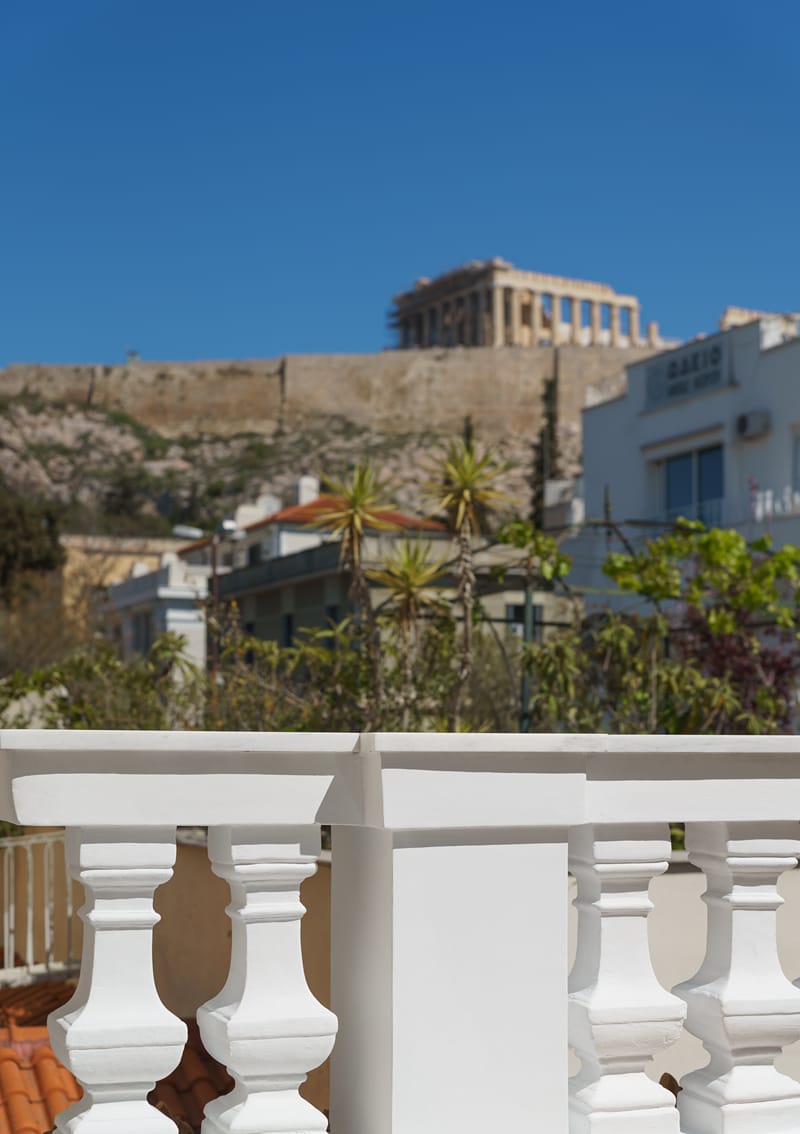
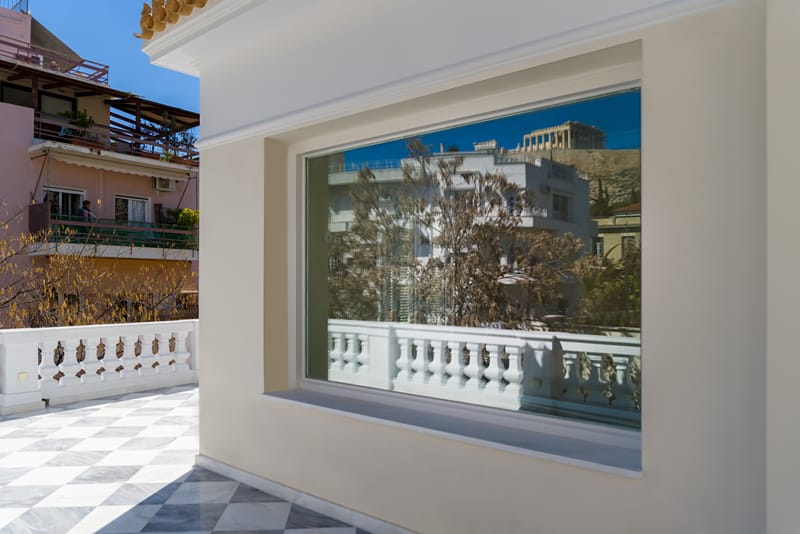
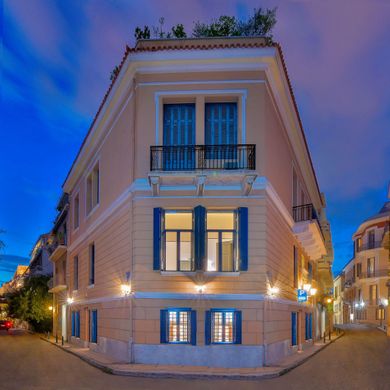
Noble Suites
A 1901 neoclassical house under the Acropolis – four suites of marble and old wood.
9.7 Alternative places to stay
AthensDay 1
The food tour & the Acropolis
The Ultimate Food Tour
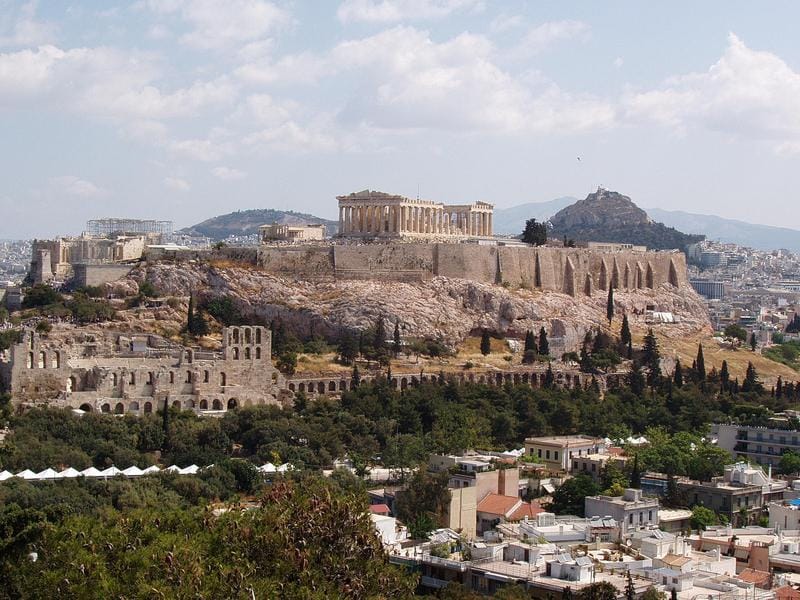
Acropolis – guided
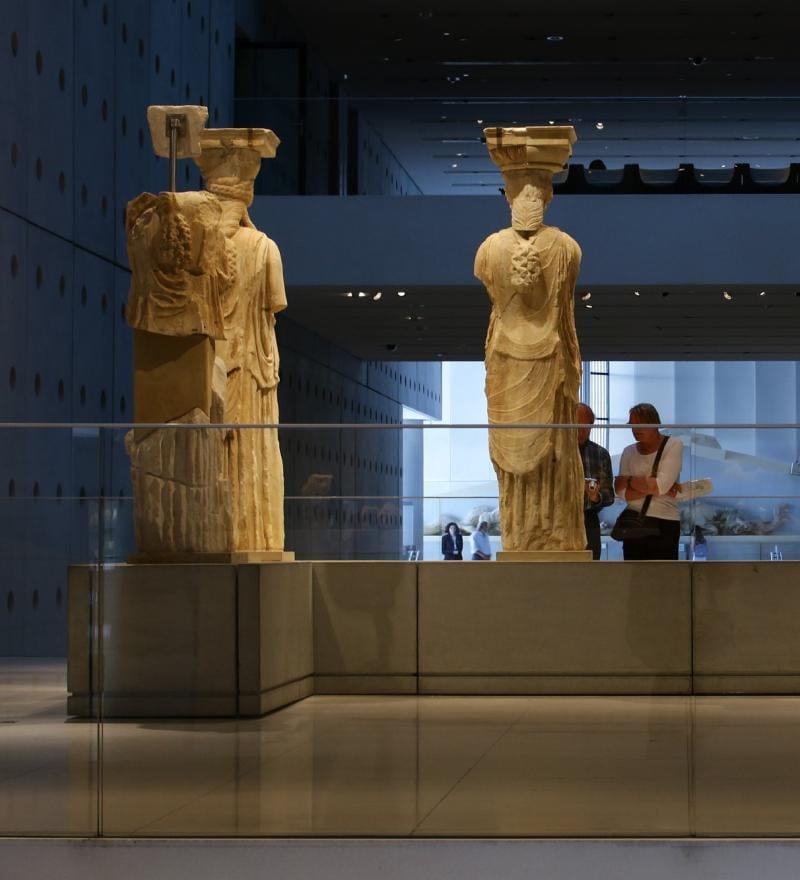
Acropolis Museum
The museum displays the Parthenon frieze on the top floor, in the same orientation and lighting as the original on the building you can see through the glass wall. Two hours minimum. The downstairs café and rooftop restaurant are both worth a stop.
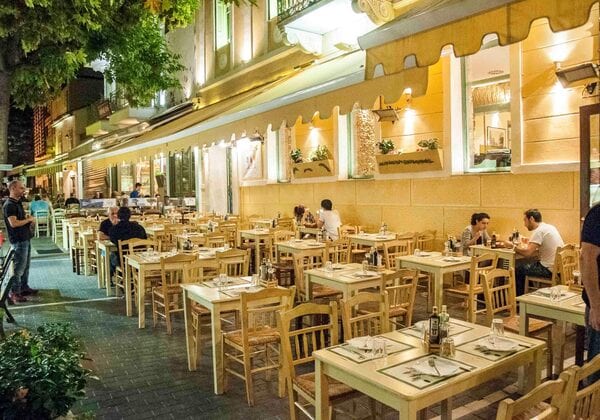
Lithos Taverna
Tucked into a Psirri side street, Lithos does my favourite Moussaka in Athens – layered the way your grandmother would approve, sitting in front of you within minutes of ordering. The room is stone-walled and unfussy, the wine comes in carafes, and the kitchen turns out the Greek classics with just enough finesse to make the regulars regulars.
AthensDay 2
The Ancient Agora, Syntagma & the National Garden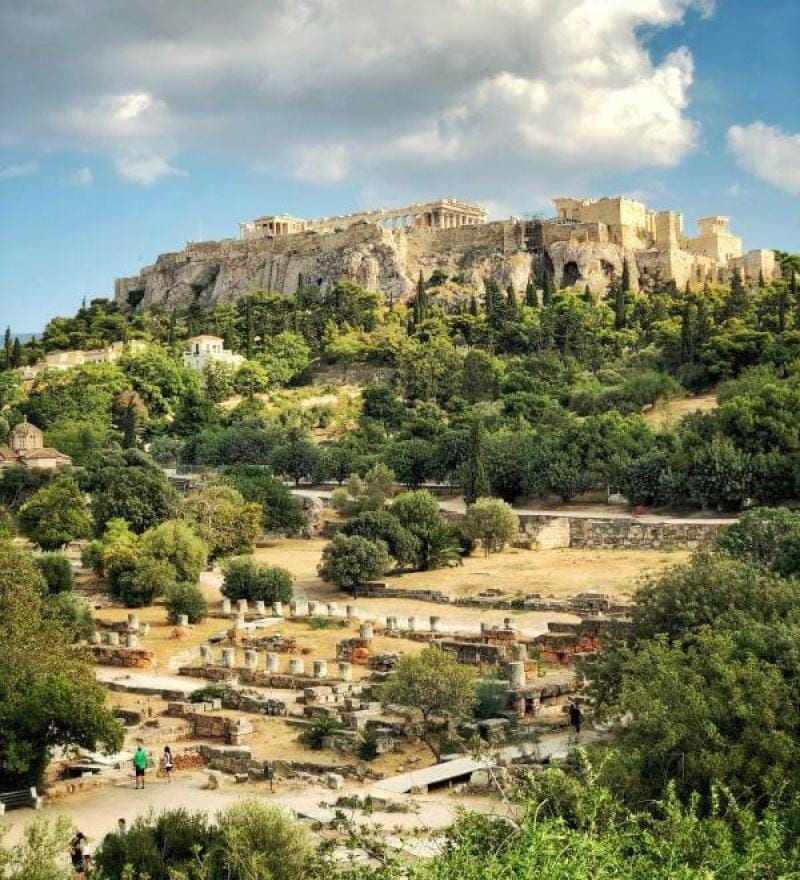
Ancient Agora
The archaeological area of the ancient Agora is located on the foothills of the Acropolis, near Thission Metro Station. In antiquity, the Agora was not solely a commercial centre. It was also an important political, cultural and religious centre. In the area of the agora were located administrative buildings, temples, public services and courts. The Athenians gathered here every day to buy and sell their goods, learn the current news, criticise the government, exchange ideas, or engage in discussion. The area was settled in the Neolithic age. The monuments located there were built in various historical periods: from the classical age to the 11th century AD. The church of Ayioi Apostoloi was built in the 11th century
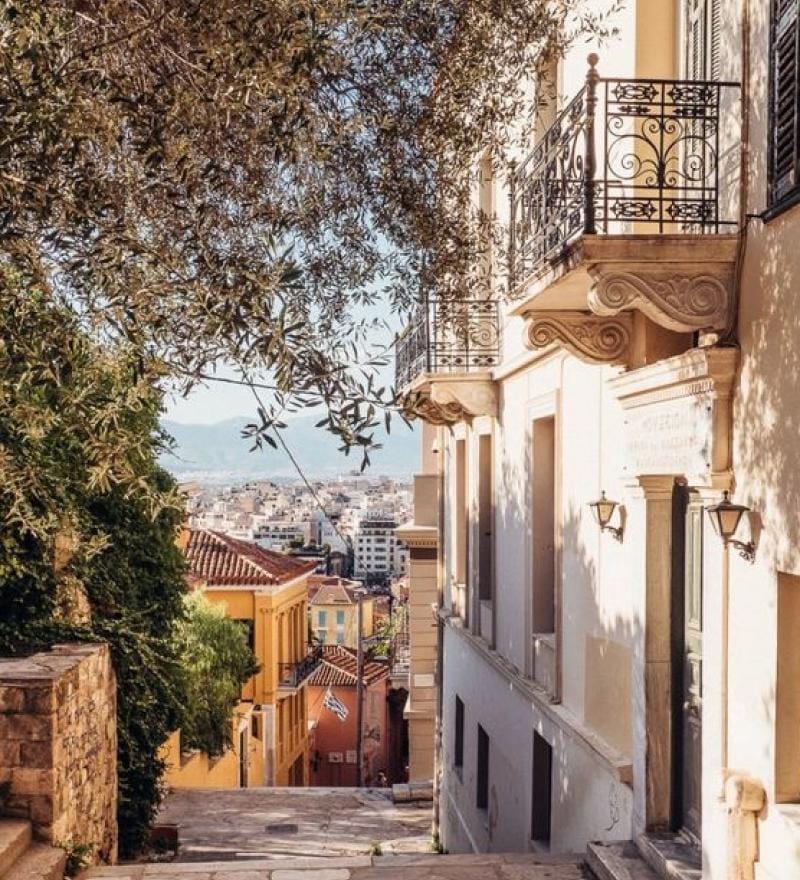
Plaka
The old neighbourhood at the foot of the Acropolis – marble lanes, neoclassical houses, and a hundred tavernas. Tourist-leaning, yes, but the heart of why people come to Athens. Walk the higher streets towards Anafiotika to dodge the bigger crowds.
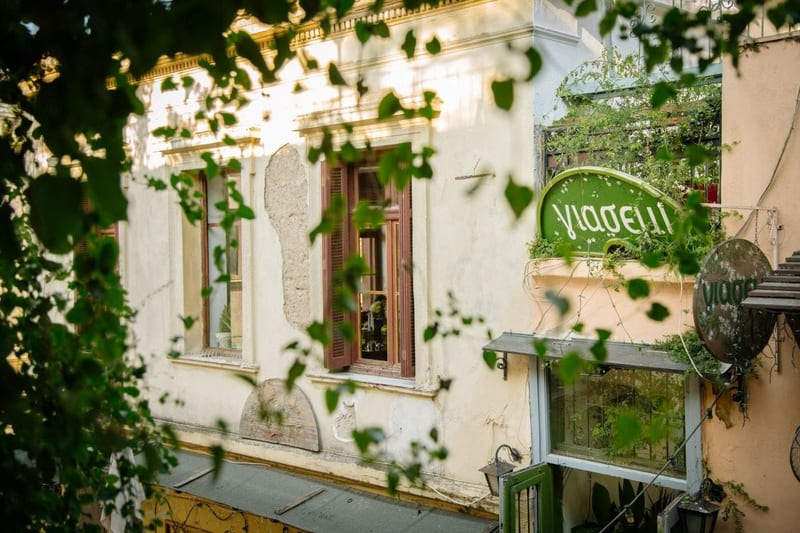
Yiasemi
Yiasemi is a café in Athens, Greece on busy Mnisikleous -a steep, stepped, pedestrian street in the Plaka area that leads down from the Acropolis and is lined with cafés and restaurants. It feels like one of the more characterful offerings on the street, with two separate indoor spaces, seating outside on the steps (of course), tons of plants and flowers, and adorable mismatched furnishings and décor. There's a selection of meze and other dishes but your best bet is to grab a tea or Greek coffee and something sweet to snack on – one of the homemade pies or the honey-drenched, big-enough-to-share baklava. Yiasemi is a nice mix of locals and tourists, buzzy and busy without feeling rushed, and offers superb people-watching
Monastiraki
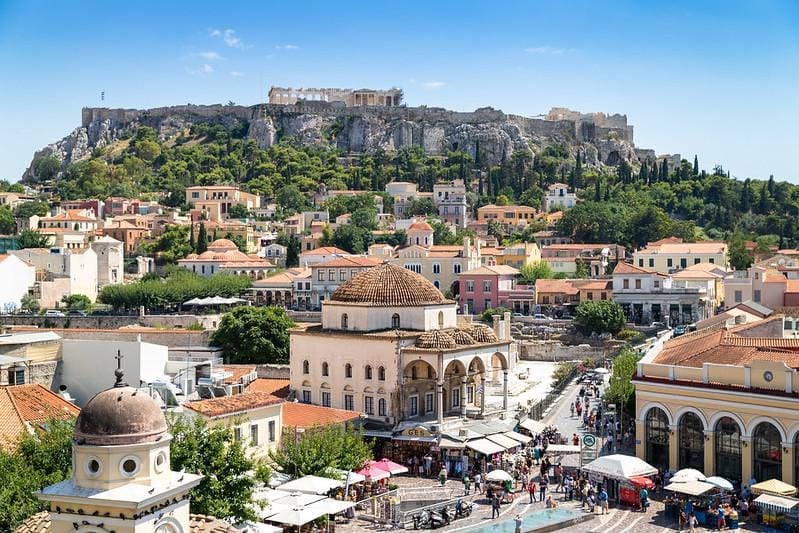
A distinctive old Athens area, with narrow, irregularly criss-crossing streets, and small buildings, characteristic of Ottoman and to some extent Byzantine urban planning. On the outdoor stands of street sellers, or the small shops on the central roads you can find anything, such as shoes, clothes, old and new furniture, old books and magazines, souvenirs, jewellery, hats, bronze objects, new and used records and CDs and traditional Greek instruments (bouzouki, touberleki). Shopping or walking in Monastiraki is an unforgettable experience. You will be stunned by the variety and quality of things you can buy in the market
Kostas
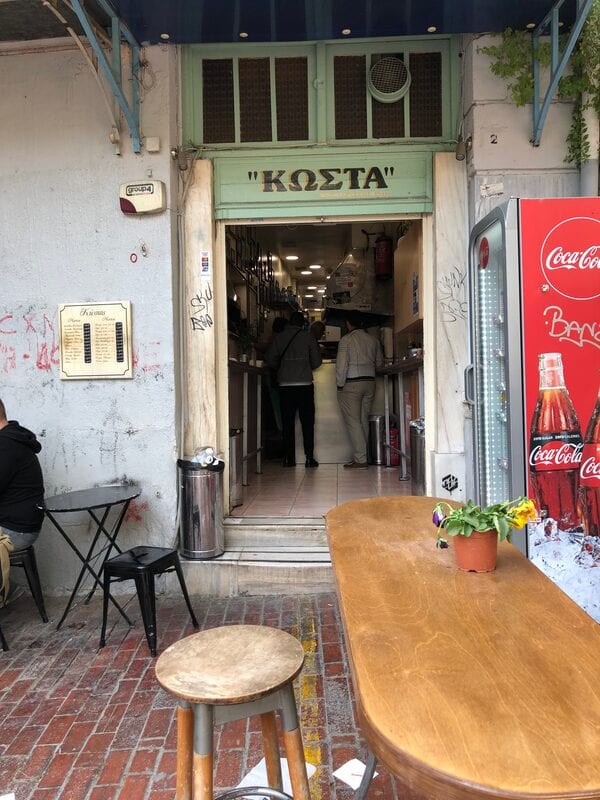
Amazing gyros – a tiny grill on Agia Irini Square that has been doing pork souvlaki the same way for decades. A handful of stools, a queue that moves fast, and the smell of charcoal two streets away. Grab one (or two) in the pita, open the wax paper on the square, and you've understood why this is the Athens food pilgrimage.
Syntagma Square
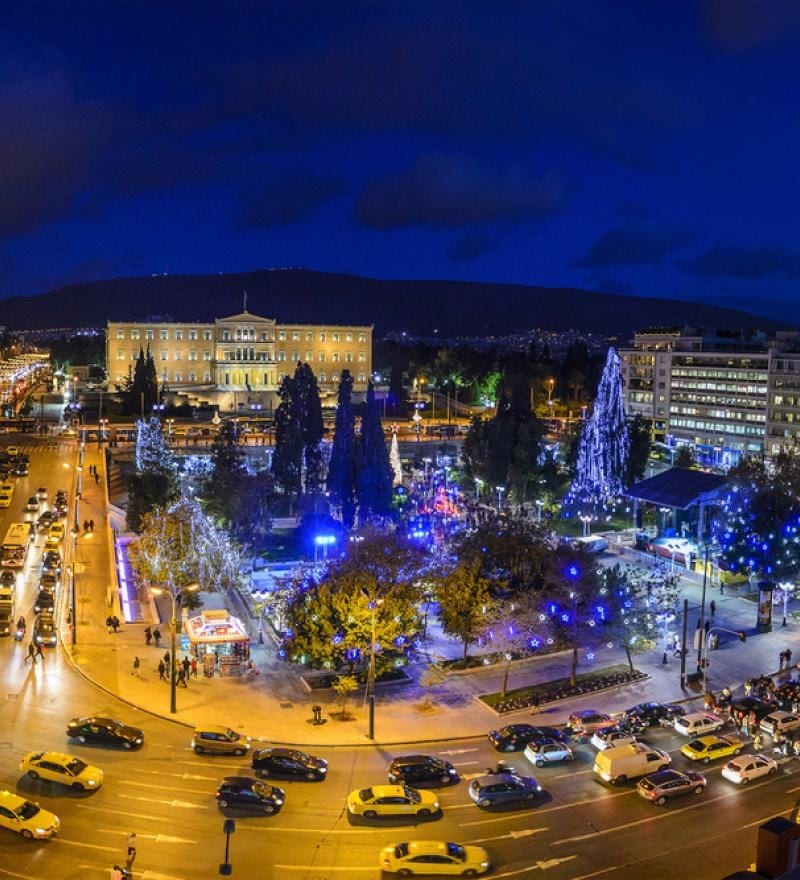
Syntagma Square is Athens' central square. The name of the square is derived from an uprising on 3 September 1843, of the people and the guard of Athens before the then Royal Palace building, (what is now the Parliament), demanding that King Otto grant a Constitution (Syntagma means Constitution). Syntagma Square and Omonia Square are the two central locations of the city. You should not be surprised when you ask directions if people refer to Syntagma square. Plaka, Acropolis, the Cathedral, the National Garden, Ermou Str, and Kolonaki, are located in the vicinity of Syntagma Square. You will find fashionable cafes and small restaurants located here. The square is busy around the clock. At the kiosks you will find miscellaneous items, ranging from aspirin to souvenirs, newspapers and foreign magazines.
Greek Parliament
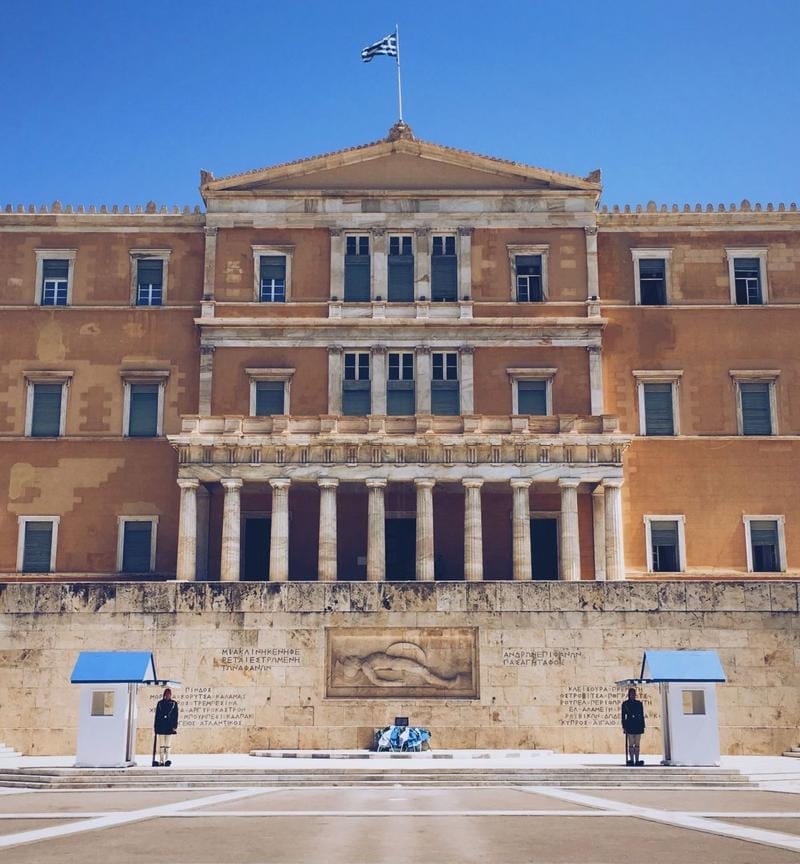
Dominating Syntagma Square, the building was the residence of the first king of Greece Otto. The building was constructed from 1836 to 1842. George A', who succeeded Otto on the throne, also resided in the palace. During his reign, two successive fires destroyed the building, making it unsuitable for use as a royal residence. In 1924 the government decided to situate Parliament in the building. Reconstruction work was completed in 1934. The interior was redesigned by architect A. Kriezis. In Parliament you will find national treasures, such as the first Greek Constitution, a collection of valuable paintings and a large library.
National Garden
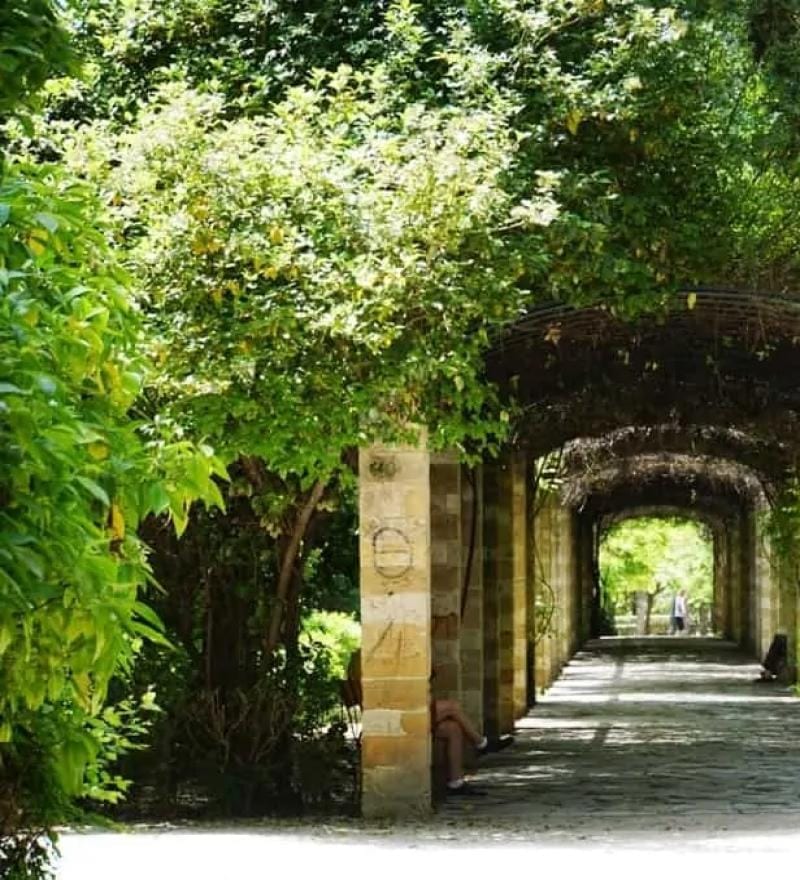
The National Garden, open from dawn to sunset, is an oasis in the centre of the city. It has a total area of 160,000 m2. Some five hundred different kinds of plants, bushes and trees from various locations around the world are grown here (in total, it has 7,000 trees and 40,000 bushes). At the same time, it comprises an important natural life reserve in Athens as many different species of birds, hedgehogs, turtles, ducks and even bats are gathered here. The National Garden – which was formerly the palace garden - was laid out from 1838-1860. There are six entrances: at Vasilissis Sofias Avenue, Irodou Attikou Str, Vasilissis Amalias Avenue, and two entrances connecting the National Garden to the Zappeion. You will also find here a small pond, a small zoo, the Botanical Museum, a traditional café, a children's library, a playground, various monuments of antiquity, and the busts of important personalities of modern Greece (among others, politicians and authors).
Grande Bretagne Roof Bar
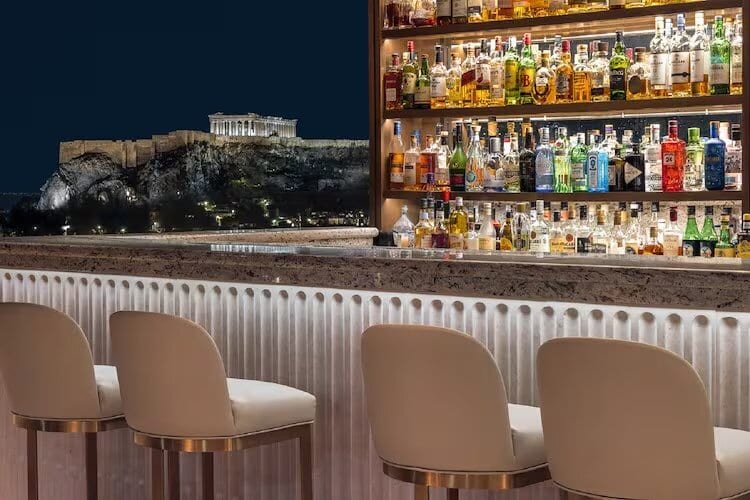
The rooftop bar of the GB Roof Garden restaurant, crowning the Hotel Grande Bretagne on Syntagma Square. Take a stool at the marble counter or a terrace table at golden hour – the Acropolis floodlit across the rooftops, a list of some fifty cocktails, and the calmest view in the city centre. Open daily 13:00–02:00; smart casual, and book ahead in season.
Your whole trip in one booking
With WeAreTravelers – a licensed, Athens-based travel agency.
- Zero service fees. Same price as if you organized everything on your own.
- One booking and one payment for the whole trip (instead of separate bookings for each hotel, ferry and flight).
- One local point of contact, who has your back – before you travel, and while you're here.
- Covered by the EU package travel rules. Your payments are protected by law.